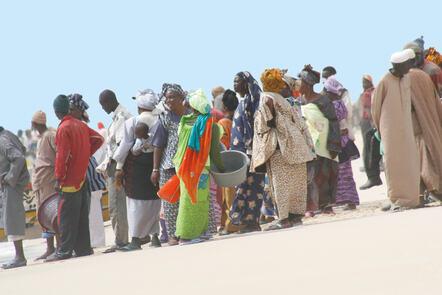
Examining African Contributions to Global Health (FutureLearn)

Offered by University of Basel,
Examining African Contributions to Global Health (FutureLearn)

Discover the achievements and impact made by African experts in global healthcare. Diversify your historical perspective by learning about the Global South. The history of science has largely been written from the perspective of the Global North. This has meant that the impact of the Global South has been neglected and undervalued. This five-week course from the University of Basel will uncover the innovation and excellence that Africa has brought to global health over time.

Class Deals by MOOC List - Click here and see FutureLearn's Active Discounts, Deals, and Promo Codes.

Use African ingenuity to improve public health worldwide
Africa has been at the forefront of the fight against COVID-19, having contributed 12.8% of the technologies used to respond to the pandemic.
As you will learn in the case studies, many African countries have overcome health challenges using innovative solutions that can benefit the world. You’ll explore theories, financing solutions, and technologies from Africa that can be used to uplift health systems across the world.

Utilise the knowledge exchange of the Global South to inspire innovation
African countries have a wealth of knowledge that the Global North could benefit from.
Using the knowledge from this course, you will be able to identify problems relating to clinical trials and financing in the Global North and learn from innovative approaches in Africa.
You will also learn about examples of knowledge exchange in the Global South and find connections between urban planning and public health that can be used to motivate transformation in global health.

Learn with the experts in African Studies from the University of Basel
The University of Basel has a renowned Centre for African Studies, has one of the few chairs of African History in Europe, and is associated with one of the leading tropical medicine institutes in the world.
The experts are best placed to guide you in your journey, broaden your horizons, and improve your knowledge of the history of African contributions to global health.

Syllabus

Week 1: What are African contributions to global health?
Week 2: African health financing
Week 3: Learning from drug development in Africa
Week 4: South-South knowledge circulation
Week 5: Urban health in Africa

What will you achieve?
By the end of the course, you‘ll be able to...

  • Investigate the history of global health as well as knowledge and theory from the Global South, particularly from Africa. Discuss how it has been neglected in Northern academia.
  • Explore African health financing through concrete examples such as Universal Health Coverage and Results-Based Financing.
  • Compare the challenges of drug development and R&D costs estimation in the Global North and South.
  • Investigate South-South knowledge circulation and Chinese medical assistance in Tanzania. Explore how historians conduct their research.
  • Identify the interdependence between environmental factors and people’s health in African cities. Assess the ways in which the recent history of urban planning in Africa impacts public health. Delve into urban health and urban agriculture.

Who is the course for?
This course is suited to public health professionals as well as students and scholars of global health and African Studies.
It’s also helpful to those interested in history, urbanism, public health, health economics, drug development, and Africa.

Go to Class
MOOC List is learner-supported. When you buy through links on our site, we may earn an affiliate commission.

Related Courses

Introduction to Critical Care Medicine (FutureLearn) FutureLearn
University of Glasgow

Introduction to Critical Care Medicine (FutureLearn)

Learn how to handle complex issues faced in Critical Care Units when other options on the ward have been exhausted. Learn how to manage common presentations seen in Critical Care Units. Critical care is an emerging specialty in hospitals and, with an increasing population living with multiple co-morbidites, the burden on Critical Care Units is rising. In this course, find out about the common presentations seen in a Critical Care Unit and how to manage them effectively.

Self Paced
3 Weeks
Causes of Human Disease: Understanding Causes of Disease (FutureLearn) FutureLearn
University of Leeds

Causes of Human Disease: Understanding Causes of Disease (FutureLearn)

Learn the epidemiological methods used to understand the causes of diseases and how social factors influence their development. What causes human disease? Why do some people get a disease but others don’t? Through this course, you’ll learn how epidemiologists are helping to find answers to these complex questions and how the health of a population is measured and analysed.

Self Paced
2 Weeks
Understanding Insulin (FutureLearn) FutureLearn
University of Southampton

Understanding Insulin (FutureLearn)

Learn more about all things insulin: from how it works, to insulin types, to side effects and guidance on how to prescribe safely. The current spend on diabetes care by the NHS is estimated to be £1.6 million pounds per hour. 80% of this is spent on managing diabetes complications, the risk of which can be significantly reduced through effective blood glucose control using insulin.

Self Paced
4 Weeks
Protecting Health Data in the Modern Age: Getting to Grips with the GDPR (FutureLearn) FutureLearn
University of Groningen

Protecting Health Data in the Modern Age: Getting to Grips with the GDPR (FutureLearn)

Learn how the GDPR helps to protect health data and get familiar with rights, obligations, risks and safeguards. Join this course to understand how health data is protected. People use technologies to track their fitness and health. Medical and health professionals use technologies to treat patients. These technologies generate a lot of health data. With technological developments in the health sector come questions of privacy.

Self Paced
2 Weeks
Liver Disease: Looking After Your Liver (FutureLearn) FutureLearn
University of Birmingham

Liver Disease: Looking After Your Liver (FutureLearn)

Learn about how your liver works, ways to look after it and how liver damage is caused, studied and treated around the world. We are currently experiencing an international explosion of liver disease that continues to have enormous impact upon healthcare systems and global health. In the UK we have seen a 20% increase in deaths related to liver disease since 2000 and this pattern reflects the global situation.

Self Paced
3 Weeks
Improving Health Assessments for People with an Intellectual Disability (FutureLearn) FutureLearn
Trinity College Dublin,EIT Health

Improving Health Assessments for People with an Intellectual Disability (FutureLearn)

Learn how to improve healthcare for people with intellectual disabilities with this course for healthcare professionals. Detecting poor health and supporting people with an intellectual disability in managing their health can be challenging for healthcare professionals. During this course, you will gain valuable knowledge that you can transfer into your daily practice on how to include people with an intellectual disability in health assessments.

Self Paced
3 Weeks
Using Infection Control to Combat Antimicrobial Resistance (FutureLearn) FutureLearn
University of East Anglia

Using Infection Control to Combat Antimicrobial Resistance (FutureLearn)

Find out how effective infection control in health and social care can tackle the global risk of antimicrobial resistance. Get practical guidance on infection control in health and social care settings. This online course will explore the growing problem of antimicrobial-resistant infections in health and social care settings. You’ll find out how infectious diseases are acquired and spread, and how this contributes to the global risk of antimicrobial resistance.

Self Paced
3 Weeks
OPAT: Outpatient Parenteral Antimicrobial Therapy (FutureLearn) FutureLearn
British Society for Antimicrobial Chemotherapy - BSAC

OPAT: Outpatient Parenteral Antimicrobial Therapy (FutureLearn)

Learn how patients with a serious infection can be managed in outpatient settings with the help of an OPAT service. Discover the function, role and limitations of an OPAT service. OPAT is a clinical service which enables patients with serious infection to be managed in an outpatient setting. The service aims to facilitate admission avoidance or early hospital discharge. On this course, you will be introduced to the concept of OPAT. You’ll start by looking at the roles and responsibilities within the multi-disciplinary OPAT team.

Self Paced
2 Weeks
Improving Healthcare Through Clinical Research (FutureLearn) FutureLearn
University of Leeds

Improving Healthcare Through Clinical Research (FutureLearn)

On this free online course, find out how medical treatments are discovered, tested and evaluated to improve healthcare for all. Everything we do in healthcare has to be discovered and thoroughly tested before it can be put into practice. In this course you will explore clinical research – its challenges and its huge benefits to modern healthcare.

Self Paced
4 Weeks
Challenges in Antibiotic Resistance: Gram Negative Bacteria (FutureLearn) FutureLearn
British Society for Antimicrobial Chemotherapy - BSAC

Challenges in Antibiotic Resistance: Gram Negative Bacteria (FutureLearn)

This course by BSAC is for healthcare professionals managing infections. You will learn about Gram Negative Bacteria. Identify, diagnose and treat gram negative bacterial infections. Gram negative bacteria (GNB) are a group of bacteria that can cause infection and toxic reaction in patients, yet are difficult to differentiate and treat with antibiotics due to their structure.

Self Paced
3 Weeks