IUCN Red List of Ecosystems: The Global Standard for Assessing Risks to Ecosystems (FutureLearn)

Offered by Deakin University,
IUCN Red List of Ecosystems: The Global Standard for Assessing Risks to Ecosystems (FutureLearn)

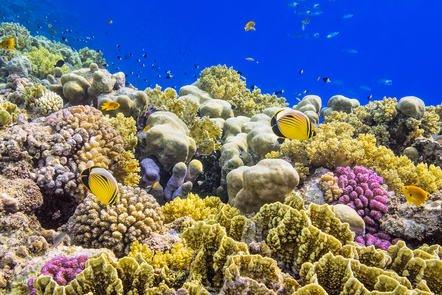
This course introduces the IUCN Red List of Ecosystems and its successful use and policy impact through real-world case studies. Learn how the Red List of Ecosystems is helping to sustain global biodiversity. Nature is under threat around the world. Understanding where ecosystems are at greatest risk allows us to act to sustain species and ecosystems.

Class Deals by MOOC List - Click here and see FutureLearn's Active Discounts, Deals, and Promo Codes.

The IUCN (International Union for Conservation of Nature) Red List of Ecosystems is a rigorous standardised assessment method that supports decision making while generating strategies for policy and management practice.
The Red List of Ecosystems is the global standard for ecosystem risk assessment, used by governments, NGOs, scientists and practitioners to sustain biodiversity worldwide.

Syllabus

Week 1: Introducing the IUCN Red List of Ecosystems
Week 2: Applying the Red List of Ecosystems

What will you achieve?
By the end of the course, you‘ll be able to...

  • describe the purpose of the IUCN Red List of Ecosystems
  • assess the benefits of the Red List of Ecosystems approach to ecosystem conservation and management
  • explore the process of completing ecosystem assessments
  • Identify the characteristics of ecosystems
  • explore the challenges of defining ecosystems
  • identify threats to ecosystems and how to measure them
  • classify Red List of Ecosystems outcomes and categories of risk
  • assess the Red List of Ecosystems in the landscape of conservation policies and tools

Who is the course for?

  • People interested in sustainability of the world’s ecosystems.
  • Practitioners who need to understand the IUCN Red List of Ecosystems approach, its purpose and its place relative to other conservation tools.
  • Decision makers who will value the scientific basis and global authority of Red List of Ecosystems assessments.
  • People interested in cutting-edge approaches to sustainable conservation.
  • People who seek to undertake their own ecosystem assessment using the Red List of Ecosystems method

The course was created for practitioners who need to understand the Red List of Ecosystems processes and decision-makers who will value the scientific basis and global authority of Red List of Ecosystems assessments.
The amount of time it takes you to complete this course will vary depending on your level of interest and experience of ecosystems.


Go to Class
MOOC List is learner-supported. When you buy through links on our site, we may earn an affiliate commission.

Related Courses

Sustainable Management in the Extractive Industry (FutureLearn) FutureLearn
SUMEX

Sustainable Management in the Extractive Industry (FutureLearn)

Explore the importance of sustainability in the extractive industry and what the solutions along 5 key action areas are. On this six-week course, you’ll discover the most pressing issues and practical challenges faced by decision makers within the extractive industry. You’ll critically reflect on sustainability, discover best practice strategies, and learn how to respond to sustainability challenges faced by the mineral resource extraction sector.

Aug 14th 2023
5-12 Weeks
The Great Sustainability Transition: Global Challenges, Local Actions (FutureLearn) FutureLearn
Leiden University

The Great Sustainability Transition: Global Challenges, Local Actions (FutureLearn)

Discover how global environmental crises are connected, their impacts, and how to take action in your local community. Learn from experts in environmental science at Leiden University. We are living in an era of unprecedented environmental change. As a result, we are experiencing biodiversity loss, climate change, and overuse of freshwater resources, to name just a few. All of these affect fundamental ecosystem processes, causing change on a local and global scale. On this four-week course from Leiden University, you’ll learn how these huge environmental crises are interconnected and how they impact our planet.

Jan 16th 2023
4 Weeks
How Food is Made. Understanding Food Processing Technologies (FutureLearn) FutureLearn
EIT Food,EIT,DIL

How Food is Made. Understanding Food Processing Technologies (FutureLearn)

Have you ever wondered how your food is processed before it reaches your plate? Find out with this online course. Learn more about processing technologies and the foods that are affected. Food processing isn’t a new concept, however, many people might not understand how and why it happens. On this course, you will improve your knowledge of food processing technologies and build confidence in the processed foods on the market.

Jan 2nd 2023
4 Weeks
Educating for Sustainable Development (ESD) in Schools and Universities (FutureLearn) FutureLearn
University College London

Educating for Sustainable Development (ESD) in Schools and Universities (FutureLearn)

Explore the global challenges facing sustainable development worldwide and how to introduce them in schools and HE institutions. Develop the skills to examine sustainable development with all learners. As part of the UN Sustainable Development Goals, schools and universities have a responsibility to educate all learners on sustainability. On this three-week course, you’ll gain an overview of the key issues relating to sustainability and how to deliver this knowledge, whether you teach in schools or higher education.

Oct 30th 2023
3 Weeks
Understanding Food Labels (FutureLearn) FutureLearn
University of Reading,EIT Food,EIT

Understanding Food Labels (FutureLearn)

Learn how to interpret food labels so you can make informed food choices and buy food that supports your health and wellbeing. Get the facts you need to put your trust in the food system. Huge amounts of information are provided on food product labels, but surveys have shown that we’re often unsure of its meaning. On this course, you’ll learn how to make sense of the regulations, data, and logos on packaging so that you can make more informed food choices.

Jan 2nd 2023
3 Weeks
Planet Earth: Understanding and Protecting our Environment (FutureLearn) FutureLearn
University of Leeds

Planet Earth: Understanding and Protecting our Environment (FutureLearn)

Learn about the physical geography of Earth and discover how to use this knowledge to protect our natural environment. Discover the Earth’s natural systems and how human activity affects them. On this two-week course from the University of Leeds, you will discover the processes of the hydrosphere, the geosphere, and the biosphere and explore the impact of human activity and climate change on our planet.

Feb 16th 2026
2 Weeks
Renewable Energy: Achieving Sustainability through Bioenergy (FutureLearn) FutureLearn
University of Leeds

Renewable Energy: Achieving Sustainability through Bioenergy (FutureLearn)

Understand the principles of bioenergy and learn how to harness this form of renewable energy to achieve sustainability. Learn about the principles and environmental implications of bioenergy. On this two week course, you will explore bioenergy, one of the most diverse and readily available sources of renewable energy. You’ll look into what types of biomass can be used and how sustainable energy solutions can be developed in a wide range of communities.

Sep 23rd 2024
2 Weeks
Compassion in Fashion: Sustainability and the Global Fur Trade (FutureLearn) FutureLearn
ACTAsia

Compassion in Fashion: Sustainability and the Global Fur Trade (FutureLearn)

Learn how fashion designers and businesses can make more compassionate choices to build fur-free, sustainable fashion brands. Explore why sustainability in fashion begins with fur-free. As the fashion industry’s future leaders and decision-makers, students in the fashion industry today have the potential to steer the industry to a fur-free and sustainable future. On this course, you’ll examine fashion sustainability through the lens of the fur industry.

Jan 2nd 2023
5-12 Weeks
Organising for the Sustainable Development Goals (SDGs) (FutureLearn) FutureLearn
Hanken School of Economics

Organising for the Sustainable Development Goals (SDGs) (FutureLearn)

What are the Sustainable Development Goals and how will we achieve them? Learn how you can work towards the United Nations’ SDGs. Learn how to tackle sustainability challenges through the 17 SDGs. The world is facing unprecedented and pressing social and environmental challenges. On this course, you’ll explore the what, why and how of the 17 SDGs and understand what key global challenges remain as we work towards a sustainable and inclusive world.

Jan 20th 2025
5-12 Weeks
Environmental Challenges: Human Impact in the Natural Environment (FutureLearn) FutureLearn
University of Leeds

Environmental Challenges: Human Impact in the Natural Environment (FutureLearn)

Complexity in nature arises from a myriad of simple interactions. How can this lead to an unpredictable dynamism? Complex patterns in ecology are not always causal and predictable. Populations have their own dynamics that can be independent of external environmental conditions. In this course we look at the way that natural systems are organised; although living systems are complex, there are also some fairly constant patterns and relationships.

Nov 11th 2024
2 Weeks
Renewable Energy: Sustainable Electricity Supply with Microgrids (FutureLearn) FutureLearn
University of Leeds

Renewable Energy: Sustainable Electricity Supply with Microgrids (FutureLearn)

Explore approaches to electrification, microgrids, and how to harness this form of renewable energy to achieve sustainability. Learn and assess different electrification approaches from around the world. On this two-week course, you will learn how electricity is generated globally and explore different approaches to electrification. You will then learn technical aspects of electrification options via a national grid, off grid, micro and mini grids and reflect on the barriers to affordable, clean and fair access to electricity.

Sep 23rd 2024
2 Weeks