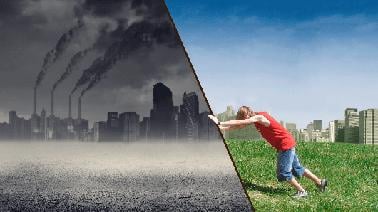
Using real examples, learn how ecology can guide urban design to avert environmental disasters and improve people’s lives. Too often modern cities and suburbs are disorganized places where most new development makes daily life less pleasant, creates more traffic congestion, and contributes to climate change. This trend has to change; and our course is going to show you how.
Class Deals by MOOC List - Click here and see EdX's Active Discounts, Deals, and Promo Codes.
Ecodesign means integrating planning, urban design and the conservation of natural systems to produce a sustainable built and natural environment. Ecodesign can be implemented through normal business practices and the kinds of capital programs and regulations already in use in most communities. We will show you how ecodesign has already been used for exceptional projects in many cities and suburbs—from Hammarby Sjöstad in Stockholm to False Creek North in Vancouver to Battery Park City in Manhattan, as well as many smaller-scale examples that can be adopted in any community. Cities and suburbs built according to ecodesign principles can and should become normal, instead of just a few special examples, transforming urban development into desirable, lower-carbon, compact and walkable communities and business centers.
As this course describes specific solutions to the vexing urban challenges we all face, course participants can see how these ideas might be applied in their own area. Participants will learn the conceptual framework of ecodesign, see many real, successful examples, and come to understand the tools, processes, and techniques for policy development and implementation.
Ecodesign thinking is relevant to anyone who has a part in shaping or influencing the future of cities and suburbs – citizens, students, designers, public officials, and politicians. At the conclusion of the course participants will have the tools and strategies necessary to advocate policies and projects for a neighbourhood or urban district using the ecodesign framework.
What you'll learn
- The principles of ecodesign and why it is important as a response to the current disorganized urban growth model
- Ways to adapt to a changing climate, and ways to mitigate climate change locally
- Policies to balance auto and airplane transportation with walking, cycling, transit and high-speed rail
- Ways of designing urban and suburban regulations to make cities more livable and environmentally compatible
- Strategies for designing and managing the public realm, plus Innovative arrangements and processes for implementing ecodesign
Course Syllabus
Week 1: How the usual urban growth model operates and why it needs to change.
Three growth models that we can learn from: Vancouver, Helsinki, and Portland. The six axioms of Ecodesign
The four urgent sets of issues that are at the heart of this course.
Week 2: Adapting to climate change and limiting global warming locally:
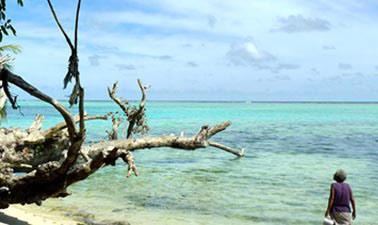
Ways to adapt to sea level rise, changing coastlines and storm surges;
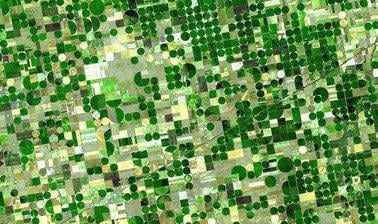
Adapting to other climate risks and to threats to global food supplies.
Limiting global warming locally by using alternative energy sources.
Prototypes for urban and environmental harmony – Stockholm’s Hammarby Sjostad, Abu Dhabi’s Masdar City, Vancouver’s Southeast False Creek Village.
Week 3: Balancing cars and other kinds of transportation, assuming, as we do, that the automobile is here to stay.
Toronto’s Big Move and other balanced transportation systems – where the most energy-efficient mode for each kind of trip is also the most attractive.
Transit-oriented development – how the Washington Metro is transforming suburban Tyson’s Corner; and how BRT could also restructure suburbs in places where rail transit is not economic.
Cutting traffic related deaths – the Sweden and New York examples.
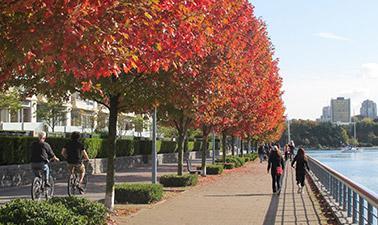
Improving walkability and cycling.
High-speed rail as the backbone of multi-city regional development.
Week 4: Making cities more livable and environmentally compatible.
The experiential perspective.
Blind spots in development regulations which make places less livable, and spread out urban growth far more than is necessary;
Relating regulations to nature.
The power of neighbourhood – history and current relevance of a key concept for urban and suburban structure.
The benefits of mixed use and diversity – managing the mix for neighbourliness.
Ways to make housing more affordable.
Making living in compact, urban places competitive with suburban lifestyles.
The relationship of living and working in walkable places to overall health.
Week 5: Designing and managing the public realm.
Social demands for public space; maximizing the experiential dimension.
Economic demands for public space; maximizing quality, utility and value.
People-oriented public space.
Creating complete streets with primacy for pedestrians and green infrastructure.
Managing the public realm as an active place, for safety and to serve people better.
Recovering forgotten urban places and turning industrial waterfronts into parks and neighbourhoods – Brooklyn Bridge Park, Battery Park City in New York, False Creek North in Vancouver.
Re-creating a natural environment in urban settings.
Week 6: Implementing Ecodesign.
Public and private, we all have a role in implementation;
Public-private collaboration is essential for livable, sustainable cities.
Implementing adaptation to climate change and reducing causes of global warming locally.
First steps towards balancing transportation systems.
Making regulations more discretionary and development management more transactional.
Financing the public realm - leveraging the relationship between development rights and land values.
Concluding discussion.