Easing the burden of obesity, diabetes and cardiovascular disease (Coursera)

Easing the burden of obesity, diabetes and cardiovascular disease (Coursera)

This course is multidisciplinary in nature, and aims to equip the global audience of interested lay people, people with chronic disease, public health researchers, health clinicians, students, administrators, and researchers to reflect on the overall impact of the burden of chronic disease. It shows how all chronic diseases (obesity, diabetes, cardiovascular disease, chronic obstructive pulmonary disease, and cancer) are related by a set of common causes, and that such diseases should be tackled, not individually, but as part of a complex system, with interrelated contributing factors. These factors are genetic, environmental, psychological, economic, social, developmental, and media related.

Class Deals by MOOC List - Click here and see Coursera's Active Discounts, Deals, and Promo Codes.

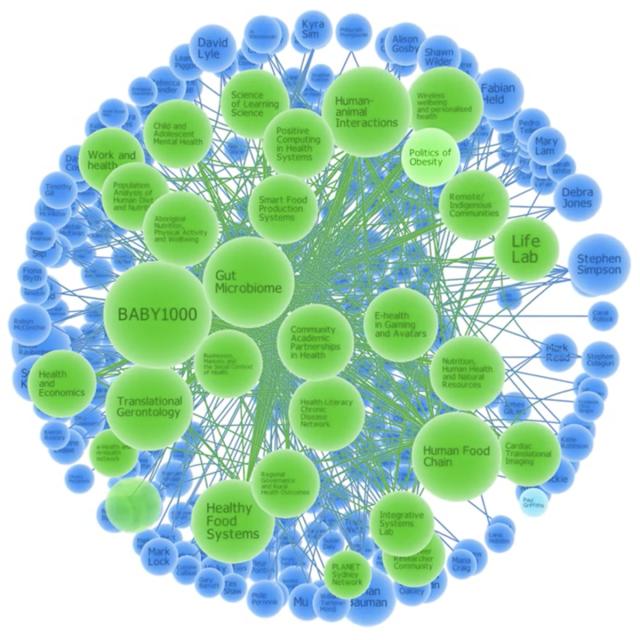
The Charles Perkins Centre at the University of Sydney is a unique interdisciplinary education and research hub which seeks solutions to chronic disease through a complex systems approach. Academics in many disciplines (in Science and Medicine, but also in Architecture, Humanities, Law etc) work in a collaborative fashion to produce novel solutions to the problems of chronic disease. All contributors and participants in this course are members of the Charles Perkins Centre and will speak from the unique interdisciplinary perspective that this Centre affords.
The course will describe a complex systems approach as the most productive way to ease the burden of chronic disease. It then describes these diseases in detail, their risk factors, and the environmental and biological factors that have led to the current epidemic of obesity, diabetes and cardiovascular disease. Finally, the solutions – and more importantly the process for finding solutions- is the subject of the last module. No one approach by itself can ever be the answer, and certainly not a simple diet and exercise approach.
The entire Chronic Disease Course consists of 5 modules and takes about 5 weeks to complete. Completion certificates are issued on the basis of participation in all 6 modules.
What You Will Learn

  • How the Charles Perkins Centre recruits interdisciplinary teams to ease the burden of chronic disease
  • How a complex systems approach is necessary to provide solutions to a complex problem
  • The fundamentals of chronic disease research and where it is heading
  • The biggest risk factors for chronic disease and their global incidence
  • The biological, genetic, social, regulatory, and other influences that have inflated these risk factors
  • How to provide solutions globally for the reduction of chronic disease

Syllabus

WEEK 1
Module 1 – Setting the Scene
This module looks at the impact of the increasing incidence globally of non-communicable, or chronic, diseases and how the Charles Perkins Centre is developing a new approach to this complex challenge.

WEEK 2
Module 2 - The Big Non-Communicable Diseases
This module outlines the five major non-communicable diseases, Obesity, Diabetes, Cardiovascular Disease, Chronic Obstructive Pulmonary Disease and Cancer, and the many risk factors that they share.

WEEK 3
Module 3 - The key risk factors for chronic disease
In this module we look more closely at the main risk factors for the non-communicable diseases and at the impact our modern environment is having on the global burden of these preventable diseases.

WEEK 4
Module 4 - How did we get here?
This module will provide an overview of the main factors in our biology, our environment, our food production systems, and our human psychology that have made us susceptible to the chronic disease health crisis.

WEEK 5
Module 5 - Solutions
In this module we will consider in detail the complex challenges of finding solutions to chronic diseases and how these could be brought together in developing a systems approach to address these major chronic diseases and the threat they pose to individual and population health.

WEEK 6
Wrapping up
This module gives you time to complete your final assignment and to reflect on what you have learned in the course.
Go to Class
MOOC List is learner-supported. When you buy through links on our site, we may earn an affiliate commission.

Related Courses

Curanderismo: Global & Cultural Influences of Traditional Healing (Coursera) Coursera
University of New Mexico

Curanderismo: Global & Cultural Influences of Traditional Healing (Coursera)

As the last of four courses on Curanderismo, the art of Hispanic/Latino traditional medicine, this course focuses specifically on traditional healing using different techniques of many countries around the world. As an educational and cultural platform, this course will share a number of traditional global perspectives.

Sep 14th 2026
5-12 Weeks
Everyday Chinese Medicine (Coursera) Coursera
The Chinese University of Hong Kong

Everyday Chinese Medicine (Coursera)

This course aims to serve as an education platform on Chinese medicine (CM) for the general public. Our primary goal is to empower healthcare choices by promoting awareness and practical application on CM diagnostic and therapeutic approaches, as well as regulation on CM services and herbal products using international examples.

Sep 14th 2026
5-12 Weeks
Clinical Kidney, Pancreas and Islet Transplantation (Coursera) Coursera
Leiden University,Leiden University Medical Center

Clinical Kidney, Pancreas and Islet Transplantation (Coursera)

Kidney transplantation is a major advance of modern medicine which provides high-quality of life for patients with end-stage renal disease. What used to be an experimental, risky, and very limited treatment option more than 50 years ago is now routinely performed in many countries worldwide. The number of renal transplants is expected to rise sharply in the next decade since the proportion of patients with end stage renal disease is increasing.

Sep 14th 2026
4 Weeks
The Brain and Space (Coursera) Coursera
Duke University

The Brain and Space (Coursera)

This course is about how the brain creates our sense of spatial location from a variety of sensory and motor sources, and how this spatial sense in turn shapes our cognitive abilities. Knowing where things are is effortless. But “under the hood,” your brain must figure out even the simplest of details about the world around you and your position in it.

Sep 14th 2026
5-12 Weeks
An Introduction to the U.S. Food System: Perspectives from Public Health (Coursera) Coursera
Johns Hopkins University

An Introduction to the U.S. Food System: Perspectives from Public Health (Coursera)

A food system encompasses the activities, people and resources involved in getting food from field to plate. Along the way, it intersects with aspects of public health, equity and the environment. In this course, we will provide a brief introduction to the U.S. food system and how food production practices and what we choose to eat impacts the world in which we live. Through several case studies, we will discuss some key historical and political factors that have helped shape the current food system and consider alternative approaches from farm to fork.

Sep 14th 2026
5-12 Weeks
Epidemics (Coursera) Coursera
University of Hong Kong

Epidemics (Coursera)

“If history is our guide, we can assume that the battle between the intellect and will of the human species and the extraordinary adaptability of microbes will be never-ending.” Despite all the remarkable technological breakthroughs that we have made over the past few decades, the threat from infectious diseases has significantly accelerated. In this course, we will learn why this is the case by looking at the fundamental scientific principles underlying epidemics and the public health actions behind their prevention and control in the 21st century.

Sep 14th 2026
5-12 Weeks
Medical Cannabis for Pain Control (Coursera) Coursera
Technion - Israel Institute of Technology

Medical Cannabis for Pain Control (Coursera)

Cannabis is a group of flowering plants that has been long used for industrial, recreational and medical purposes. When relating to its medical use, the terms "Medical Cannabis" or "Medical marijuana" has become prevalent. In this course we will use the term "Medical Cannabis". Nowadays, Medical Cannabis involves multiple medical disciplines such as neuroscience, pain, pharmacology, oncology, psychiatry and more. Moreover, it has cultural, agricultural and social, legal and political implications.

Sep 14th 2026
5-12 Weeks
Biochemical Principles of Energy Metabolism (Coursera) Coursera
Korea Advanced Institute of Science and Technology - KAIST

Biochemical Principles of Energy Metabolism (Coursera)

Everyone knows that energy is essential for sustaining life. How can you define energy in life? Have ever thought about ways of how carbohydrates like glucose from your diet can be used for extracting energy? A scientific field that focuses on energy production and flow though living cells and organisms is called bioenergetics. Energy metabolism covers various biochemical ways of energy transformation and regulatory mechanisms of over thousands chemical reactions. Without fine control of those metabolic processes, cells and organisms cannot maintain activities linked to life.

Sep 14th 2026
5-12 Weeks
A Life of Happiness and Fulfillment (Coursera) Coursera
Indian School of Business - ISB

A Life of Happiness and Fulfillment (Coursera)

What are the determinants of a happy and fulfilling life? This is surely one of life’s biggest questions, and a question that has interested many of our ancestors. Buddha famously gave up his kingdom in search of happiness. Several Greek philosophers (from Aristotle to Epicurus and Plato to Socrates) had their own views on what it takes to be happy. And of course, we all have our own theories about happiness too.

Sep 14th 2026
5-12 Weeks
eHealth: More than just an electronic record (Coursera) Coursera
The University of Sydney

eHealth: More than just an electronic record (Coursera)

The MOOC, "eHealth: More than just an electronic record!", is multidisciplinary in nature, and aims to equip the global audience of health clinicians, students, managers, administrators, and researchers to reflect on the overall impact of eHealth on the integration of care. It explores the breadth of technology application, current and emerging trends, and showcases both local and international eHealth practice and research.

Sep 14th 2026
5-12 Weeks