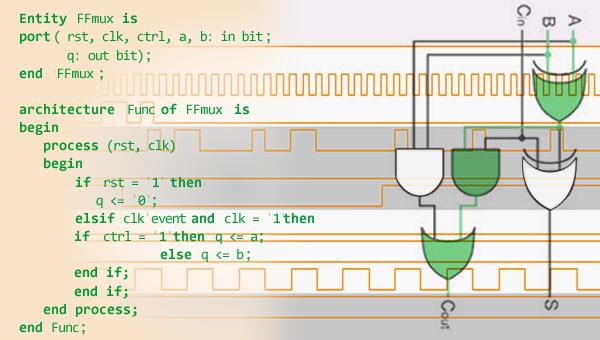
This course provides basic knowledge about digital design and implementation using VHDL as the description language, as well as skills in the use of computer-based design and simulation tools.
...
This course provides basic knowledge about digital design and implementation using VHDL as the description language, as well as skills in the use of computer-based design and simulation tools.
...
Examining and exploring the various types of images and graphic elements will be the focus of this course. We will start with color theory to distinguish between CMYK, Pantone and RGB color options and their usages. Then we will review the various types of images used in both print and digital design projects. Finally we will look at logo designs to determine what makes for the best images and graphic elements for corporate branding and imaging.
This course will show you how to build a massive open online course (MOOC), including lots of tips and tricks, at an affordable cost. It covers content creation and content sourcing from the web, assessment at large scale using quizzes and peer assignments, communication between learners and course design. Not only will this course show you how to build a MOOC, it will provide you with support from tutors and fellow participants for four months. Depending on your level of interest, it will require between two and four hours of effort per week. This course is offered by a team from five European institutions working in content development, online learning and MOOCs.
This course provides an introduction to elearning expectations; elearning basic skills and strategies; and elearning resources which support student success. This course is designed for students interested in taking online college courses and/or becoming more successful online college students. There are no prerequisites for this course.
In this course, you’ll learn how to apply automation to manage fleets of computers. You’ll understand how to automate the process for deploying new computers, keeping those machines updated, managing large-scale changes, and a lot more. We'll discuss managing both physical machines running in our offices and virtual machines running in the Cloud.
This course in computer architecture will take you from an understanding of digital design using combinational logic and synchronous sequential building blocks to building your own single-cycle multicycle, and pipelined microprocessors.
This first course in Digital Design will take you from Zero to One - from no previous experience, to being able to design amazing digital systems. This is the first step on the path to computer engineering. Digital systems have revolutionized our world. From television to cell phones to GPS to warfare to automobiles to medicine to distance education, computers and digital processing have reshaped the way we live and work. The semiconductor industry has grown from $21B in 1985 to $412B in 2019, making it one of the largest sectors of the economy. Computers are also a vital part of daily practice in every field of science and engineering.
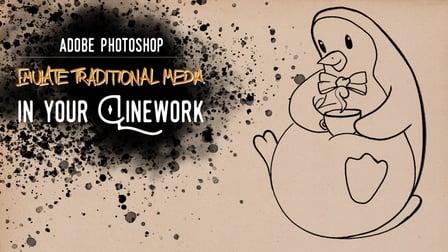
What You'll Learn. One of Photoshop's most amazing features for creating digital drawings is the possibility to influence how your brush tool works. This becomes particularly exciting when you use Photoshop to emulate traditional drawing media, like for example pencil, watercolor, ink or brush pen.
This course has been created for Mechanical, Manufacturing, and Mechatronics Engineers. The "Digital Manufacturing and Industry 4.0" course is intended for those who want to comprehend and navigate the transformative concepts and technologies that shape modern Industry. Throughout this course, participants will learn about the fundamental principles of digital manufacturing, the path to Industry 4.0, and the emerging technology that drives smart design and production processes through three modules.
In this project-centered course*, you’ll design, build, and publish a basic website that incorporates text, sound, images, hyperlinks, plug-ins, and social media interactivity. We’ll provide you with step-by-step instructions, exercises, tips, and tools that enable you to set up a domain name, create an attractive layout for your pages, organize your content properly, ensure that your site functions well across different operating systems and on mobile devices, keep your site safe, and finally, let people know your site is online. We’ll even show you how to track your visitors.
In this course, we'll give you the tools to quickly identify and solve real-world problems that you might come across in your IT role. We'll look at a bunch of different strategies and approaches for tackling the most common pitfalls of your code and IT infrastructure. You'll learn strategies for approaching almost any technical problem and then see how those apply to solving different real-world scenarios.
This course is designed to teach you the foundations in order to write simple programs in Python using the most common structures. No previous exposure to programming is needed. By the end of this course, you'll understand the benefits of programming in IT roles; be able to write simple programs using Python; figure out how the building blocks of programming fit together; and combine all of this knowledge to solve a complex programming problem.
In this course, you’ll learn how to keep track of the different versions of your code and configuration files using a popular version control system (VCS) called Git. We'll also go through how to setup an account with a service called GitHub so that you can create your very own remote repositories to store your code and configuration.