Diffusion and Mass Transfer (FutureLearn)

Diffusion and Mass Transfer (FutureLearn)

Master a core field of chemical engineering by learning about transport phenomena like diffusion, convection, and mass transfer. This six-week course from Taipei Medical University (TMU) provides a comprehensive overview of transport phenomena, with a particular focus on diffusion, mass transfer, and convection. Once you’ve understood the fundamentals of all three processes, you’ll learn how to analyse them using coefficient models.

Class Deals by MOOC List - Click here and see FutureLearn's Active Discounts, Deals, and Promo Codes.

Understand and analyse transport phenomena
Transport phenomena like heat transfer, mass transfer, and momentum transfer are vital to the study of chemical engineering. Understanding them is the key to developing advanced separation techniques.

Gain an introduction to diffusion, convection, and mass transfer
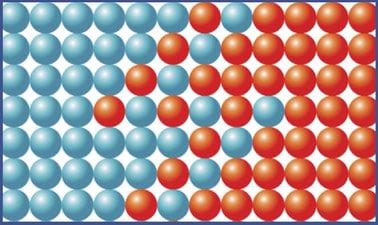
You’ll start the course with an overview of the basic concepts and mechanisms of three transport phenomena: diffusion, convection, and mass transfer.
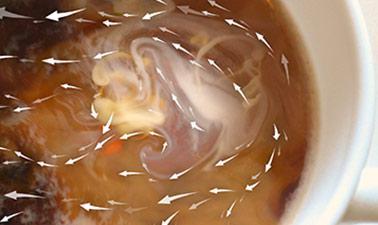
You’ll explore different types of diffusion and mass transfer, learning how you can identify them in everyday life.

Solve equations using the mass transfer and diffusion coefficient models
Once you’ve understood the principles of diffusion, convection, and mass transfer, you’ll begin mastering equations for analysing them. You’ll focus on two basic models for analysis, known as the diffusion coefficient model and the mass transfer coefficient model.
By the end of the course, you’ll have a deeper understanding of essential transport phenomena, and the skills you need to undertake advanced separation techniques.

Syllabus

Week 1: Introduction to diffusion and mass transfer
Week 2: Diffusion in dilute solution
Week 3: Diffusion coupled with convection
Week 4: Mass transfer in different coordinates
Week 5: Mass transfer coefficient model
Week 6: Correlations for Mass transfer

What will you achieve?
By the end of the course, you‘ll be able to...

  • Explain the basic concept of mass transfer and diffusion
  • Identify mass transfer in daily-life applications
  • Expalin the differences between diffusion coefficient model and mass transfer coefficient model
  • Solve mass flux and concentration profiles for simple problems using the mass transfer coefficient model
  • Solve mass flux and concentration profiles for simple problems using the diffusion coefficient model
  • Investigate the complicated problems involving diffusive and convective mass transfers

Who is the course for?
This course is designed for anyone interested in learning more about a vital area of chemistry and chemical engineering.
Learners will need a basic understanding of mathematics or engineering, and the ability to solve linear algebra and differential equations.

Go to Class
MOOC List is learner-supported. When you buy through links on our site, we may earn an affiliate commission.

Related Courses

How Does the Body Use DNA as a Blueprint? (FutureLearn) FutureLearn
University of Aberdeen

How Does the Body Use DNA as a Blueprint? (FutureLearn)

Get an introduction to the basics of molecular biology, and how DNA code works. Find out how the body repairs and regulates itself. Every part of the body is made according to a code that is carried in the body’s cells. This code is called DNA, and knowing how it works is fundamental to understanding how the body regulates itself throughout our lives.

Self Paced
3 Weeks
Introduction to Semiconductor Process 1 (Coursera) Coursera
Korea Advanced Institute of Science and Technology - KAIST

Introduction to Semiconductor Process 1 (Coursera)

This course aims to provide a general understanding of semiconductor process. This course explores the principles and basic theory of semiconductor device and process. Furthermore, the students will learn the overall semiconductor process such as oxidation, diffusion, ion implantation, lithography, etching, thin film deposition, plasma, metallization, and packaging.

Sep 7th 2026
5-12 Weeks
Microstructural Evolution of Materials Part 2: Defects and Diffusion (edX) EdX
MIT,MITx

Microstructural Evolution of Materials Part 2: Defects and Diffusion (edX)

Discover the principles of point defect evolution that explain materials science phenomena. This series introduces various kinetic phenomena in various classes of materials. The course explains how materials develop different microstructure based on different processing techniques, and it relates these microstructures to the properties of the material.

Self Paced
Self-Paced
Discovering Science: Science Writing (FutureLearn) FutureLearn
University of Leeds

Discovering Science: Science Writing (FutureLearn)

What science discoveries will you choose to write about? Without science writing, science could not really exist. By recording experiments and publishing the results of studies and discoveries, scientists can share their important work, and find an engaged audience. Science writing takes many forms: from press releases to video scripts. You’ll learn about different types of science writing, and look at the factors which you need to consider to write a story.

Self Paced
2 Weeks
Shape and Property Control of Metals I & II (Coursera) Coursera
Arizona State University

Shape and Property Control of Metals I & II (Coursera)

This course introduces students to the basic concepts of shaping materials and their impacts on properties and structure. An introduction to the fundamentals of diffusion in a solid follows. We present different types of diffusion mechanisms and their dependence on temperature. The role of dislocation on mechanical properties and how it can be used to strengthen materials will be shown.

Aug 24th 2026
5-12 Weeks
Chemical Engineering: Review of Enabling Sciences through Problem Solving  (Canvas net) Canvas Network
University of Alabama in Huntsville - UAH

Chemical Engineering: Review of Enabling Sciences through Problem Solving (Canvas net)

By introducing problems that chemical engineers are asked to solve and exploring the reasons why the enabling sciences are required to solve them, participants will gain a better understanding of the underlying disciplines supporting the work in chemical engineering.

No sessions available
No Information
Science & Cooking: From Haute Cuisine to Soft Matter Science (chemistry) (edX) EdX
HarvardX,Harvard University

Science & Cooking: From Haute Cuisine to Soft Matter Science (chemistry) (edX)

Top chefs and Harvard researchers explore how everyday cooking and haute cuisine can illuminate basic principles in chemistry, physics, and engineering. Learn about food molecules and how chemical reactions can affect food texture and flavor. During each module of this course, chefs reveal the secrets behind some of their most famous culinary creations — often right in their own restaurants. Inspired by such cooking mastery, the Harvard team will then explain the science behind the recipe.

Self Paced
Self-Paced
An Introduction to Cryptography (FutureLearn) FutureLearn
Coventry University,Institute of Coding

An Introduction to Cryptography (FutureLearn)

Explore how code breakers and spies influenced cryptography and investigate the role it plays in modern secure communication. Investigate the security of encrypted data. Is it possible to prove the security of encrypted data? Will every algorithm fail given sufficient time or computing power? On this course you will get an introduction to cryptography and cryptanalysis. From ancient examples of secret messages and the spies that cracked them to modern cryptographic applications, you will have the opportunity to explore the foundations of data security.

Self Paced
2 Weeks
Chemical Engineering Thermodynamics 2 (Coursera) Coursera
Korea Advanced Institute of Science and Technology - KAIST

Chemical Engineering Thermodynamics 2 (Coursera)

An appreciation of thermodynamics is required to become a chemical and biomolecular engineer. Thermodynamics can assess the viability of a process and is one of the curriculum's most essential topics. The principles are utilized in following engineering courses (kinetics, mass transfer, design, materials) and are applicable to numerous engineering disciplines. The increased emphasis on energy usage and transformation as a result of rising demand, diminishing supply, and global warming necessitates that the engineers who will tackle these issues have a firm grasp of thermodynamics.

Aug 31st 2026
5-12 Weeks