Introduction to Process Safety and Risk Analysis (Coursera)

Introduction to Process Safety and Risk Analysis (Coursera)

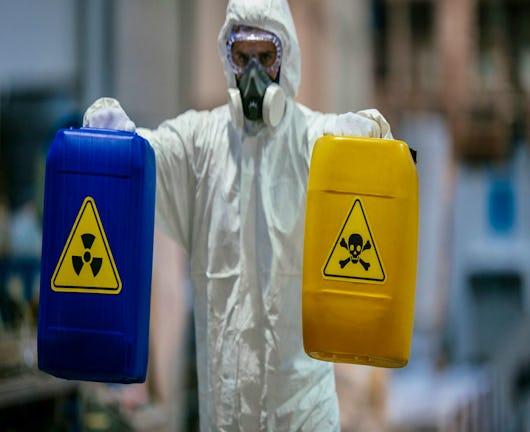
This course aims to provide process safety experience for engineers, particularly relevant to chemical engineering but applicable to any field involving process operations. This course introduces you to the important, practical, value-added skills and information that will aid your career, or preparation for a career, in chemical process engineering.

Class Deals by MOOC List - Click here and see Coursera's Active Discounts, Deals, and Promo Codes.

These skills include an understanding of how to identify, evaluate, assess, and mitigate hazards or risks in the chemical process industry. You will gain insight and skills as you study mistakes of the past and discover how risk and safety will become a bigger and more important part of your decision-making process, both at work and at home.

Syllabus

Getting Started & Why Study Chemical Process Safety?
After this module, you will be able to recognize and understand the importance of the study of process safety in the chemical process industry. You will be able to examine and become familiar with important historical events that have shaped the study of chemical process safety and you will be equipped with important resources necessary for the study of chemical process safety.

Risk Identification and Evaluation
At the end of this module, you will be identify risk involved in various activities related to the chemical process industry, as well as evaluate this risk using checklist analysis. You will be able to manage risk using safeguards and continue to use lessons from past chemical process safety incidents to inform the implementation of safer solutions and work practices.

Risk Assessment - Part 1
At the end of this module, you will be able to apply probability theory to estimate the failure frequencies of equipment and safeguards. You will be able to construct event trees and make calculations for the probabilities of result occurrences. You will also continue to use lessons from past chemical process safety incidents to inform the implementation of safer solutions and work practices.

Risk Assessment - Part 2
At the end of this module, you will be able to construct fault trees and make calculations for the probabilities of event occurrences and be able to identify independent layers of protection. You will be able to use layer of protection analysis to perform risk assessment and apply inherently safer design principles.


Go to Class
MOOC List is learner-supported. When you buy through links on our site, we may earn an affiliate commission.

Related Courses

Detect and Mitigate Ethical Risks (Coursera) Coursera
CertNexus

Detect and Mitigate Ethical Risks (Coursera)

Data-driven technologies like AI, when designed with ethics in mind, benefit both the business and society at large. But it’s not enough to say you will “be ethical” and expect it to happen. We need tools and techniques to help us assess gaps in our ethical behaviors and to identify and stop threats to our ethical goals. We also need to know where and how to improve our ethical processes across development lifecycles.

Aug 24th 2026
5-12 Weeks
Human Health Risks, Health Equity, and Environmental Justice (Coursera) Coursera
University of Michigan

Human Health Risks, Health Equity, and Environmental Justice (Coursera)

The fourth and final course of the Impacts of the Environment on Global Public Health specialization will cover two topics. The first is environmental justice – that is, avoiding an inequitable distribution of environmental health threats in our population, and ensuring a healthy and safe environment and health equity for all. The second is risk assessment and management, a framework that can be utilized to assess and quantify human health risks, and to identify appropriate approaches to mitigating those risks and promoting better health. We will explore the steps involved in risk assessment, as well as how risk assessment can incorporate and address environmental justice issues.

Aug 31st 2026
4 Weeks
Chemical Engineering: Shaping a Sustainable Future (FutureLearn) FutureLearn
University of Leeds

Chemical Engineering: Shaping a Sustainable Future (FutureLearn)

Learn how chemical engineering can help to solve global challenges and explore its role in delivering sustainable development. Understand how chemical engineers can provide sustainable solutions. Chemical engineers are leading the way in providing answers to global challenges such as climate change, food security, and effective healthcare. On this two-week course, you will be introduced to the exciting world of chemical engineering. You’ll explore how chemical engineers develop and design chemical manufacturing processes to provide sustainable solutions.

Self Paced
2 Weeks
Diffusion and Mass Transfer (FutureLearn) FutureLearn
Taipei Medical University

Diffusion and Mass Transfer (FutureLearn)

Master a core field of chemical engineering by learning about transport phenomena like diffusion, convection, and mass transfer. This six-week course from Taipei Medical University (TMU) provides a comprehensive overview of transport phenomena, with a particular focus on diffusion, mass transfer, and convection. Once you’ve understood the fundamentals of all three processes, you’ll learn how to analyse them using coefficient models.

Self Paced
5-12 Weeks
Risk & Return (edX) EdX
Columbia University,ColumbiaX

Risk & Return (edX)

Learn how to measure the risk and return of equity and debt; and compute the weighted average of cost of capital. In this course, you will learn to estimate the expected return of equity and debt. You will also learn to estimate the weighted average cost of capital (WACC), the opportunity cost of capital you should use when discounting the free cash flows to value a firm.

Self Paced
Self-Paced
A Resilient Future: Science and Technology for Disaster Risk Reduction (edX) EdX
École Polytechnique Fédérale de Lausanne

A Resilient Future: Science and Technology for Disaster Risk Reduction (edX)

Discover how science and technology help us reduce disaster risk and increase resilience. This course aims to introduce participants to existing and emerging technologies suitable for disaster risk reduction while promoting the overall aim of sustainable development. The course focuses on three main natural hazards- floods, landslides and earthquakes. It also discusses the challenges and limits of adapting and adopting technologies depending on context (Global North and Global South) with examples from Switzerland, Nepal, Colombia, Philippines and other countries.

Self Paced
Self-Paced
Proyecto Final: Diseño y Gestión de Proyectos de Desarrollo (Coursera) Coursera
Inter-American Development Bank - IDB

Proyecto Final: Diseño y Gestión de Proyectos de Desarrollo (Coursera)

Los proyectos de desarrollo son cruciales para mejorar vidas y acelerar el desarrollo económico y social en América Latina y el Caribe. A lo largo de los tres cursos que componen la Especialización en Diseño y Gestión de Proyectos de Desarrollo has fortalecido tus habilidades para diseñarlos y gestionarlos de manera adecuada con el fin de lograr los resultados esperados.

Aug 31st 2026
2 Weeks
Introduction to Risk Management (Coursera) Coursera
University of California, Irvine

Introduction to Risk Management (Coursera)

In this course, you will learn about risk assessment techniques and how to implement a number of strategies that will ensure the protection of assets. You will learn about the relationship between assets, vulnerabilities, threats, and risks. You will also engage with a number of current case studies in the industry that illustrate the material. You will leave the course with skills relating to threat modeling and business continuity planning that have direct applications at your current job or in your future career.

Jun 29th 2026
4 Weeks
Chemical Engineering Thermodynamics 2 (Coursera) Coursera
Korea Advanced Institute of Science and Technology - KAIST

Chemical Engineering Thermodynamics 2 (Coursera)

An appreciation of thermodynamics is required to become a chemical and biomolecular engineer. Thermodynamics can assess the viability of a process and is one of the curriculum's most essential topics. The principles are utilized in following engineering courses (kinetics, mass transfer, design, materials) and are applicable to numerous engineering disciplines. The increased emphasis on energy usage and transformation as a result of rising demand, diminishing supply, and global warming necessitates that the engineers who will tackle these issues have a firm grasp of thermodynamics.

Aug 31st 2026
5-12 Weeks
A General Approach to Risk Management (Coursera) Coursera
University System of Georgia

A General Approach to Risk Management (Coursera)

Every organization uses its information to support its business operations. When there are threats in the internal and external environments, they create the risk of information loss or damage. This course examines the design and construction of a risk management program, including policies and plans, to support the identification and treatment of risk to the organization’s information assets.

Aug 24th 2026
5-12 Weeks
Strategic Edge Security Management (Coursera) Coursera
LearnQuest

Strategic Edge Security Management (Coursera)

This course is designed for Enterprise IT Leaders, Cybersecurity Professionals, and Cloud Service Providers. This final course in the series looks at edge security from a strategic perspective. By the end of this course, learners will be able to explain the impact of edge computing breaches, identify edge computing risk identification methodologies, estimate cyber-attack probability with threat data and trends, prioritize potential risks specific to edge computing environments, develop risk mitigation strategies, list real-time monitoring and incident response solutions, list options involved with harmonizing edge computing standards across different regions and industries, and more.

Aug 31st 2026
3 Weeks