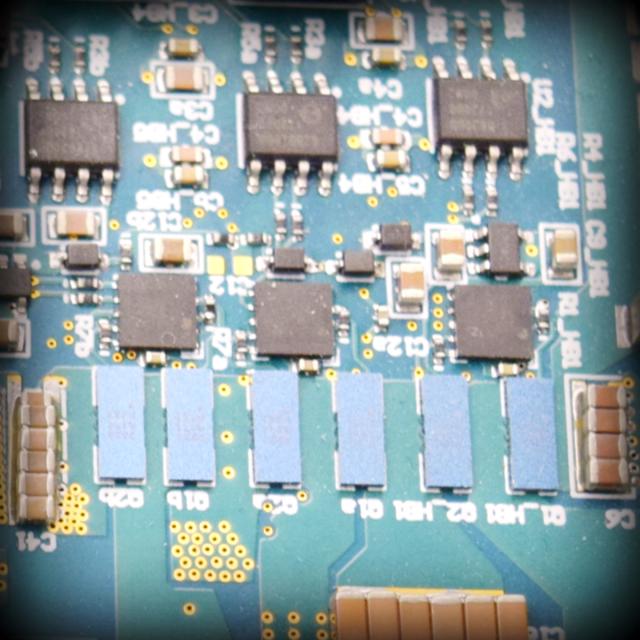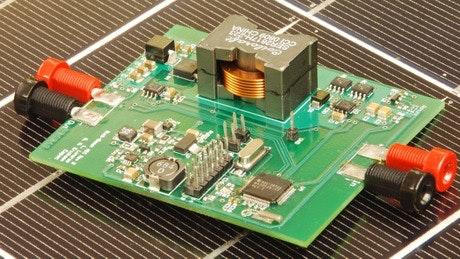
Current-Mode Control (Coursera)

Current-Mode Control (Coursera)

This is Course #4 in the Modeling and Control of Power Electronics course sequence. The course is focused on current-mode control techniques, which are very frequently applied in practical realizations of switched-mode. Practical advantages of peak current mode control are discussed, including built-in overcurrent protection, simpler and more robust dynamic responses, as well as abilities to ensure current sharing in parallel connected converter modules.

Class Deals by MOOC List - Click here and see Coursera's Active Discounts, Deals, and Promo Codes.

For peak current-mode controlled converters, slope compensation, and high-frequency effects are discussed in detail. Upon completion of the course, you will be able to understand, analyze, model, and design high-performance current-mode controllers for dc-dc power converters, including peak current-mode controllers and average current-mode controllers.
We strongly recommend students complete the CU Boulder Power Electronics specialization as well as Course #1 (Averaged-Switch Modeling and Simulation) before enrolling in this course (the course numbers provided below are for students in the CU Boulder's MS-EE program):
Introduction to Power Electronics (ECEA 5700)
Converter Circuits (ECEA 5701)
Converter Control (ECEA 5702)
Averaged-Switch Modeling and Simulation (ECEA 5705)
After completing this course, you will be able to:
● Understand conducted electromagnetic interference (EMI) and the need for input filter
● Understand input filter design principles based on attenuation requirements and impedance interactions.
● Design properly damped single-stage input filters.
● Design properly damped multi-stage input filters.
● Use computer-aided tools and simulations to verify input filter design
Course 4 of 5 in the Modeling and Control of Power Electronics Specialization

Syllabus

WEEK 1
Peak Current-Mode Control: Simple Model
Introduction to peak current-mode control, simple model, and the need for slope compensation

WEEK 2
Peak Current-Mode Control: More Accurate Model
More accurate averaged model, averaged circuit simulations, and design of control loops

WEEK 3
High-Frequency Effects in Peak Current-Mode Control
Introduction to the sampled-data nature of switching converters and high-frequency effects in peak current-mode controlled converters

WEEK 4
Average Current-Mode Control
Averaged current-mode control and design of current and voltage control loops


Go to Class
MOOC List is learner-supported. When you buy through links on our site, we may earn an affiliate commission.

Related Courses

Modelling, Analysis and Design of Steel Buildings (Coursera) Coursera
L&T EduTech

Modelling, Analysis and Design of Steel Buildings (Coursera)

"Modelling, Analysis & Design of Steel Buildings" is an intensive course that covers a wide range of topics essential for understanding and designing steel structures. The course begins with establishing the building information and initial model settings, followed by a detailed exploration of building geometry and member properties. Participants learn to create member groups, utilize section libraries, and assign materials.

Jun 22nd 2026
4 Weeks
Fundamentals of Robotics & Industrial Automation (Coursera) Coursera
L&T EduTech

Fundamentals of Robotics & Industrial Automation (Coursera)

The "Fundamentals of Robotics & Industrial Automation" course is tailored to provide a comprehensive understanding of essential concepts and practical skills necessary for excelling in the field of collaborative robotics. Through three dynamic modules, participants will explore the intricacies of sensors & transducers in machine tools & robots, servo systems, and interfacing and simulation techniques.

Jun 22nd 2026
3 Weeks
Applied Text Mining in Python (Coursera) Coursera
University of Michigan

Applied Text Mining in Python (Coursera)

This course will introduce the learner to text mining and text manipulation basics. The course begins with an understanding of how text is handled by python, the structure of text both to the machine and to humans, and an overview of the nltk framework for manipulating text. The second week focuses on common manipulation needs, including regular expressions (searching for text), cleaning text, and preparing text for use by machine learning processes. The third week will apply basic natural language processing methods to text, and demonstrate how text classification is accomplished. The final week will explore more advanced methods for detecting the topics in documents and grouping them by similarity (topic modelling).

Jun 22nd 2026
4 Weeks
Simulation Skills: This is Your Brain on the Future (Coursera) Coursera
Institute for the Future

Simulation Skills: This is Your Brain on the Future (Coursera)

Do you want to learn how to simulate the future more creatively and more effectively? This course is for you. Humans are the only living creatures with the ability to think about and make plans for the long- term future. Even so, our brains don’t always make it easy. Over the past decade, scientists have discovered a number of neurological “road blocks” to effective futures thinking. These glitches in the brain make it harder for us to accurately predict how we’ll feel and what we’re likely to do, when a particular future arrives.

Jun 15th 2026
4 Weeks
Precalculus: Mathematical Modeling (Coursera) Coursera
Johns Hopkins University

Precalculus: Mathematical Modeling (Coursera)

This course helps to build the foundational material to use mathematics as a tool to model, understand, and interpret the world around us. This is done through studying functions, their properties, and applications to data analysis. Concepts of precalculus provide the set of tools for the beginning student to begin their scientific career, preparing them for future science and calculus courses. This course is designed for all students, not just those interested in further mathematics courses.

Jun 15th 2026
4 Weeks
Digital Systems: From Logic Gates to Processors (Coursera) Coursera
Universitat Autònoma de Barcelona

Digital Systems: From Logic Gates to Processors (Coursera)

This course gives you a complete insight into the modern design of digital systems fundamentals from an eminently practical point of view. Unlike other more "classic" digital circuits courses, our interest focuses more on the system than on the electronics that support it. This approach will allow us to lay the foundation for the design of complex digital systems.

Jun 8th 2026
5-12 Weeks
Modelaje y Análisis con información georreferenciada (Coursera) Coursera
Universidad de los Andes

Modelaje y Análisis con información georreferenciada (Coursera)

El curso modelaje y análisis con información georreferenciada busca que comprendas la diversidad y el potencial de los datos geográficos. En el curso podrás utilizarlos en ejemplos básicos para modelar, procesar y analizar problemas donde la ubicación juega un rol importante. Todo esto con el fin de encontrar soluciones que te permiten un primer acercamiento práctico para el procesamiento de este tipo de datos no tradicionales.

Jun 22nd 2026
4 Weeks
Business Analysis: Key Definitions & Strategy Analysis (Coursera) Coursera
Starweaver

Business Analysis: Key Definitions & Strategy Analysis (Coursera)

This comprehensive course provides a strong foundation in business analysis principles, techniques, and strategies. It covers essential topics such as the definition of business analysis, various requirement types, career paths in business analysis, and the Business Analysis Body of Knowledge (BABOK) guide. It also delves into key definitions and practical techniques used in business analysis.

Jun 15th 2026
4 Weeks
Calculus through Data & Modeling: Differentiation Rules (Coursera) Coursera
Johns Hopkins University

Calculus through Data & Modeling: Differentiation Rules (Coursera)

Calculus through Data & Modeling: Differentiation Rules continues the study of differentiable calculus by developing new rules for finding derivatives without having to use the limit definition directly. These differentiation rules will enable the calculation of rates of change with relative ease the derivatives of polynomials, rational functions, algebraic functions, exponential and logarithmic functions, and trigonometric and inverse trigonometric functions.

Jun 15th 2026
5-12 Weeks