Cuidando a la persona en situación crítica de salud en UCI (Coursera)

Cuidando a la persona en situación crítica de salud en UCI (Coursera)

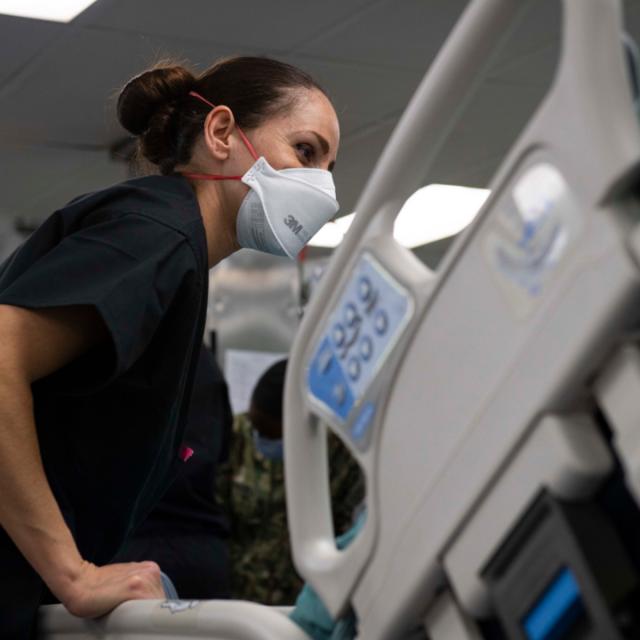
Esta aula es un espacio de formación y actualización para los profesionales del área de la salud, en particular el talento humano de Enfermería. Es un aporte desde la Universidad Nacional de Colombia, a través de la Facultad de Enfermería, acorde con los lineamientos internacionales y locales frente a la posible atención de nuestros pacientes en Unidades de Cuidado Intensivo.

Class Deals by MOOC List - Click here and see Coursera's Active Discounts, Deals, and Promo Codes.

Syllabus

WEEK 1
Presentación del curso
Este módulo presenta la organización del curso y la estrategia seleccionada para capacitar a enfermeros (as) en el cuidado de enfermería a personas en situación crítica de salud que se encuentran hospitalizados en la UCI.

WEEK 2
Generalidades para el cuidado de enfermería del paciente crítico en la UCI

WEEK 3
Proceso de atención de enfermería para el cuidado del paciente crítico en la UCI
Go to Class
MOOC List is learner-supported. When you buy through links on our site, we may earn an affiliate commission.

Related Courses

Lecture Series for Preventing and Controlling COVID-19 (Coursera) Coursera
Xi'an Jiaotong University

Lecture Series for Preventing and Controlling COVID-19 (Coursera)

In December 2019, a cluster of patients with pneumonia of unknown cause appeared in Wuhan, Hubei. Governments at all levels and Department of Health Administration highly valued and rapidly organized the centers for Disease Control and Prevention (CDC), medical institutions, and scientific research academies to conduct a survey, rescue, and collaborative research. This new antigen was quickly identified as a novel coronavirus, named as 2019-nCoV by World Health Organization (WHO).

Sep 28th 2026
3 Weeks
Health Concepts in Chinese Medicine (Coursera) Coursera
The Hong Kong University of Science and Technology - HKUST

Health Concepts in Chinese Medicine (Coursera)

Chinese Medicine and Modern Medicine are two distinct medical systems, yet they both aim at the prevention and treatment of human diseases. With this in mind, we should understand the practice of Chinese Medicine in the context of Modern Medicine. In this course, we explore the basic theories underlying the practice of Chinese Medicine, compare and contrast the use of Chinese Medicine and Modern Medicine in Preventive Health, and discuss how to restore a healthy condition and understand the pharmacological basis of different types of Chinese tonifying herbs.

Sep 28th 2026
5-12 Weeks
Gender and Sexuality: Diversity and Inclusion in the Workplace (Coursera) Coursera
University of Pittsburgh

Gender and Sexuality: Diversity and Inclusion in the Workplace (Coursera)

What is sex? What is gender? What is sexuality? What do we mean by LGBTQIA? How are these concepts related to the workplace? How have our understandings of these terms changed over time, and how have these changes impacted work and culture? To help you answer these important questions, this course will introduce you to the exciting field of gender, sexuality, and women's studies, and to LGBTQIA identities.

Sep 28th 2026
4 Weeks
Regulated Competition in Healthcare Systems: Theory & Practice (Coursera) Coursera
Erasmus University Rotterdam

Regulated Competition in Healthcare Systems: Theory & Practice (Coursera)

In this MOOC you will learn about the theory and practice of 'regulated competition' (also known as 'managed competition') in healthcare systems. Many countries have implemented or consider implementation of regulated competition in healthcare. Examples include Australia, Belgium, Chile, Colombia, Germany, Ireland, Israel, The Netherlands, Switzerland and the United States.

Sep 28th 2026
5-12 Weeks
Application of Health Equity Research Methods for Practice and Policy (Coursera) Coursera
Johns Hopkins University

Application of Health Equity Research Methods for Practice and Policy (Coursera)

Intended for students who have completed the introduction to health equity research course and/or have previous experience working in this area. This course will cover innovative methods, practical tools, and skills required to conduct rigorous health equity research and translate evidence-based strategies into practice and policy.

Sep 28th 2026
5-12 Weeks
Water Supply and Sanitation Policy in Developing Countries Part 1: Understanding Complex Problems (Coursera) Coursera
University of Manchester

Water Supply and Sanitation Policy in Developing Countries Part 1: Understanding Complex Problems (Coursera)

Our course explores what can be done to solve the complex problem that half a billion people worldwide do not have improved water supplies and two billion do not have improved sanitation. We look forward to you joining us. We want to help you develop the skills you need to address this major global challenge of the 21st century.

Sep 28th 2026
5-12 Weeks
Introduction to Psychology (Coursera) Coursera
Yale University

Introduction to Psychology (Coursera)

What are people most afraid of? What do our dreams mean? Are we natural-born racists? What makes us happy? What are the causes and cures of mental illness? This course tries to answer these questions and many others, providing a comprehensive overview of the scientific study of thought and behavior. It explores topics such as perception, communication, learning, memory, decision-making, persuasion, emotions, and social behavior. We will look at how these aspects of the mind develop in children, how they differ across people, how they are wired-up in the brain, and how they break down due to illness and injury.

Sep 28th 2026
5-12 Weeks
Design and Interpretation of Clinical Trials (Coursera) Coursera
Johns Hopkins University

Design and Interpretation of Clinical Trials (Coursera)

Clinical trials are experiments designed to evaluate new interventions to prevent or treat disease in humans. The interventions evaluated can be drugs, devices (e.g., hearing aid), surgeries, behavioral interventions (e.g., smoking cessation program), community health programs (e.g. cancer screening programs) or health delivery systems (e.g., special care units for hospital admissions). We consider clinical trials experiments because the investigators rather the patients or their doctors select the treatment the patients receive.

Sep 28th 2026
5-12 Weeks
Toxicology 21: Scientific Applications (Coursera) Coursera
Johns Hopkins University

Toxicology 21: Scientific Applications (Coursera)

This course familiarizes students with the novel concepts being used to revamp regulatory toxicology in response to a breakthrough National Research Council Report “Toxicity Testing in the 21st Century: A Vision and a Strategy.” We present the latest developments in the field of toxicology—the shift from animal testing toward human relevant, high content, high-throughput integrative testing strategies. Active programs from EPA, NIH, and the global scientific community illustrate the dynamics of safety sciences.

Sep 28th 2026
5-12 Weeks
Voice Disorders: What Patients and Professionals Need to Know (Coursera) Coursera
Icahn School of Medicine at Mount Sinai

Voice Disorders: What Patients and Professionals Need to Know (Coursera)

Knowledge regarding vocal production physiology and management options for voice disorders have experienced rapid growth over the past 40 years. This growth has resulted in a knowledge gap amongst patients and practitioners. Entirely new subspecialties of laryngology under otolaryngology and vocology under speech-language pathology have developed in response to this gap. This MOOC (Massive Open Online Course) is designed to educated patients, allied healthcare providers, vocal trainers/coaches, general medical practitioners and otolaryngologists.

Sep 28th 2026
5-12 Weeks