The Critical Role of IT Support Staff in Healthcare (Coursera)

The Critical Role of IT Support Staff in Healthcare (Coursera)

This is a very exciting time to be exploring a career in Health IT Support! In this introductory course, you’ll learn about various roles in IT support that are common in healthcare. IT support staff play critical roles in many different healthcare venues. In addition to helping clinics, hospitals, and emergency rooms, you may end up providing support in a skilled nursing facility, ambulatory surgical centers, virtual care settings, or even a patient’s home!

Class Deals by MOOC List - Click here and see Coursera's Active Discounts, Deals, and Promo Codes.

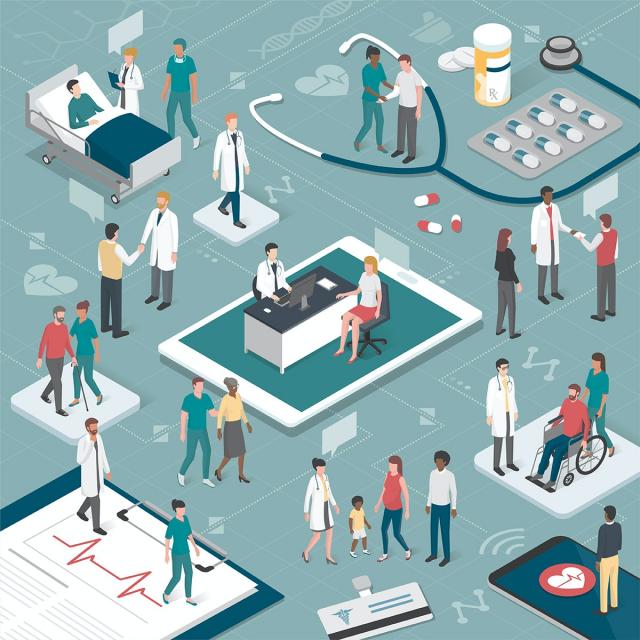
On any given day, you may interact with nurses, physicians, pharmacists, physical therapists, social workers, other allied health professionals, patients or caregivers. Each of these individuals rely on IT support specialists to help them maintain a high reliability healthcare organization. As you learn about what makes Health IT unique, we hope you find inspiration in the stories shared by some of our very own IT support staff at Johns Hopkins.
They’ll talk to you about the most common problems they help resolve as well as the complexity and range of issues that arise. Whether you dream of being an end-user computer support specialist, working at a healthcare help desk, or rising to an analyst role, we’re thrilled that you are embarking upon this journey. Welcome again!
Course 1 of 4 in the Healthcare IT Support Specialization

Syllabus

WEEK 1
Why Health IT?
This first module is designed to pique your interest about the exciting world of Health Information Technology, or HIT. Over the past decade, technology has had a tremendous impact on the way healthcare is delivered. As the work of clinicians, hospitals, and health systems has been re-imagined, the need for IT Support Specialists has grown. As you learn about what’s unique when working in Health IT (HIT) and what some common roles are, you’ll even see some examples of what a day-in-the life of an IT support specialist in healthcare looks like. You'll watch a help desk agent field a call from a very frustrated surgeon and through empathy and clear communication, helps to resolve the matter. During this module, you’ll be introduced to Johns Hopkins employees who are passionate about the critical role they play every day. They’ll share stories of inspiration and words of advice on how you can get your foot in the door as a Health IT support specialist. What are some examples of difficult calls they’ve handled? What are some of their proudest moments on the job? What are the most common IT issues they've helped troubleshoot? What kinds of tickets will you be helping to close someday? Get started to hear the answers to these questions and many more!

WEEK 2
Roles for Health IT Support Staff
There are a variety of IT support roles that are important for keeping a hospital or health system running. In this module, you’ll learn about the kind of work that’s involved in this important and growing field. You’ll hear about what it means to be a high reliability organization and the kinds of leadership and communication skills you need to have to work in this space. You’ll get to see behind-the-scenes footage in the hospital where an IT support staff member helps a patient with their request. In another scene, you’ll see an IT support team member calmly troubleshoot an error message that a nervous employee is receiving. One of the unique aspects of healthcare compared to other fields is that there are so many clinical terms and topics that might be new to you. We want you to slowly gain exposure to the language used in hospitals as well as familiarity with terms such as chest x-rays, CT scans, second opinions, HIPAA, patient portals. Continue along to gain a better understanding of what’s involved in being an end-user computer support specialist, a help desk agent, or a healthcare IT analyst. No matter what step you take next in your career journey, just know that the rapidly growing field of health IT support has a place for you!

Go to Class
MOOC List is learner-supported. When you buy through links on our site, we may earn an affiliate commission.

Related Courses

Health Information Technology Fundamentals (Coursera) Coursera
Johns Hopkins University

Health Information Technology Fundamentals (Coursera)

In this course you will receive an overview of the health IT ecosystem and the types of technologies IT support staff interact with the most. You will be introduced to the role of electronic health records (EHRs), clinical decision support, telemedicine, patient portals, and medical devices. We’ll cover common examples of how disruptions in these technologies can impact ongoing operations and routine clinical workflow. Although there is an interconnectedness to some aspects of healthcare, there are also limitations in data sharing. We want you to walk away from this course with an understanding of the family of technologies and tools that are critical in healthcare operations.

Aug 31st 2026
4 Weeks
HI-FIVE: Health Informatics For Innovation, Value & Enrichment (Administrative/IT Perspective) (Coursera) Coursera
Columbia University

HI-FIVE: Health Informatics For Innovation, Value & Enrichment (Administrative/IT Perspective) (Coursera)

HI-FIVE (Health Informatics For Innovation, Value & Enrichment) Training is an approximately 10-hour online course designed by Columbia University in 2016, with sponsorship from the Office of the National Coordinator for Health Information Technology (ONC). The training is role-based and uses case scenarios. No additional hardware or software are required for this course. Our nation’s healthcare system is changing at a rapid pace.

Aug 31st 2026
4 Weeks
Service Transformed: Lessons in U.S. Veteran Centered Care (Coursera) Coursera
University of Michigan

Service Transformed: Lessons in U.S. Veteran Centered Care (Coursera)

Improving health care for veterans has become a matter of national attention and has gained increasing attention from the medical community. With the current surge of veterans reintegrating into civilian society it is critical to improve the training of the next cadre of providers who will provide care for our veterans. It is widely known that veterans receive care in all aspects of the health system, thus providers in veteran focused care facilities, military health serves and civilian locals must be aware of the unique needs of veterans. It is perhaps even more important to educate civilian providers who may be unfamiliar with the unique physical, mental and emotional needs related to military service.

Aug 31st 2026
5-12 Weeks
Predictive Modeling and Transforming Clinical Practice (Coursera) Coursera
University of Colorado System

Predictive Modeling and Transforming Clinical Practice (Coursera)

This course teaches you the fundamentals of transforming clinical practice using predictive models. This course examines specific challenges and methods of clinical implementation, that clinical data scientists must be aware of when developing their predictive models.

Aug 31st 2026
5-12 Weeks
Leadership in Interprofessional Informatics (Coursera) Coursera
University of Minnesota

Leadership in Interprofessional Informatics (Coursera)

In this course, students in the health and information technology professions will examine models for interprofessional collaboration and teamwork, practice communication techniques to promote effective interaction, and envision futures literacy in interprofessional informatics scenarios. We will hear from nurses and other informaticians who are leading and working interprofessionally, and glean insights from their diverse perspectives.

Aug 31st 2026
5-12 Weeks
Health Care IT: Challenges and Opportunities (Coursera) Coursera
Icahn School of Medicine at Mount Sinai

Health Care IT: Challenges and Opportunities (Coursera)

A strong argument can be made that the health care field is one of the most information-intensive sectors in the U.S. economy and avoidance of the rapid advances in information technology is no longer an option. Consequently, the study of health care information technology and systems has become central to health care delivery effectiveness. This course covers the modern application of information technology that is critical to supporting the vision and operational knowledge of the health care leaders in managing the health care organization.

Jul 6th 2026
5-12 Weeks
Dynamical Modeling Methods for Systems Biology (Coursera) Coursera
Icahn School of Medicine at Mount Sinai

Dynamical Modeling Methods for Systems Biology (Coursera)

An introduction to dynamical modeling techniques used in contemporary Systems Biology research. We take a case-based approach to teach contemporary mathematical modeling techniques. The course is appropriate for advanced undergraduates and beginning graduate students. Lectures provide biological background and describe the development of both classical mathematical models and more recent representations of biological processes. The course will be useful for students who plan to use experimental techniques as their approach in the laboratory and employ computational modeling as a tool to draw deeper understanding of experiments.

Sep 7th 2026
5-12 Weeks
Interprofessional Healthcare Informatics (Coursera) Coursera
University of Minnesota

Interprofessional Healthcare Informatics (Coursera)

Interprofessional Healthcare Informatics is a graduate-level, hands-on interactive exploration of real informatics tools and techniques offered by the University of Minnesota and the University of Minnesota's National Center for Interprofessional Practice and Education. We will be incorporating technology-enabled educational innovations to bring the subject matter to life. Over the 10 modules, we will create a vital online learning community and a working healthcare informatics network.

Sep 14th 2026
5-12 Weeks
The Outcomes and Interventions of Health Informatics (Coursera) Coursera
Johns Hopkins University

The Outcomes and Interventions of Health Informatics (Coursera)

For clinical data science to be effective in healthcare—to achieve the outcomes desired—it must translate into decision support of some sort, either at the patient, clinician, or manager level. By the end of this course, students will be able to articulate the need for an intervention, to right size it, to choose the appropriate technology, to describe how knowledge should be obtained, and to design a monitoring plan.

Aug 24th 2026
4 Weeks
Instructional Methods in Health Professions Education (Coursera) Coursera
University of Michigan

Instructional Methods in Health Professions Education (Coursera)

This course provides those involved in educating members of the health professions an asynchronous, interdisciplinary, and interactive way to obtain, expand, and improve their teaching skills. These skills can then be applied within their own professional context, with a variety of learners, extending across many stages.

Aug 24th 2026
5-12 Weeks