Leading Change in Health Informatics (Coursera)

Leading Change in Health Informatics (Coursera)

Do you dream of being a CMIO or a Senior Director of Clinical Informatics? If you are aiming to rise up in the ranks in your health system or looking to pivot your career in the direction of big data and health IT, this course is made for you. You'll hear from experts at Johns Hopkins about their experiences harnessing the power of big data in healthcare, improving EHR adoption, and separating out the hope vs hype when it comes to digital medicine.

Class Deals by MOOC List - Click here and see Coursera's Active Discounts, Deals, and Promo Codes.

Whether you're a nurse, pharmacist, physician, other allied health professional or come from a non-clinical background--you know that Health Informatics skills are in demand. This newly launched 5-course specialization by JohnsHopkins faculty members provides a solid foundation for anyone wanting to become a leader in one of the hottest fields in healthcare.
As health informaticians, we need to be very clear in our understanding of the current state (as-is), the future state (to-be) and any unintended consequences that can result from our interventions. Prior to introducing large scale change, we need to assess whether a healthcare organization is truly ready for change. This involves taking into account an organization's current culture and values. Successfully leading change through health informatics also requires strategic planning and careful financial considerations. Proper workflow redesign and a clear change management strategy are of utmost importance when introducing new technologies and in ensuring their successful adoption and proper use.
By the end of this course, students will become familiar with examples of successful and failed attempts at change in health informatics, and the reasons for each. Students will be armed with tools to help optimize their chances for successfully leading change in their respective organizations.
Course 2 of 5 in the Health Informatics Specialization.
What You Will Learn

  • Describe essential steps in the process of successfully leading change in health IT organizations.
  • Recognize the importance of multidisciplinary and interprofessional teamwork in health informatics.
  • Utilize several common project management and strategic planning tools used by health informaticists.
  • Apply best practices for successful change management in health informatics.

Syllabus

WEEK 1
Leading Change in Health Informatics
This module introduces students to the role of leadership, teamwork, and governance in health informatics. We use various real world examples to help familiarize you with a well known 8-step process for successfully leading change. During the module, students will be oriented to the purpose of organizational readiness assessments. You'll learn about the role of clinical governance in health IT and the role it plays in designing and optimizing clinical decision support systems.

WEEK 2
Project Management for Health Informaticists
Knowing how to manage projects effectively is an essential skill for health informaticians. In this module, students will be introduced to the standard terminology in project management. We’ll start by defining what a project is and explaining the phases of a project life cycle in the context of health IT. You'll become familiar with the role of a work breakdown structure, Gantt Charts, and process maps. You'll see examples of common project related pitfalls such as groupthink and scope creep. Throughout the course, we incorporate case studies from real health informaticians in the field, both clinical and non-clinical, to illustrate the importance of each of these concepts.

WEEK 3
Strategic Planning in Health IT
This modules introduces students to the importance of strategic planning when leading healthcare transformation efforts. Case studies on the role of strategic planning in mHealth, hospital acquisitions and various telemedicine initiatives are woven in throughout the course with interviews of subject matter experts from across Johns Hopkins. Students will learn about commonly used strategic planning tools such as: SWOT and Scenario Planning. We’ll also review the considerations that go into an organization's decision to Build or Buy and students will be oriented to commonly used terms in procurement such as RFIs, RFPs, TCO, and ROI. During the course, you'll be introduced to the basics of vendor evaluation and will have gain experience in using a vendor evaluation matrix for purposes of decision making.

WEEK 4
Change Management
In this module we’ll cover the complexities of change management in health information systems. Students will be introduced to the PDSA (Plan Do Study Act) cycle. We'll demonstrate the value of taking into account the current clinical workflow and how any intervention will impact it. Challenges associated with usability and workarounds with health information systems are explored. Students will have an opportunity to review and critically interpret a go-live-readiness assessment. This module covers best practices in change management and the need for proper documentation and effective communication of changes.
Go to Class
MOOC List is learner-supported. When you buy through links on our site, we may earn an affiliate commission.

Related Courses

Clinical Kidney, Pancreas and Islet Transplantation (Coursera) Coursera
Leiden University,Leiden University Medical Center

Clinical Kidney, Pancreas and Islet Transplantation (Coursera)

Kidney transplantation is a major advance of modern medicine which provides high-quality of life for patients with end-stage renal disease. What used to be an experimental, risky, and very limited treatment option more than 50 years ago is now routinely performed in many countries worldwide. The number of renal transplants is expected to rise sharply in the next decade since the proportion of patients with end stage renal disease is increasing.

Oct 12th 2026
4 Weeks
HPV-Associated Oral and Throat Cancer: What You Need to Know (Coursera) Coursera
Icahn School of Medicine at Mount Sinai

HPV-Associated Oral and Throat Cancer: What You Need to Know (Coursera)

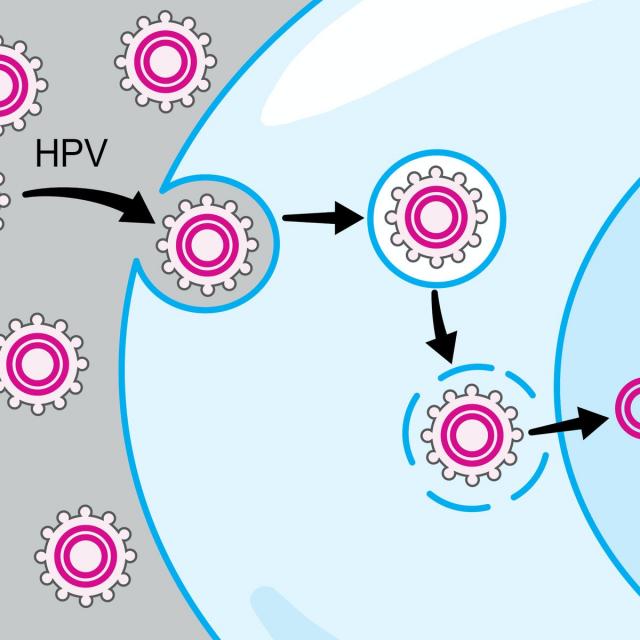
This course, offered by the Department of Otolaryngology – Head and Neck Surgery at the Icahn School of Medicine at Mount Sinai, is designed to inform primary care physicians and otolaryngologists (general and head and neck surgeons), as well as medical students, residents, nurses, physician assistants, medical assistants, about HPV-associated oral and throat cancers. It is also applicable to individuals who wish to broaden their knowledge and vernacular about this disease process, especially those who may have been diagnosed with HPV and/or HPV-associated oropharyngeal cancers.

Oct 12th 2026
5-12 Weeks
Business Models for Innovative Care for Older People (Coursera) Coursera
University of Copenhagen,Copenhagen Business School

Business Models for Innovative Care for Older People (Coursera)

This course will introduce you to healthcare innovation within the field of healthy living and active aging. By following two specific cases on diabetes and rehabilitation, this interdisciplinary course will provide you with key theories, tools and concepts for analyzing and developing viable innovative solutions for aging populations. The lectures will cover demographic, biological, economic, social and cultural aspects of active aging and healthy living, along with lectures on current innovation theories and methods.

Oct 12th 2026
5-12 Weeks
Diabetes - a Global Challenge (Coursera) Coursera
University of Copenhagen

Diabetes - a Global Challenge (Coursera)

Diabetes and obesity are growing health problems in rich and poor countries alike. With this course you will get updated on cutting-edge diabetes and obesity research including biological, genetic and clinical aspects as well as prevention and epidemiology of diabetes and obesity. All lectures are provided by high-profile scientists from one the world's leading universities in diabetes research.

Oct 12th 2026
5-12 Weeks
Feeding the World (Coursera) Coursera
University of Pennsylvania

Feeding the World (Coursera)

This course will explore the concepts driving current food production science (population growth, urbanization, emerging affluence, resource constraints, and underlying biological limits) with the main focus on livestock production. Each of the major food animal species (dairy, swine, beef, and poultry) will be covered in terms of their universal life cycles, constraints to production and emerging societal issues.

Oct 12th 2026
5-12 Weeks
A Life of Happiness and Fulfillment (Coursera) Coursera
Indian School of Business - ISB

A Life of Happiness and Fulfillment (Coursera)

What are the determinants of a happy and fulfilling life? This is surely one of life’s biggest questions, and a question that has interested many of our ancestors. Buddha famously gave up his kingdom in search of happiness. Several Greek philosophers (from Aristotle to Epicurus and Plato to Socrates) had their own views on what it takes to be happy. And of course, we all have our own theories about happiness too.

Oct 12th 2026
5-12 Weeks
Chemicals and Health (Coursera) Coursera
Johns Hopkins University

Chemicals and Health (Coursera)

This course covers chemicals in our environment and in our bodies and how they impact our health. It addresses policies and practices related to chemicals, particularly related to how they get into our bodies (exposures), what they do when they get there (toxicology), how we measure them (biomonitoring) and their impact on our health. Most examples are drawn from the US.

Oct 12th 2026
5-12 Weeks
Schizophrenia (Coursera) Coursera
Wesleyan University

Schizophrenia (Coursera)

The main goal of this class are to gain an introductory exposure to the nature of the psychiatric disorder known as schizophrenia as revealed by the scientific method. We will discuss a broad range of findings from the scientific investigation of biological and psychological factors related to schizophrenia and its treatment.

Oct 12th 2026
5-12 Weeks
The Brain and Space (Coursera) Coursera
Duke University

The Brain and Space (Coursera)

This course is about how the brain creates our sense of spatial location from a variety of sensory and motor sources, and how this spatial sense in turn shapes our cognitive abilities. Knowing where things are is effortless. But “under the hood,” your brain must figure out even the simplest of details about the world around you and your position in it.

Oct 12th 2026
5-12 Weeks