Introduction to Healthcare (Coursera)

Offered by Stanford University,
Introduction to Healthcare (Coursera)

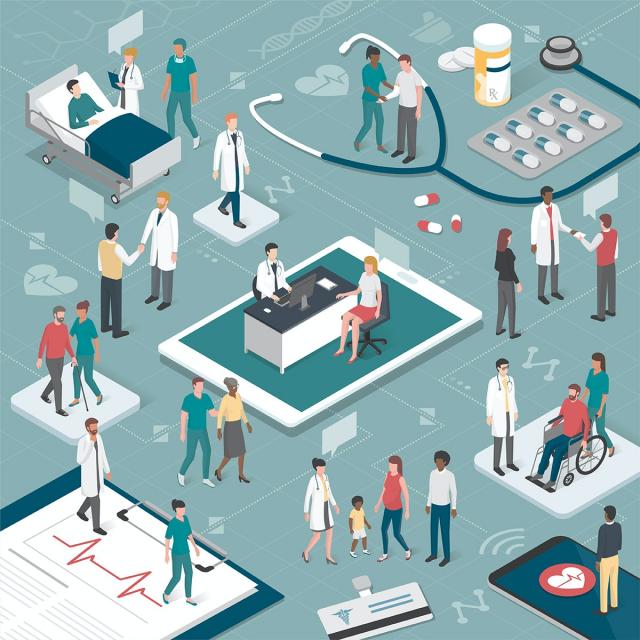
Solving the problems and challenges within the U.S. healthcare system requires a deep understanding of how the system works. Successful solutions and strategies must take into account the realities of the current system. This course explores the fundamentals of the U.S. healthcare system. It will introduce the principal institutions and participants in healthcare systems, explain what they do, and discuss the interactions between them. The course will cover physician practices, hospitals, pharmaceuticals, and insurance and financing arrangements.

Class Deals by MOOC List - Click here and see Coursera's Active Discounts, Deals, and Promo Codes.

We will also discuss the challenges of healthcare cost management, quality of care, and access to care. While the course focuses on the U.S. healthcare system, we will also refer to healthcare systems in other developed countries.
Course 1 of 5 in the AI in Healthcare Specialization.
What You Will Learn

  • The major challenges of the U.S.healthcare system
  • Issues you may encounter in efforts to improve healthcare delivery and the healthcare system
  • Who the key stakeholders are in the U.S. healthcare system

Syllabus

WEEK 1: Overview of Health Care Systems and Key Challenges They Face
WEEK 2: Physicians, Physician Practices, and Physician Payment
WEEK 3: Hospitals, Other Provider Organizations, and Related Payment Systems
WEEK 4: Intermediaries, Health Insurance Plans, and Health Care Financing
WEEK 5: Health Care Products and Prescription Drugs, and Quality Measurement and Improvement
WEEK 6: Ethics in Healthcare System
WEEK 7: Course Summary and Final Assessment

Go to Class
MOOC List is learner-supported. When you buy through links on our site, we may earn an affiliate commission.

Related Courses

Foundations of Healthcare Systems Engineering (Coursera) Coursera
Johns Hopkins University

Foundations of Healthcare Systems Engineering (Coursera)

Through dynamic video lectures and practical application questions, you will learn about the Foundations of Healthcare Systems Engineering. In this course you will learn about the current lack of synchronized, efficient, and integrated healthcare systems, which are some of the drivers for improvements to healthcare delivery.

Aug 10th 2026
4 Weeks
Leading Healthcare Quality and Safety (Coursera) Coursera
George Washington University

Leading Healthcare Quality and Safety (Coursera)

Ensuring patient safety and healthcare quality is critical and should be a key focus of everyone in healthcare practice. This course provides healthcare practitioners and others with an introduction to the knowledge and skills needed to lead patient safety and quality improvement initiatives at the micro and macro levels. Participants will explore the foundations of health care quality and the science underlying patient safety and quality improvement, design and select effective health care measures, analyze patient safety problems and processes using tools such as human factors analysis, apply systematic approaches including the Plan-Do-Study-Act (PDSA) model to address quality improvement challenges, and learn strategies to lead a culture of change

Aug 3rd 2026
5-12 Weeks
Building Trust: Ethics for AI-powered Chatbots (Coursera) Coursera
Coursera Instructor Network

Building Trust: Ethics for AI-powered Chatbots (Coursera)

Many organizations with websites are using chatbots to engage with customers. While this strategy has proved profitable and efficient, there are ethical issues that can arise if users are unaware that their interaction is with an AI bot and not a human. This course will take the learner through the evolution of chatbots, so they are equipped with an appropriate sense of incremental improvements.

Aug 10th 2026
1 Week
Design and Interpretation of Clinical Trials (Coursera) Coursera
Johns Hopkins University

Design and Interpretation of Clinical Trials (Coursera)

Clinical trials are experiments designed to evaluate new interventions to prevent or treat disease in humans. The interventions evaluated can be drugs, devices (e.g., hearing aid), surgeries, behavioral interventions (e.g., smoking cessation program), community health programs (e.g. cancer screening programs) or health delivery systems (e.g., special care units for hospital admissions). We consider clinical trials experiments because the investigators rather the patients or their doctors select the treatment the patients receive.

Aug 3rd 2026
5-12 Weeks
XR in Healthcare Education and Clinical Practice (Coursera) Coursera
Imperial College London

XR in Healthcare Education and Clinical Practice (Coursera)

This course is designed to teach you about Extended Reality (XR) and its use in healthcare education and clinical practice. Using lessons from experts in the field and different use cases, this course shows you how to use this innovative technology in a way that creates sustainable and accessible real-world use.

Aug 10th 2026
4 Weeks
Ética y Gobierno Corporativo (Coursera) Coursera
Universidad de Palermo

Ética y Gobierno Corporativo (Coursera)

En este curso de Ética y Gobierno Corporativo estudiaremos y analizaremos la importancia desde lo estratégico, pero también desde lo reputacional, que tiene trabajar para ser una empresa ética y responsable con todos los ámbitos del negocio. Los objetivos de este curso se orientan a comprender las diferentes miradas que hubo y hay sobre el tema, sus consecuencias y beneficios.

Aug 10th 2026
4 Weeks
Service Transformed: Lessons in U.S. Veteran Centered Care (Coursera) Coursera
University of Michigan

Service Transformed: Lessons in U.S. Veteran Centered Care (Coursera)

Improving health care for veterans has become a matter of national attention and has gained increasing attention from the medical community. With the current surge of veterans reintegrating into civilian society it is critical to improve the training of the next cadre of providers who will provide care for our veterans. It is widely known that veterans receive care in all aspects of the health system, thus providers in veteran focused care facilities, military health serves and civilian locals must be aware of the unique needs of veterans. It is perhaps even more important to educate civilian providers who may be unfamiliar with the unique physical, mental and emotional needs related to military service.

Aug 3rd 2026
5-12 Weeks
Cybersecurity in Healthcare (Hospitals & Care Centres) (Coursera) Coursera
Erasmus University Rotterdam

Cybersecurity in Healthcare (Hospitals & Care Centres) (Coursera)

The Cybersecurity in Healthcare MOOC was developed as part the SecureHospitals.eu project. This project has received funding from the European Union’s Horizon 2020 Coordination Research and Innovation Action under Grant Agreement No. 826497. The course "Cybersecurity in Healthcare" has been developed to raise awareness and understanding the role of cybersecurity in healthcare (e.g., hospitals, care centres, clinics, other medical or social care institutions and service organisations) and the challenges that surround it.

Aug 10th 2026
5-12 Weeks