FUN

Conversion Thermodynamique de la Chaleur : Cycles classiques et innovants (FUN)

Conversion Thermodynamique de la Chaleur : Cycles classiques et innovants (FUN)

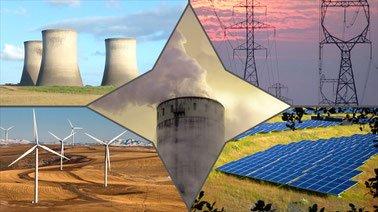
La Conversion Thermodynamique de la Chaleur joue un rôle essentiel dans nos sociétés car elle permet de répondre à des besoins fondamentaux comme le chauffage, la production de froid, l’éclairage, la mobilité, la fourniture d’énergie mécanique, etc. Les systèmes énergétiques qui seront étudiés dans ce MOOC ont donc un impact direct sur notre vie quotidienne à tous. Vous souhaitez comprendre comment ces systèmes énergétiques permettent d’effectuer des conversions entre chaleur et travail, mais vous ne supportez plus les développements théoriques fastidieux et inutiles. Ce MOOC propose pour cela une méthode originale qui permet de dépasser les limites que rencontre l'enseignement de la discipline par les approches classiques.

Après le succès des deux premières sessions du MOOC Conversion Thermodynamique de la Chaleur : Cycles Classiques et Innovants (CTC-CI), qui ont réuni près de 3500 inscrits et dont le taux de réussite à l’examen final a été de 77 %, toute l’équipe pédagogique du MOOC est heureuse de vous retrouver sur la plateforme FUN pour l’ouverture de cette troisième session.
La pédagogie retenue a été développée au sein de Mines ParisTech et est entièrement originale . Faisant appel au simulateur Thermoptim, elle est mise en application dans plus de 120 établissements d’enseignement dans le monde.

Compte tenu du champ couvert, le cours est décomposé en deux MOOC : Modéliser et Simuler (CTC-MS) et Cycles Classiques et Innovants (CTC-CCI).
Dans le MOOC CTC Modéliser et Simuler les apprenants ont commencé par acquérir les bases de la modélisation des systèmes énergétiques simples (centrales à vapeur, turbines à gaz, machines de réfrigération) et appris à en paramétrer les modèles dans Thermoptim.
Ils utilisent ensuite ce savoir dans ce MOOC Cycles Classiques et Innovants pour étudier les cycles moteurs et récepteurs classiques et les cycles innovants à faible impact environnemental.
Dans ce second MOOC, les apprenants font le lien entre les caractéristiques technologiques des différents systèmes énergétiques et leurs architectures et voient comment ils peuvent être modélisés avec un progiciel comme Thermoptim.
Ils commencent par réfléchir aux pistes d’amélioration possibles des cycles simples étudiés dans le MOOC Modéliser et Simuler, l’objectif étant d’obtenir les meilleures performances thermodynamiques possibles.
Le fil directeur qui sous-tend ces analyses est la réduction des irréversibilités, une attention particulière étant accordée à celles qui proviennent des écarts de température avec les sources externes et lors des régénérations internes.

Prérequis:
Ce MOOC nécessite un niveau bac pro ou scientifique. De plus, afin de suivre le cours sans difficulté, il est recommandé :

  • soit d'avoir suivi le MOOC Conversion Thermodynamique de la Chaleur : Modéliser et Simuler dans son intégralité
  • soit d'avoir une connaissance des bases de la thermodynamique et de Thermoptim

Plan du cours

Le MOOC se déroule sur 5 semaines :
Semaine 1/A : Présentation générale
Semaine 1/B : Réduction des irréversibilités dans les cycles moteurs, application aux cycles à vapeur
Semaine 2 : Moteurs à combustion interne classiques, biomasse
Semaine 3 : Cycles combinés, cogénération, cycles récepteurs
Semaine 4 : Cycles innovants à faible impact environnemental
Semaine 5 : Semaine d’évaluation finale
Go to Class
MOOC List is learner-supported. When you buy through links on our site, we may earn an affiliate commission.

Related Courses

Modelling, Analysis and Design of Steel Buildings (Coursera) Coursera
L&T EduTech

Modelling, Analysis and Design of Steel Buildings (Coursera)

"Modelling, Analysis & Design of Steel Buildings" is an intensive course that covers a wide range of topics essential for understanding and designing steel structures. The course begins with establishing the building information and initial model settings, followed by a detailed exploration of building geometry and member properties. Participants learn to create member groups, utilize section libraries, and assign materials.

Jun 8th 2026
4 Weeks
Conversion Thermodynamique de la Chaleur : Modéliser et Simuler (FUN) FUN
Institut Mines-Telecom

Conversion Thermodynamique de la Chaleur : Modéliser et Simuler (FUN)

La Conversion Thermodynamique de la Chaleur joue un rôle essentiel dans nos sociétés car elle permet de répondre à des besoins fondamentaux comme le chauffage, la production de froid, l’éclairage, la mobilité, la fourniture d’énergie mécanique, etc. Les systèmes énergétiques qui seront étudiés dans ce MOOC ont donc un impact direct sur notre vie quotidienne à tous. Ce MOOC propose une méthode originale qui permet de dépasser les limites que rencontre l'enseignement de la discipline par les approches classiques.

No sessions available
5-12 Weeks
Simulation, Algorithm Analysis, and Pointers (Coursera) Coursera
University of Colorado System

Simulation, Algorithm Analysis, and Pointers (Coursera)

This course is the fourth and final course in the specialization exploring both computational thinking and beginning C programming. Rather than trying to define computational thinking, we’ll just say it’s a problem-solving process that includes lots of different components. Most people have a better understanding of what beginning C programming means!

Jun 8th 2026
4 Weeks
ImageInLife - Imaging the Vertebrate embryo: from biological material to modelling (FUN) FUN
Université de Montpellier

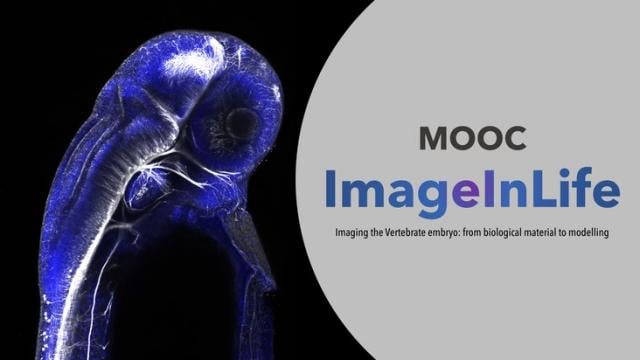
ImageInLife - Imaging the Vertebrate embryo: from biological material to modelling (FUN)

Microscopy technologies have progressed to such a point that it is now possible to image a developing vertebrate at the single cell resolution. Two main model species are being used for such studies, the zebrafish and the mouse. The present MOOC introduces the trainees to these two animal models, to the most modern microscopy technologies, to the use of high volume of data (images) and to the modelling of the studied processes. Trainees will also be introduced to the intravital study of viral infections.

Aug 24th 2021
5-12 Weeks
Linear Regression and Modeling (Coursera) Coursera
Duke University

Linear Regression and Modeling (Coursera)

This course introduces simple and multiple linear regression models. These models allow you to assess the relationship between variables in a data set and a continuous response variable. Is there a relationship between the physical attractiveness of a professor and their student evaluation scores? Can we predict the test score for a child based on certain characteristics of his or her mother? In this course, you will learn the fundamental theory behind linear regression and, through data examples, learn to fit, examine, and utilize regression models to examine relationships between multiple variables, using the free statistical software R and RStudio.

Jun 8th 2026
4 Weeks
Introduction to Thermodynamics: Transferring Energy from Here to There (Coursera) Coursera
University of Michigan

Introduction to Thermodynamics: Transferring Energy from Here to There (Coursera)

This course provides an introduction to the most powerful engineering principles you will ever learn - Thermodynamics: the science of transferring energy from one place or form to another place or form. We will introduce the tools you need to analyze energy systems from solar panels, to engines, to insulated coffee mugs. More specifically, we will cover the topics of mass and energy conservation principles; first law analysis of control mass and control volume systems; properties and behavior of pure substances; and applications to thermodynamic systems operating at steady state conditions.

Jun 1st 2026
5-12 Weeks
Customising your models with TensorFlow 2 (Coursera) Coursera
Imperial College London

Customising your models with TensorFlow 2 (Coursera)

Welcome to this course on Customising your models with TensorFlow 2! In this course you will deepen your knowledge and skills with TensorFlow, in order to develop fully customised deep learning models and workflows for any application. You will use lower level APIs in TensorFlow to develop complex model architectures, fully customised layers, and a flexible data workflow. You will also expand your knowledge of the TensorFlow APIs to include sequence models.

Jun 8th 2026
5-12 Weeks
Global Warming I: The Science and Modeling of Climate Change (Coursera) Coursera
University of Chicago

Global Warming I: The Science and Modeling of Climate Change (Coursera)

This class describes the science of global warming and the forecast for humans’ impact on Earth’s climate. Intended for an audience without much scientific background but a healthy sense of curiosity, the class brings together insights and perspectives from physics, chemistry, biology, earth and atmospheric sciences, and even some economics—all based on a foundation of simple mathematics (algebra).

Jun 1st 2026
5-12 Weeks
Statistical Thermodynamics: Molecules to Machines (Coursera) Coursera
Carnegie Mellon University

Statistical Thermodynamics: Molecules to Machines (Coursera)

Modern engineering research focuses on designing new materials and processes at the molecular level. Statistical thermodynamics provides the formalism for understanding how molecular interactions lead to the observed collective behavior at the macroscale. This course will develop a molecular-level understanding of key thermodynamic quantities like heat, work, free energy and entropy. These concepts will be applied in understanding several important engineering and biological applications.

Jun 14th 2026
5-12 Weeks
Introduction to Physical Chemistry (Coursera) Coursera
University of Manchester

Introduction to Physical Chemistry (Coursera)

Chemical reactions underpin the production of pretty much everything in our modern world. But, what is the driving force behind reactions? Why do some reactions occur over geological time scales whilst others are so fast that we need femtosecond-pulsed lasers to study them? Ultimately, what is going on at the atomic level? Discover the answers to such fundamental questions and more on this course in introductory physical chemistry.

Jun 1st 2026
5-12 Weeks
Big Data Modeling and Management Systems (Coursera) Coursera
University of California, San Diego

Big Data Modeling and Management Systems (Coursera)

Once you’ve identified a big data issue to analyze, how do you collect, store and organize your data using Big Data solutions? In this course, you will experience various data genres and management tools appropriate for each. You will be able to describe the reasons behind the evolving plethora of new big data platforms from the perspective of big data management systems and analytical tools.

Jun 8th 2026
5-12 Weeks
Thermodynamique : applications (Coursera) Coursera
École Polytechnique Fédérale de Lausanne

Thermodynamique : applications (Coursera)

Ce cours complète le MOOC « Thermodynamique : fondements » qui vous permettra de mettre en application les concepts fondamentaux de la thermodynamique. Pour atteindre cet objectif, le Professeur J.-Ph. Ansermet de l’Ecole Polytechnique Fédérale de Lausanne s’est entouré d’experts et de spécialistes des différents domaines d’application provenant de diverses institutions partenaires du réseau RESCIF. Vous pourrez ainsi voir l’usage de la thermodynamique en chimie, en ingénierie et en physique.

Jun 8th 2026
5-12 Weeks