AME

Comprehensive Patient Care (AME)

Offered by Virology Education,
Comprehensive Patient Care (AME)

This Online Education Activity is accredited by the European Accreditation Council for Continuing Medical Education (EACCME) for 1 European CME credit (ECMEC®). Welcome to the Comprehensive Patient Care edition of the Online Meeting Highlights. Here you will learn about stigma and discrimination that people living with HIV experience on a daily basis and how this affects uptake and retention in HIV testing, PrEP and ART services.

This edition brings into focus stigma and discrimination that people living with HIV experience on a daily basis and how this affects uptake and retention in HIV testing, PrEP and ART services. In those lines, this edition will also provide insights in factors which impact HIV risks and outcomes in transgender people, who are often exposed to discrimination and social rejection. Finally, you will learn about HIV and STI syndemic drivers and how integration of services may reduce screening, prevention, and treatment gaps.

All modules can be followed independently and at your own pace. Complete the entire course to equip yourself with the knowledge to work towards making a significant impact on the quality of life of your patients faced with stigma and discrimination.
After following this eLearning activity, you will be able to:

  • Comprehend the key considerations for clinical care of HIV infected transgender people;
  • Define how stigma affects uptake and retention in HIV testing, PrEP and ART services, and chart strategies to reduce stigma experienced by people living with HIV;
  • Define HIV and STI syndemic drivers and outline approaches to reduce screening, prevention, and treatment gaps.

To obtain your certificate, you have complete all three modules, passed the relevant assessments and answered the evaluation survey.


Module 1 | Care of HIV Infected Transgender Individuals
Module 2 | Overcoming HIV Stigma
Module 3 | HIV and STI
Duration: approximately 20 minutes per module
You can enhance your learning experience by:

  • adding notes to the video modules;
  • consulting the accompanying presentation slides;
  • sharing your questions and observations with other learners in the discussion board; and
  • referring to further literature and other materials provided to you by our experts.

The program is aimed at clinicians from various specialties who occasionally treat HIV patients, such as primary care physicians, family doctors, OBGYN, transgender healthcare clinicians, adolescent medicine professionals, and preventive medicine professionals, as well as public health workers and researchers engaged in HIV related disciplines at varying degrees.
Go to Class
MOOC List is learner-supported. When you buy through links on our site, we may earn an affiliate commission.

Related Courses

Myocardial Infarction (Coursera) Coursera
University of Zurich

Myocardial Infarction (Coursera)

Cardiovascular diseases are – according to the (World Health Organization (WHO) – the number one cause of death globally. Myocardial infarction (heart attack) is the most prominent under the Cardiovascular diseases. In Switzerland alone, the risk to develop a coronary heart disease during life time is around 25% for men and 18% for women. Most cardiovascular diseases can be prevented by addressing behavioral risk factors, the understanding of these risk factors, their mechanisms and impact on the cardiovascular system.

Oct 26th 2026
5-12 Weeks
Doping : Sports, Organizations and Sciences (Coursera) Coursera
University of Lausanne

Doping : Sports, Organizations and Sciences (Coursera)

The objective of this course is to encourage a critical understanding of doping. To achieve this goal, this course will rely on a multidisciplinary approach that allow you to see how different disciplines get into a single object, in different perspectives and in often complementary ways. This approach will also allow us to appreciate the complexity of a subject like doping. Doping in sports is a complex practice whose definition and identification is the result of socially and historically constructed norms. This course offers to shed light on the processes that led to the use and prohibition of doping substances.

Oct 26th 2026
4 Weeks
Update on INSTIs (AME) AME
Virology Education

Update on INSTIs (AME)

This Online Education Activity is accredited by the European Accreditation Council for Continuing Medical Education (EACCME) for 1 European CME credit (ECMEC®). Welcome to the Update on INSTIs edition of the Online Meeting Highlights. Here you will learn about HIV integrase strand transfer inhibitors (INSTI), compiling for you data from relevant clinical trials that have assessed the efficacy, toxicity, and resistance.

Self Paced
Self-Paced
HIV Treatment and Prevention in Asia (AME) AME
Virology Education

HIV Treatment and Prevention in Asia (AME)

This Online Education Activity is accredited by the European Accreditation Council for Continuing Medical Education (EACCME) for 1 European CME credit (ECMEC®).
 Welcome to the HIV Treatment and Prevention in Asia edition of the Online Meeting Highlights. Here you will learn about the use of PrEP and INSTIs in Asia as well as the prevalence of HIV drug resistance across the region, and its implications on the decision-making process when designing an optimal treatment regimen.

Self Paced
Self-Paced
Understanding Clinical Research: Behind the Statistics (Coursera) Coursera
University of Cape Town

Understanding Clinical Research: Behind the Statistics (Coursera)

If you’ve ever skipped over`the results section of a medical paper because terms like “confidence interval” or “p-value” go over your head, then you’re in the right place. You may be a clinical practitioner reading research articles to keep up-to-date with developments in your field or a medical student wondering how to approach your own research. Greater confidence in understanding statistical analysis and the results can benefit both working professionals and those undertaking research themselves.

Oct 26th 2026
5-12 Weeks
The exposome: cracking the science about what makes us sick (Coursera) Coursera
Universiteit Utrecht

The exposome: cracking the science about what makes us sick (Coursera)

What are the causes of disease? We know that most diseases result from a combination of genes and environment (nature and nurture). Our genes alone do not determine our fate. For most complex diseases, externalities - environmental factors in the broad sense - are more important. This includes our living and working environments, diet, social support and stress, pollution, and exposure to infectious agents. Exposome research is about discovering the non-genetic drivers of health and disease.

Nov 1st 2026
5-12 Weeks
Introduction to Reproduction (Coursera) Coursera
Northwestern University

Introduction to Reproduction (Coursera)

Do you have questions about sex hormones or menstrual cycles? This is a crash-course in human reproductive health through fact and biology-based information on a variety of topics. "Sex 101" will cover reproductive anatomy, key biological changes during puberty, sexual biology and contraceptive methods, reproductive disorders, and a special introduction to the exciting field of Oncofertility. Specific lecture titles are as follows: 1) Reproductive Anatomy & Hormones, 2) Menstrual Cycle, Oocyte Maturation, & Sperm Activation, 3) Sexual Biology, Fertilization, & Contraception, and 4) Reproductive Health & Disorders.

Oct 26th 2026
4 Weeks
Water Supply and Sanitation Policy in Developing Countries Part 1: Understanding Complex Problems (Coursera) Coursera
University of Manchester

Water Supply and Sanitation Policy in Developing Countries Part 1: Understanding Complex Problems (Coursera)

Our course explores what can be done to solve the complex problem that half a billion people worldwide do not have improved water supplies and two billion do not have improved sanitation. We look forward to you joining us. We want to help you develop the skills you need to address this major global challenge of the 21st century.

Oct 26th 2026
5-12 Weeks
Major Depression in the Population: A Public Health Approach (Coursera) Coursera
Johns Hopkins University

Major Depression in the Population: A Public Health Approach (Coursera)

Public Mental Health is the application of the principles of medicine and social science to prevent the occurrence of mental and behavioral disorders and to promote mental health of the population. This course illustrates the principles of public health applied to depressive disorder, including principles of epidemiology, transcultural psychiatry, health services research, and prevention. It is predicted that by 2020 depressive disorder will be the most important cause of disease burden in the entire world! Every human being suffers from feeling depressed at some point or other, but only about one fifth of the population will experience an episode of depressive disorder over the course of their lives.

Oct 26th 2026
5-12 Weeks
Leading Healthcare Quality and Safety (Coursera) Coursera
George Washington University

Leading Healthcare Quality and Safety (Coursera)

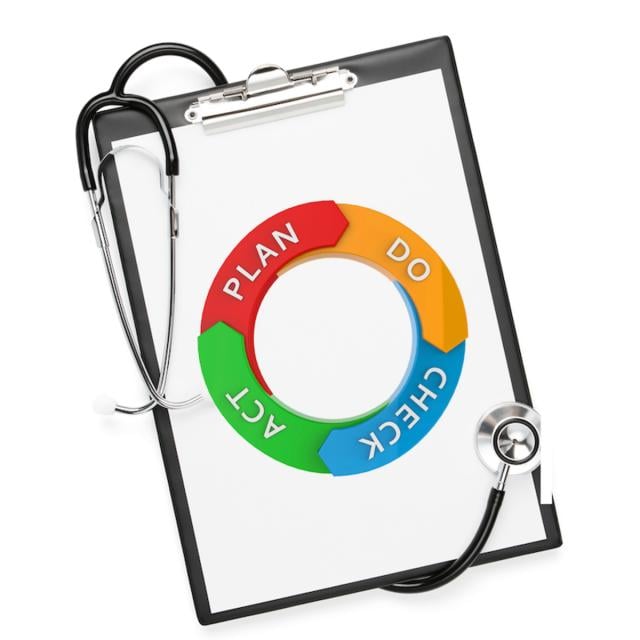
Ensuring patient safety and healthcare quality is critical and should be a key focus of everyone in healthcare practice. This course provides healthcare practitioners and others with an introduction to the knowledge and skills needed to lead patient safety and quality improvement initiatives at the micro and macro levels. Participants will explore the foundations of health care quality and the science underlying patient safety and quality improvement, design and select effective health care measures, analyze patient safety problems and processes using tools such as human factors analysis, apply systematic approaches including the Plan-Do-Study-Act (PDSA) model to address quality improvement challenges, and learn strategies to lead a culture of change

Oct 26th 2026
5-12 Weeks
Design and Interpretation of Clinical Trials (Coursera) Coursera
Johns Hopkins University

Design and Interpretation of Clinical Trials (Coursera)

Clinical trials are experiments designed to evaluate new interventions to prevent or treat disease in humans. The interventions evaluated can be drugs, devices (e.g., hearing aid), surgeries, behavioral interventions (e.g., smoking cessation program), community health programs (e.g. cancer screening programs) or health delivery systems (e.g., special care units for hospital admissions). We consider clinical trials experiments because the investigators rather the patients or their doctors select the treatment the patients receive.

Oct 26th 2026
5-12 Weeks
Living with Dementia: Impact on Individuals, Caregivers, Communities and Societies (Coursera) Coursera
Johns Hopkins University

Living with Dementia: Impact on Individuals, Caregivers, Communities and Societies (Coursera)

Health professionals and students, family caregivers, friends of and affected individuals, and others interested in learning about dementia and quality care will benefit from completing the course. Led by Drs. Nancy Hodgson and Laura Gitlin, participants will acquire foundational knowledge in the care of persons with Alzheimer’s Disease and other neurocognitive disorders.

Oct 26th 2026
5-12 Weeks