¿Cómo viajamos por la ciudad? Asignación y equilibrio en redes de transporte (Coursera)

¿Cómo viajamos por la ciudad? Asignación y equilibrio en redes de transporte (Coursera)

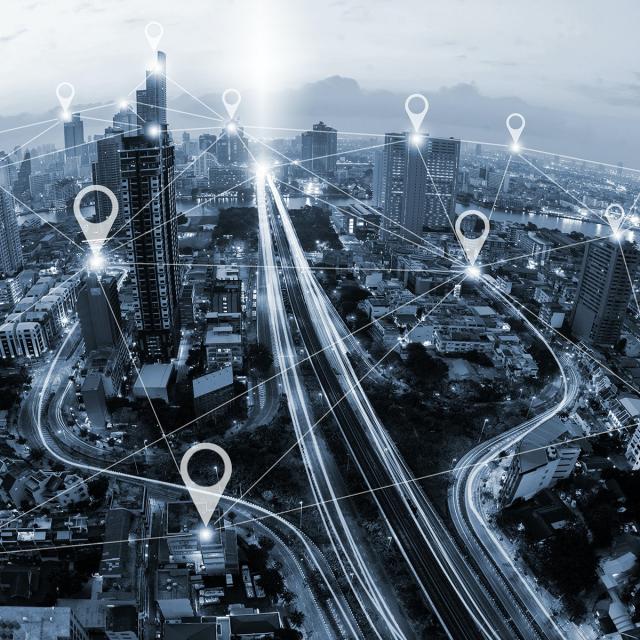
El movimiento de personas en una ciudad es un proceso complejo, pero que es muy importante de entender en profundidad para poder planificar adecuadamente el desarrollo de una ciudad. En este curso se presenta una introducción a diferentes herramientas que son aplicadas en la Ingeniería de Transporte para predecir de qué forma las personas escogen cómo y por dónde moverse en la red vial de una ciudad.

Class Deals by MOOC List - Click here and see Coursera's Active Discounts, Deals, and Promo Codes.

What You Will Learn

  • Comprender los fenómenos de asignación y de equilibrio sobre una red de transporte.
  • Conocer las herramientas utilizadas para modelar y predecir asignaciones de equilibrio en casos introductorios.

Syllabus

WEEK 1
Asignación y equilibrio en redes de transporte
Comprender la esencia y complejidad de los problemas de asignación y equilibirio de pasajeros.

WEEK 2
Asignación a redes sin congestión
Aprender a modelar y resolver problemas de asignación en redes de transporte privado sin congestión.

WEEK 3
Equilibrio de tráfico
Comprender el fenómeno de congestión, las condiciones que definen un equilibrio para los usuarios, y la forma de encontrar dicho equilibrio en el caso sin interacciones.

WEEK 4
Asignación en transporte público
Adquirir una visión de las diferentes formas que existen para modelar el comportamiento de los usuarios de un sistema de transporte público.

WEEK 5
Equilibrio de mercado
Adquirir una visión global de los problemas de equilibrio con demanda variable, y de la interacción de la oferta y de la demanda en un sistema de transporte urbano.
Go to Class
MOOC List is learner-supported. When you buy through links on our site, we may earn an affiliate commission.

Related Courses

Sustainability of Social-Ecological Systems: the Nexus between Water, Energy and Food (Coursera) Coursera
Universitat Autònoma de Barcelona

Sustainability of Social-Ecological Systems: the Nexus between Water, Energy and Food (Coursera)

In this course you will become familiar with the ideas of the water-energy-food nexus and transdisciplinary thinking. You will learn to see your community or country as a complex social-ecological system and to describe its water, energy and food metabolism in the form of a pattern, as well as to map the categories of social actors.

Nov 9th 2026
5-12 Weeks
Through Engineers' Eyes: Engineering Mechanics by Experiment, Analysis and Design (FutureLearn) FutureLearn
UNSW Sydney - University of New South Wales

Through Engineers' Eyes: Engineering Mechanics by Experiment, Analysis and Design (FutureLearn)

Learn the techniques of Engineering Mechanics, use them to interpret experiments and apply them to design. When you design anything, how do you know that the design will work? You need Engineering Mechanics - the science-based analysis that engineers use to predict how their designs will perform, so they can meet their responsibilities for performance and safety.

No sessions available
5-12 Weeks
Transforming Urban Mobility: Introduction to Transport Planning for Sustainable Cities (FutureLearn) FutureLearn
University College London,Transforming Urban Mobility Initiative - TUMI,GIZ

Transforming Urban Mobility: Introduction to Transport Planning for Sustainable Cities (FutureLearn)

Discover the different dimensions of sustainable urban mobility, including the Avoid-Shift-Improve (ASI) framework. Good transport systems and projects are critical to the development of environmentally sustainable and socially inclusive cities. This course considers the impacts of motorisation, our current unsustainable travel patterns, and the framework for changing to sustainable urban mobility.

Self Paced
4 Weeks
Entropy and Equilibria (edX) EdX
HarvardX,Harvard University

Entropy and Equilibria (edX)

Expand your learning of chemistry and thermodynamics by exploring entropy, free energy, and equilibrium. Nature is driven by spontaneity — processes that move forward without external intervention. In this course, Entropy and Equilibria , you will explore the Second Law of Thermodynamics and get an introduction to the concepts of entropy and equilibrium states.

Self Paced
Self-Paced
Wood Science: Beyond Building (Coursera) Coursera
West Virginia University

Wood Science: Beyond Building (Coursera)

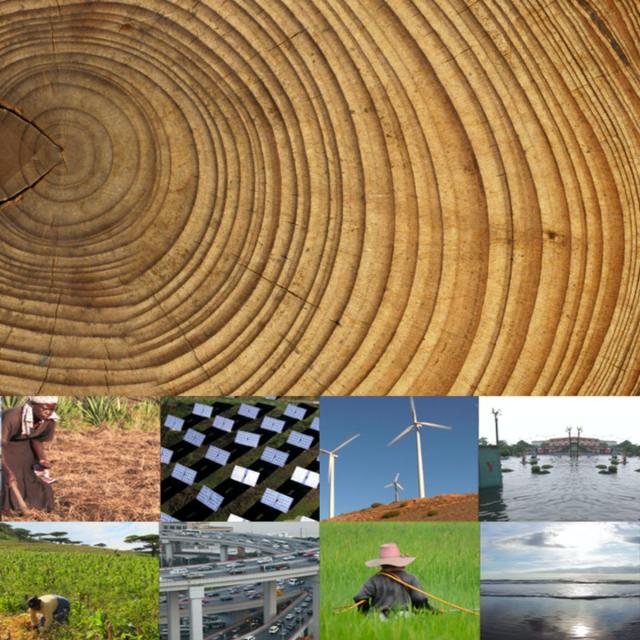
The central question of this course: “why study wood?” If “why study wood” is the question, one answer would be that it is the only raw material available to us that is truly renewable in human life span terms. Wood is as important to society today as it ever was, despite the development of many man-made substitute materials, changing resource availability, and the changing needs of society.

Nov 2nd 2026
4 Weeks
Wind resources for renewable energies (Coursera) Coursera
École Polytechnique

Wind resources for renewable energies (Coursera)

The main goal of this course is to get the necessary knowledge on atmospheric and fluid dynamics in order to quantify the wind resource of a local or regional area. We’ll learn about basic meteorology, the specific dynamics of turbulent boundary layers and some standard techniques to estimate wind resources regardless of the type of turbine used or the level of efficiency achieved.

Nov 2nd 2026
4 Weeks
Sustainable Urban Freight Transport: A Global Perspective (edX) EdX
Delft University of Technology,DelftX

Sustainable Urban Freight Transport: A Global Perspective (edX)

Learn key strategies for optimizing urban freight transport based on recent developments in market understanding, vehicle technology and cooperative ventures. Life in the city relies on the smooth operation of urban logistics. Everything from retail to services, construction to waste collection rely on an efficient and reliable freight transport system. However, with the increasing pressures of urbanization, this has to be balanced with the environmental and social impacts caused by transport activity.

Self Paced
Self-Paced
Las estaciones del año y el clima (Coursera) Coursera
Universidad Nacional Autónoma de México

Las estaciones del año y el clima (Coursera)

¿Sabes por qué hay animales que migran cada año? ¿Cómo saben los campesinos cuando sembrar y cuando cosechar? ¿Sabes qué gobierna el ciclo anual de frio y calor y de lluvias y secas? Las estaciones del año son el fenómeno climático más perceptible por el ser humano y se manifiestan de diferente forma en distintas regiones; por ejemplo cuando es invierno en la mitad del mundo, es verano en la otra mitad. Entender el mecanismo de las estaciones es el primer paso para entender el clima, que afecta a casi todas las actividades humanas.

Nov 2nd 2026
4 Weeks