Vital Signs: Understanding What the Body Is Telling Us (Coursera)

Vital Signs: Understanding What the Body Is Telling Us (Coursera)

The vital signs – heart rate, blood pressure, body temperature, respiration rate, and pain – communicate important information about the physiological status of the human body. In this six-part course we explore the anatomy and physiology underlying the vital signs so that you will develop a systematic, integrated understanding of how the body functions.

Class Deals by MOOC List - Click here and see Coursera's Active Discounts, Deals, and Promo Codes.

Relevant body systems are reviewed including cardiovascular and respiratory, followed by explanations of how the function of these systems affects vital signs. We discuss normal ranges, normal variants, and the mechanisms that underlie changes in the objective measurement of vital signs. The course also includes demonstrations of appropriate techniques for measuring vital signs in yourself and others.
The course is designed for a broad, general audience but will be particularly interesting for individuals working in healthcare, those considering a career as a healthcare professional, lay caregivers, those with an interest in personal health and fitness, or anyone who simply wants to understand how the body functions.

Syllabus

WEEK 1
Pulse/Heart Rate
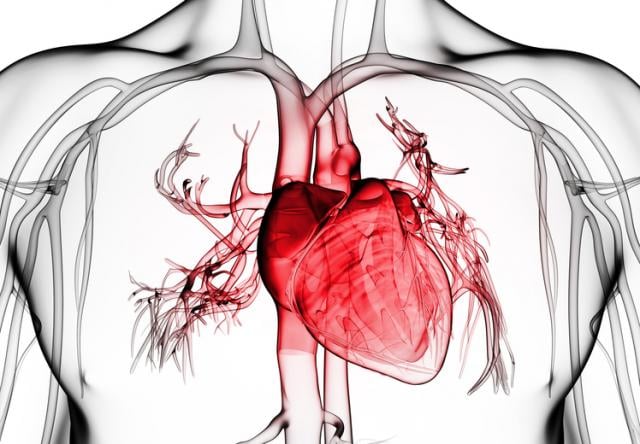
This week we start our exploration of the vital signs with a look at the heart. We'll study the basic structure of the heart, think about how the heart pumps blood through the body, and learn how clinicians assess and think about heart rate and the pulse.

WEEK 2
Blood Pressure
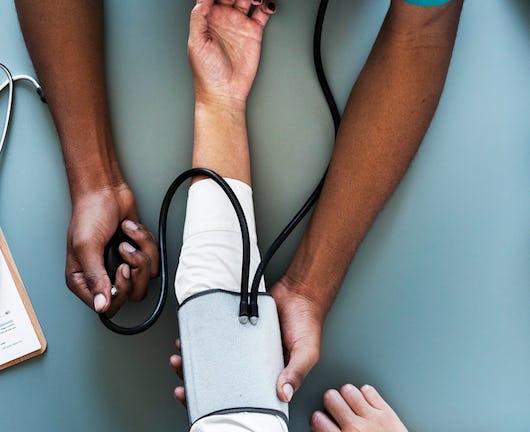
During week 2 we will learn about the anatomy of the blood vessels and how they function. You will have a better understanding of systolic and diastolic blood pressure, mean arterial pressure, and assessing blood pressure accurately.

WEEK 3
Metabolism
This week we will explore metabolism. We will discuss anabolism and catabolism, basal metabolic rate, how the body generates heat. You will also have a better understanding of how health care providers assess metabolic rate.

WEEK 4
Temperature
During week 4 you will learn the definition of mean body temperature and how the body regulates temperature. We will discuss hypothermia and the difference between hyperthermia and fever. Lastly, you will learn how to assess body temperature.

WEEK 5
Respiration Rate
This week we will learn about pulmonary anatomy, capillary gas exchange, and regulation of respiration. You will have a better understanding of how health care providers assess respiration rate and the quality of lung sounds.

WEEK 6
Pain
This week we will explore the neurological pathways associated with pain, and the difference between pain tolerance and pain threshold. We will understand what pain is telling us and why accurately assessing and effectively managing pain are important. In addition, we will review how healthcare providers asses pain.
Go to Class
MOOC List is learner-supported. When you buy through links on our site, we may earn an affiliate commission.

Related Courses

Data Science in Stratified Healthcare and Precision Medicine (Coursera) Coursera
University of Edinburgh

Data Science in Stratified Healthcare and Precision Medicine (Coursera)

An increasing volume of data is becoming available in biomedicine and healthcare, from genomic data, to electronic patient records and data collected by wearable devices. Recent advances in data science are transforming the life sciences, leading to precision medicine and stratified healthcare. In this course, you will learn about some of the different types of data and computational methods involved in stratified healthcare and precision medicine.

Oct 5th 2026
5-12 Weeks
Impacting the Opioid Crisis: Prevention, Education, and Practice for Non-Prescribing Providers (Coursera) Coursera
University of Michigan

Impacting the Opioid Crisis: Prevention, Education, and Practice for Non-Prescribing Providers (Coursera)

This course will empower non-prescribing providers to directly impact the ongoing opioid crisis in the United States through increased knowledge and tools that will transform practice and policies. The course will inform you about the opioid epidemic and provide information and research about evidence-based strategies that are focused on prevention, intervention, education, or policy.

Oct 12th 2026
5-12 Weeks
Everyday Chinese Medicine 2 (Coursera) Coursera
The Chinese University of Hong Kong

Everyday Chinese Medicine 2 (Coursera)

This course, Everyday Chinese Medicine II offered by the Chinese University of Hong Kong, aims to show to the public, as well as the healthcare professionals about the basic principles of Chinese medicine. Our primary goal is to empower healthcare choices by promoting awareness and practical application on Chinese medicine diagnostic and therapeutic approaches, and to facilitate interprofessional education between Chinese and conventional clinicians.

Oct 5th 2026
5-12 Weeks
EMT Foundations (Coursera) Coursera
University of Colorado System

EMT Foundations (Coursera)

In this course, you will get a thorough introduction to the emergency medical services system, and learn the foundation components to how it works as a whole. You will also learn the nuts and bolts of becoming a healthcare provider, and gain some basic knowledge about the human body.

Sep 28th 2026
5-12 Weeks
Principles of fMRI 1 (Coursera) Coursera
Johns Hopkins University

Principles of fMRI 1 (Coursera)

Functional Magnetic Resonance Imaging (fMRI) is the most widely used technique for investigating the living, functioning human brain as people perform tasks and experience mental states. It is a convergence point for multidisciplinary work from many disciplines. Psychologists, statisticians, physicists, computer scientists, neuroscientists, medical researchers, behavioral scientists, engineers, public health researchers, biologists, and others are coming together to advance our understanding of the human mind and brain. This course covers the design, acquisition, and analysis of Functional Magnetic Resonance Imaging (fMRI) data, including psychological inference, MR Physics, K Space, experimental design, pre-processing of fMRI data, as well as Generalized Linear Models (GLM’s).

Oct 12th 2026
4 Weeks
Take the Lead on Healthcare Quality Improvement (Coursera) Coursera
Case Western Reserve University

Take the Lead on Healthcare Quality Improvement (Coursera)

In this course you will learn about the importance of quality in healthcare and how you can contribute by implementing a quality improvement (QI) project to improve processes of care and patient outcomes. You will learn about powerful tools to add to your QI ‘toolbox’ during short lectures and reflective exercises. You will apply these tools to the implementation of a QI project in your own practice setting or an area of personal improvement. At the completion of the course, you will have a storyboard that captures your QI project success to share with others.

Sep 28th 2026
5-12 Weeks
Health Concepts in Chinese Medicine (Coursera) Coursera
The Hong Kong University of Science and Technology - HKUST

Health Concepts in Chinese Medicine (Coursera)

Chinese Medicine and Modern Medicine are two distinct medical systems, yet they both aim at the prevention and treatment of human diseases. With this in mind, we should understand the practice of Chinese Medicine in the context of Modern Medicine. In this course, we explore the basic theories underlying the practice of Chinese Medicine, compare and contrast the use of Chinese Medicine and Modern Medicine in Preventive Health, and discuss how to restore a healthy condition and understand the pharmacological basis of different types of Chinese tonifying herbs.

Sep 28th 2026
5-12 Weeks
Pioneers of Medicine and Medical Breakthroughs in Taiwan (Coursera) Coursera
National Taiwan University

Pioneers of Medicine and Medical Breakthroughs in Taiwan (Coursera)

Through ages, doctors and scientists have worked hard to fight against different diseases, but it is not easy to find the effective way to deal with them. However, it is a lot faster and easier to approach new problems nowadays with the help of past experience and modern technology. In this course, we are going to show you some common diseases and its current management. At the same time, we will also show you how modern medicine has developed and what breakthroughs are specially made in Taiwan.

Sep 28th 2026
5-12 Weeks