EdX

Claves para leer imágenes (edX)

Claves para leer imágenes (edX)

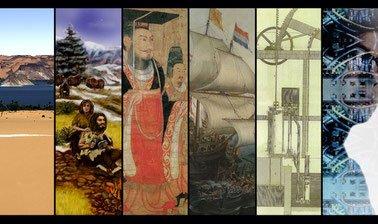
Vivimos en la era de la revolución icónica. Necesitamos métodos para comprender las imágenes. Los mapas, los paisajes, las obras de arte, los medios de masas, las películas de cine y las páginas de internet nos hablan, por lo que debemos conocer sus códigos para entenderlas. Conoce las claves para analizar las imágenes históricas que hemos producido los seres humanos. Tenemos dos objetivos: enseñar a utilizarlas como documentos históricos y emplearlas como recursos didácticos.

Class Deals by MOOC List - Click here and see EdX's Active Discounts, Deals, and Promo Codes.

La especie humana ha elaborado imágenes con fines religiosos, informativos o placenteros desde sus orígenes. La sociedad ha experimentado un proceso de multiplicación icónica. Una densidad figurativa o abstracta que se ha acelerado en los últimos siglos. El homo sapiens se ha ido transformando cada vez más rápidamente en homo videns. En la historia de la humanidad, se ha verificado el paso de la pintura sagrada del santuario rupestre a la actual era de la saturación de imágenes.

En este MOOC partimos de la teoría de la imagen, proporcionando varios métodos para analizarlas. Nos detendremos en las imágenes del poder a través de la Historia. También pondremos un ejemplo de imágenes en la larga duración histórica, concretado en las Cruzadas, cuyas representaciones han ido evolucionando desde los arquetipos medievales hasta la deformación contemporánea del concepto. En el mundo del arte aprenderemos a leer pinturas, esculturas y arquitecturas. Después analizaremos los medios de comunicación de masas. La imprenta divulgó textos y grabados entre las élites. La caricatura y el cómic, el cartel y la publicidad, provocaron la sonrisa o la ira en unos espectadores que acabaron por sucumbir a la seducción de las ilustraciones.
La invención de la fotografía, pronto asequible a muchos bolsillos, democratizó la imagen. “El hombre ha vencido a la muerte”, dijeron los críticos. El nacimiento del mismo desencadenó una carrera frenética entre los inventores. Los hermanos Lumière patentaron el cinematógrafo. Las películas viajaron a los cinco continentes y los pueblos se pusieron rostro unos a otros. En adelante, al tiempo que surgían nuevos medios audiovisuales, a la par que el mudo se globalizaba, el universo pasó a contemplarse en una pantalla. La historia pasó a leerse en imágenes.
En él creemos que las imágenes nunca han perdido su aura mágica. ¿Por qué se destruyen las estatuas de los gobernantes tiranos? ¿Por qué llevamos fotos de nuestros seres queridos en el móvil? ¿Por qué el creyente besa iconos y estampas religiosas? La razón está en que seguimos creyendo que las imágenes influyen en nuestras vidas.
Ese carisma de la imagen la hace intermediaria entre la realidad y nuestra percepción. De ahí que las personas de pensamiento poco formado confundan la imagen con su verdad. Como el niño que mira detrás del espejo para ver dónde se esconde su imagen. La hechicera que practica vudú para dañar a una persona. O el amante despechado que rompe la foto de su pareja.
This course is part of the Lectura de imágenes históricas XSeries Program.

What you'll learn

  • Enseñar a leer imágenes: teorías y métodos para analizar las imágenes.
  • Repasar la historia de las imágenes, desde las pinturas prehistóricas a internet.
  • Estudiar las imágenes del poder: de los reyes de la Antigüedad a los presidentes democráticos, la propaganda política y la iconoclastia o destrucción de imágenes.
  • Hacer un seguimiento iconográfico en la larga duración histórica de dos temas: las Cruzadas y El Quijote.
  • Analizar cómo las imágenes han sido tratadas por los medios de comunicación de masas, que van desde la imprenta hasta el cine. De manera que repasaremos el grabado, la fotografía, el cartelismo, la publicidad, los cómics, el cine, la televisión y las pantallas de la era de internet.
Go to Class
MOOC List is learner-supported. When you buy through links on our site, we may earn an affiliate commission.

Related Courses

Artful Medicine: Art’s Power to Enrich Patient Care (edX) EdX
Brown University,BrownX

Artful Medicine: Art’s Power to Enrich Patient Care (edX)

Discover how the medical community harnesses the power of art and empathy to improve patient care. What impact can art and the humanities have on patient care? Can art enhance medical caregivers’ powers of observation and humanize their interactions with patients? Through presence alone, can caregivers heal what they cannot cure?

No sessions available
3 Weeks
Cosmopolitan Tang: Aristocratic Culture in China (edX) EdX
HarvardX,Harvard University

Cosmopolitan Tang: Aristocratic Culture in China (edX)

Explore the reunification of China under the Tang with a focus on aristocratic culture — from poetry to calligraphy to literature. By the Tang period, China was divided into northern and southern dynasties with different rulers and political systems. The north was conquered by relatively unsophisticated barbarians, but in the south, the aristocratic families established a refined appreciation of writing and literature.

Self Paced
Self-Paced
Hong Kong Cinema through a Global Lens (edX) EdX
University of Hong Kong,HKUx

Hong Kong Cinema through a Global Lens (edX)

Explore globalization through Hong Kong film classics of Bruce Lee, Jackie Chan, and Maggie Cheung, among others. Hong Kong Cinema has a global reach. Let’s explore how it reached you… Perhaps you know the films of martial arts icons Bruce Lee and Jackie Chan or the heroic bloodshed films of John Woo. Perhaps you are a fan of stars such as Maggie Cheung or Chow Yun Fat. Maybe you admire works by directors such as Wong Kar Wai.

Self Paced
Self-Paced
The Spain of Don Quixote (edX) EdX
Universidad Autonoma de Madrid

The Spain of Don Quixote (edX)

An exploration of Spain depicted in Cervante’s historic novel, Don Quixote – a Golden Age in which Spanish arts and literature reached worldwide excellence. This MOOC focuses on Spanish history between the Renaissance and Baroque periods—a time when the Spanish culture set the tone in the Western world.

Self Paced
Self-Paced
The Civil War and Reconstruction - 1850-1861: A House Divided (edX) EdX
Columbia University,ColumbiaX

The Civil War and Reconstruction - 1850-1861: A House Divided (edX)

Discover how the issue of slavery came to dominate American politics, and how political leaders struggled and failed to resolve the growing crisis in the nation. A House Divided: The Road to Civil War, 1850-1861 begins by examining how generations of historians have explained the crisis of the Union. After discussing the institution of slavery and its central role in the southern and national economies, it turns to an account of the political and social history of the 1850s.

Self Paced
Self-Paced
Engineering for Your Classroom K – 3 (edX) EdX
The University of British Columbia,UBCx

Engineering for Your Classroom K – 3 (edX)

Self-paced, asynchronous course aimed to help educators introduce Science, Math, Engineering and Technology (STEM) concepts to K-3 students. This course is designed for educators to learn about ways to teach Engineering and STEM concepts to their students through fun, hands-on activities.

Self Paced
Self-Paced
The Meaning of Rome: The Renaissance and Baroque City (edX) EdX
University of Notre Dame,NotreDameX

The Meaning of Rome: The Renaissance and Baroque City (edX)

Learn how the art, architecture, and urban form of Renaissance and Baroque Rome projected the city’s image of itself to its citizens and the world. We can read a city in a number of ways: in its plan, in the buildings that make its streets and public spaces, in the skyline. We can ask, what are the buildings or spaces saying? How do they say it? How does it all stitch together?

No sessions available
5-12 Weeks
GIS Image Analysis in ArcGIS Pro (edX) EdX
University of Alaska Fairbanks,AlaskaX

GIS Image Analysis in ArcGIS Pro (edX)

Learn fundamentals of remote sensing, image analysis, image processing and its application on real-world problems such as vegetation health, wildfire severity, and flooding. Image analysis is extraction of meaningful information from an image to accomplish a simple task like understanding the landscape or to solve a complex problem like face recognition.

Self Paced
Self-Paced
Deciphering Secrets: Unlocking the Manuscripts of Medieval Burgos (Spain) (edX) EdX
Universidad Carlos III de Madrid - UC3M,UC3Mx

Deciphering Secrets: Unlocking the Manuscripts of Medieval Burgos (Spain) (edX)

Explore the medieval city of Burgos (Spain) and assess its history of Jewish, Christian, and Muslim religious and cultural coexistence. This history course delves into the medieval history of the city of Burgos, from its inception in 884 c.e. as the homeland of the Spanish Kingdom of Castile and Leon, until the completion of the Spanish Reconquista in 1492.

No sessions available
5-12 Weeks