EdX

Casing the Joint: Introducing Histories of Australian Crime (edX)

Casing the Joint: Introducing Histories of Australian Crime (edX)

Learn about approaches to the study of the history of crime and punishment, especially in Australia. Crime holds a special place in Australian history, having facilitated colonisation, provided its most celebrated anti-hero in Ned Kelly and been used to sell millions of newspapers, books and movie tickets. Drawing upon a rich array of digital history resources, this course offers you a guided tour of the origins of Australian underworlds and of the study of the history of crime and punishment.

Class Deals by MOOC List - Click here and see EdX's Active Discounts, Deals, and Promo Codes.

This course will deepen your understanding of the underworlds you encounter in podcasts, televisions series and books. You will develop a sense of the processes which occur when someone becomes entangled with the legal system, and you will know where you can go to find out more about an offender or a crime for yourself.

What you'll learn

  • Introduction to the major trends in the history of crime and punishment in Australia
  • Examination of the different ways in which people engage with, and study, crime
  • How British law was adapted to New South Wales, Victoria and other Australian colonies
  • The impact of digitisation and online sources on the study of crime

Syllabus

The course is three weeks long; each week's topic is designed to provide you with a grounding in the history of crime.
Week 1: What is the History of Crime? Learn about the distinctive features of the scholarly study of the history of crime, and how histories of crime differ from related genres like true crime.
Week 2: Criminal Justice and the Prosecution Project. You will recover the records of people convicted of crimes in Great Britain under English law and who were transported to the Australian colonies.
Week 3: Identifying Underworlds. The third week of the course reveals how the appearance of those taken into custody was recorded in police records, and how these systems of identification changed over time.


Go to Class
MOOC List is learner-supported. When you buy through links on our site, we may earn an affiliate commission.

Related Courses

A Journey through Western Christianity: from Persecuted Faith to Global Religion (200 - 1650) (Coursera) Coursera
Yale University

A Journey through Western Christianity: from Persecuted Faith to Global Religion (200 - 1650) (Coursera)

This course follows the extraordinary development of Western Christianity from its early persecution under the Roman Empire in the third century to its global expansion with the Jesuits of the early modern world. We explore the dynamic and diverse character of a religion with an enormous cast characters. We will meet men and women who tell stories of faith as well as of violence, suppression, and division.

Oct 5th 2026
5-12 Weeks
Euro Noir: Transcultural Identities in European Popular Crime Narratives (edX) EdX
KU Leuven University,KULeuvenX

Euro Noir: Transcultural Identities in European Popular Crime Narratives (edX)

Learn how crime novels, films and television dramas can help investigate European cultural identity. The crime genre, arguably the most popular narrative genre in Europe, is an ideal object of study for evaluating how the process of Europeanisation has impacted the forms of cultural production, distribution and reception. Have you ever wondered what has made crime narratives so popular throughout Europe? If yes, this course is a perfect fit for you!

Self Paced
Self-Paced
Film, Images & Historical Interpretation in the 20th Century: The Camera Never Lies (Coursera) Coursera
University of London,Royal Holloway, University of London

Film, Images & Historical Interpretation in the 20th Century: The Camera Never Lies (Coursera)

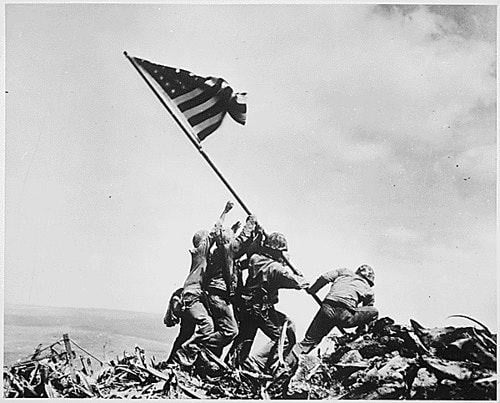
This course is a short taster on the topic of the use of Images, Film, and their use in historical interpretation in the 20th century. It is primarily provided for those who have a general interest in history that draws on photojournalism as primary evidence, and films based on historical events.

Oct 5th 2026
5-12 Weeks
La España de El Quijote (edX) EdX
Universidad Autonoma de Madrid,UAMx

La España de El Quijote (edX)

La España de El Quijote es un viaje a nuestro esplendor cultural. A un Siglo de Oro que elevó las artes y las letras hispanas a la excelencia mundial. En un lugar de la UAM, cuyo nombre merece recordar, habita la España de El Quijote. Un espacio en el que su monarquía creó el primer imperio global de la Historia. Un tiempo, entre los siglos XVI y XVII, en el que su sociedad alcanzó la excelencia en las artes y las letras.

Self Paced
Self-Paced
Claves para leer imágenes (edX) EdX
Universidad Autonoma de Madrid,UAMx

Claves para leer imágenes (edX)

Vivimos en la era de la revolución icónica. Necesitamos métodos para comprender las imágenes. Los mapas, los paisajes, las obras de arte, los medios de masas, las películas de cine y las páginas de internet nos hablan, por lo que debemos conocer sus códigos para entenderlas. Conoce las claves para analizar las imágenes históricas que hemos producido los seres humanos. Tenemos dos objetivos: enseñar a utilizarlas como documentos históricos y emplearlas como recursos didácticos.

Self Paced
Self-Paced
The Holocaust - An Introduction (II): The Final Solution (Coursera) Coursera
Tel Aviv University,Yad Vashem

The Holocaust - An Introduction (II): The Final Solution (Coursera)

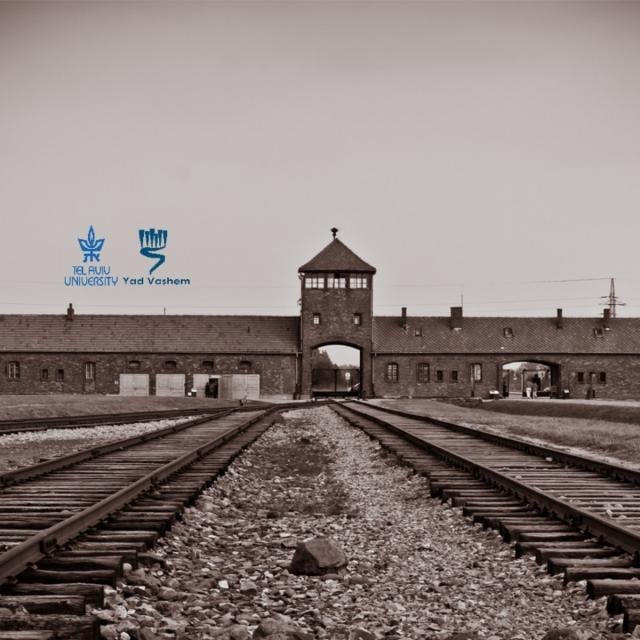
The Holocaust was an inconceivable historical event, which forever robbed Western culture of its innocence. As civilized human beings, we fail to understand how events of such horror could have taken place, and how an idea so inhumanly warped could have spread like wildfire through an entire continent, instigating the systematic annihilation of millions of Jews.

Oct 5th 2026
3 Weeks
Arab-Islamic History: From Tribes to Empires (edX) EdX
Tel Aviv University,IsraelX,TAUx

Arab-Islamic History: From Tribes to Empires (edX)

Learn about the history of the Arab and Muslim world during its first millennium, including political, social and cultural aspects. You will study this course in two parts. The first presents the main political events that set the chronological framework for the course, namely 6th century to the arrival of the Ottomans in the Middle East in the beginning of the 16th century. The second part delves into social and cultural realities of the medieval Middle East.

Self Paced
Self-Paced
Biblical Archaeology: The archaeology of ancient Israel and Judah (edX) EdX
IsraelX

Biblical Archaeology: The archaeology of ancient Israel and Judah (edX)

Join me as I share with you my passion for archaeological discovery and learn about the exciting methods of modern archaeology. Explore how archaeology illuminates biblical Israel and Judah, and the archaeological finds relate to the bible. Join me for an introductory course on biblical archaeology of ancient Israel and Judah during the Iron Age (ca. 1200-586 BCE).

Nov 1st 2022
5-12 Weeks
Pyramids of Giza: Ancient Egyptian Art and Archaeology (edX) EdX
HarvardX,Harvard University

Pyramids of Giza: Ancient Egyptian Art and Archaeology (edX)

Explore the archaeology, history, art, and hieroglyphs surrounding the famous Egyptian Pyramids at Giza. Learn about Old Kingdom pharaohs and elites, tombs, temples, the Sphinx, and how new technology is unlocking their secrets. Where is Giza? How were the Pyramids built? How did the cemeteries and hundreds of decorated tombs around them develop? What was Giza’s contribution to this first great age of ancient Egyptian civilization, the Old Kingdom?

Self Paced
Self-Paced
Terrorism and Counterterrorism: Comparing Theory and Practice (Coursera) Coursera
Leiden University

Terrorism and Counterterrorism: Comparing Theory and Practice (Coursera)

Terrorism has arguably been one of the defining factors of our age. It frequently makes headlines, threatening or attacking governments, private business and ordinary citizens. And in many parts of the world, it has been one of the most important threats to peace, security and stability. But what does this exactly mean? What is the nature of this threat? Who or what is threatened, how, by whom and why? What can be done about it or how can we at least limit the impact of terrorism and make sure that terrorists do not make headlines and manage to scare us? These are just a handful of questions that will be addressed in this course that consists of three parts.

Oct 5th 2026
5-12 Weeks