Beer Quality: Flavor (Coursera)

Beer Quality: Flavor (Coursera)

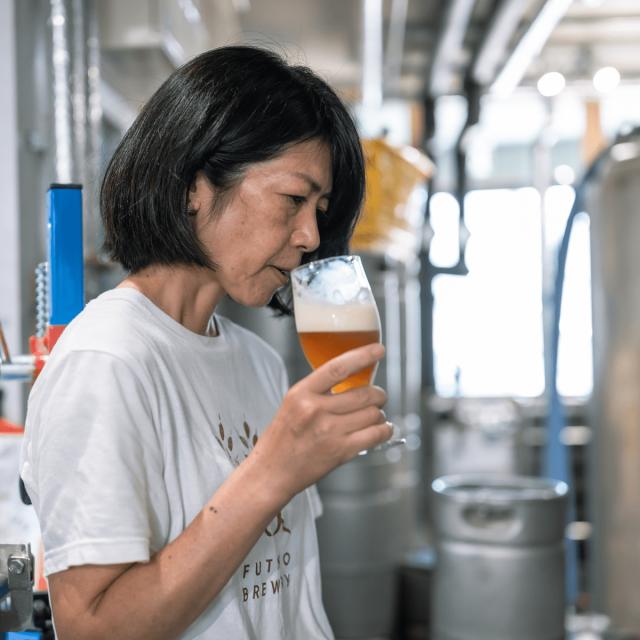
In this second course of the Beer Quality Series, you will learn about factors influencing the perception of flavor and the molecules that influence flavor. We also review methods of evaluating and measuring flavor, as well as methods of modifying flavor.

Class Deals by MOOC List - Click here and see Coursera's Active Discounts, Deals, and Promo Codes.

In addition, you will learn about how to address individual quality issues from the standpoint of: the basic underpinning science, the practicalities of the issue pertaining to brewing and its associated activities, quality assurance and quality control parameters, and a troubleshooting guide.
Course 2 of 5 in the Beer Quality Specialization.

What You Will Learn
Discover the science behind beer flavor, how to measure and assess flavor, and how to achieve the ideal flavor in beer.

Syllabus

WEEK 1
Getting Started & The Flavor of Beer
In this module, we look at how attitudes and senses other than taste affect people's perception of beer flavor. We'll also look closer at how human senses affect our perception of flavor and discuss tools and methods used to measure and score beer flavor. Then, we'll talk about key aromas for tasting and evaluating beer flavor and discuss "difference tasting" and "descriptive tasting."

WEEK 2
Molecules of Flavor & Metabolism
In this module, we'll discuss some of the molecules that influence the sweetness and bitterness of beer. We'll continue our discussion of bitterness and discuss the impact of hop aroma on beer flavor. We'll also provide an overview of yeast metabolism. By understanding the basics of metabolism, we can make sense of how yeast impacts flavor.

WEEK 3
The Chemistry & Molecules of Flavor
In this module, we'll discuss various molecules that affect flavor and how they are produced. We'll talk about how alcohols affect beer flavor and discuss the sulfur atom, which appears in some of the most potent flavor active substances in beer. We'll continue our discussion on DMS and discuss beer texture and mouthfeel.

WEEK 4
Quantifying Flavor & A Feast of Variables
In this module, we'll discuss tools and methods for quantifying beer flavor and review factors that need to be addressed when considering flavor.

Go to Class
MOOC List is learner-supported. When you buy through links on our site, we may earn an affiliate commission.

Related Courses

Reasoning Across the Disciplines (Coursera) Coursera
University of North Carolina

Reasoning Across the Disciplines (Coursera)

Critical reasoning skills are a key success factor for students entering their first year of college. They must be able to think logically and form arguments. This course, designed with incoming college freshmen in mind but open to anyone, provides an essential grounding in critical reasoning skills. Faculty from multiple disciplines at the University of North Carolina at Chapel Hill offer guidance on applying critical thinking skills in the context of specific disciplines. By developing these skills, students will learn more, enjoy their courses more, and experience greater academic success.

May 18th 2026
5-12 Weeks
General Chemistry: Concept Development and Application (Coursera) Coursera
Rice University

General Chemistry: Concept Development and Application (Coursera)

This course will cover the topics of a full year, two semester General Chemistry course. We will use a free on-line textbook, Concept Development Studies in Chemistry, available via Rice’s Connexions project. The fundamental concepts in the course will be introduced via the Concept Development Approach developed at Rice University. In this approach, we will develop the concepts you need to know from experimental observations and scientific reasoning rather than simply telling you the concepts and then asking you to simply memorize or apply them.

Jun 1st 2026
5-12 Weeks
Chemical Hazards: Toxicology & Reactivity (Coursera) Coursera
University of California, Davis

Chemical Hazards: Toxicology & Reactivity (Coursera)

This course aims to provide process safety experience for engineers, particularly relevant to chemical engineering but applicable to any field involving process operations. This course introduces you to the important, practical, value-added skills and information that will aid your career, or preparation for a career, in chemical process engineering.

Jun 8th 2026
4 Weeks
Beer Quality: Freshness (Coursera) Coursera
University of California, Davis

Beer Quality: Freshness (Coursera)

In this third course of the Beer Quality Series on beer freshness, led by distinguished professor Charles Bamforth, Ph.D, you will learn about beer flavor preconceptions, expectations, and causes of flavor instability. You'll also learn about the science of flavor change and the study and process impacts of flavor stability. In addition, you will review light instability and how it can lead to skunking.

Jun 1st 2026
4 Weeks
Chemical Engineering Thermodynamics 2 (Coursera) Coursera
Korea Advanced Institute of Science and Technology - KAIST

Chemical Engineering Thermodynamics 2 (Coursera)

An appreciation of thermodynamics is required to become a chemical and biomolecular engineer. Thermodynamics can assess the viability of a process and is one of the curriculum's most essential topics. The principles are utilized in following engineering courses (kinetics, mass transfer, design, materials) and are applicable to numerous engineering disciplines. The increased emphasis on energy usage and transformation as a result of rising demand, diminishing supply, and global warming necessitates that the engineers who will tackle these issues have a firm grasp of thermodynamics.

Jun 8th 2026
5-12 Weeks
Beer Quality Systems (Coursera) Coursera
University of California, Davis

Beer Quality Systems (Coursera)

Ultimately, the difference between success and failure as a brewer is whether you consistently deliver a quality beer. Designed for brewers of all skill levels, this course is part of a comprehensive series where brewing legend Charlie Bamforth, Ph.D. guides you through the key markers of beer quality: flavor, foam, color/clarity, freshness and quality systems. In this last course of the Beer Quality Series, you will examine the systems necessary to produce quality beer.

Jun 1st 2026
4 Weeks
Predictive Models for Toxic Chemical Releases (Coursera) Coursera
University of California, Davis

Predictive Models for Toxic Chemical Releases (Coursera)

Discover the core principles of process safety and risk analysis in chemical engineering through our dynamic course. Gain expertise in modeling liquid and gas leaks, accurately assessing potential material releases, and calculating downwind exposures to toxic chemicals using state-of-the-art dispersion models. This course equips chemical engineers with essential skills to evaluate and mitigate hazardous concentrations effectively, ensuring industrial process safety.

Jun 8th 2026
4 Weeks
Chemical Engineering Thermodynamics 1 (Coursera) Coursera
Korea Advanced Institute of Science and Technology - KAIST

Chemical Engineering Thermodynamics 1 (Coursera)

An appreciation of thermodynamics is required to become a chemical and biomolecular engineer. Thermodynamics can assess the viability of a process and is one of the curriculum's most essential topics. The principles are utilized in following engineering courses (kinetics, mass transfer, design, materials) and are applicable to numerous engineering disciplines. The increased emphasis on energy usage and transformation as a result of rising demand, diminishing supply, and global warming necessitates that the engineers who will tackle these issues have a firm grasp of thermodynamics.

Jun 8th 2026
5-12 Weeks
Thermodynamique : applications (Coursera) Coursera
École Polytechnique Fédérale de Lausanne

Thermodynamique : applications (Coursera)

Ce cours complète le MOOC « Thermodynamique : fondements » qui vous permettra de mettre en application les concepts fondamentaux de la thermodynamique. Pour atteindre cet objectif, le Professeur J.-Ph. Ansermet de l’Ecole Polytechnique Fédérale de Lausanne s’est entouré d’experts et de spécialistes des différents domaines d’application provenant de diverses institutions partenaires du réseau RESCIF. Vous pourrez ainsi voir l’usage de la thermodynamique en chimie, en ingénierie et en physique.

Jun 8th 2026
5-12 Weeks