EdX

Biological Principles in Wastewater Treatment (edX)

Offered by Purdue University, PurdueX,
Biological Principles in Wastewater Treatment (edX)

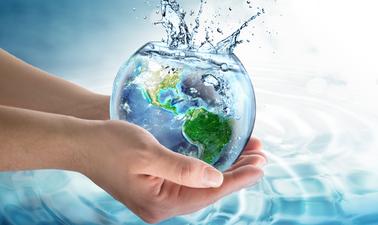
This course introduces biological principles used in the design and operation of biological wastewater treatment plants. Water scarcity is one of the most critical challenges in human society. Billions of people in the world have poor access to clean water and such a situation is getting worse with rapid population growth and industrial development.

Class Deals by MOOC List - Click here and see EdX's Active Discounts, Deals, and Promo Codes.

Wastewater treatment is an important approach to recover valuable water and reduce its pollution to the environment and risks to humans. Biological wastewater treatment is a cost-effective and most used technique for wastewater treatment.
This course introduces the fundamental design principles and practice of biological wastewater treatment and prepares students for designing wastewater treatment systems. At the end of the course, students are expected to understand general biological principles and design practices of wastewater treatment, apply the knowledge to select the best unit process to treat wastewater, and design a wastewater treatment component or process to meet water quality treatment goals.
This course is part of the Water and Wastewater Treatment MicroMasters.
What you'll learn

  • preliminary treatment of wastewater
  • primary treatment
  • wastewater microbiology
  • activated sludge process
  • secondary settling
  • disinfection
  • post-aeration
  • tertiary treatment
  • residual management.

Syllabus

Week 1:

  • Introduction of Wastewater Treatment
  • Biochemical Oxygen Demand
  • Overview of Wastewater Treatment Processes
  • Pump Station
  • Bar Screen
  • Grit Chamber
  • Equalization Basin

Week 2:

  • Primary Treatment
  • Sedimentation
  • Primary Sedimentation

Week 3:

  • Microbiological principles for biological wastewater treatment

-Microbial kinetics
-Mass balance equations
Week 4:

  • Bacterial growth kinetics
  • Sludge production
  • Oxygen demand and transfer
  • Food to microorganism ratio

-Denitrification
Week 5:

  • Secondary Settling
    • Disinfection
Go to Class
MOOC List is learner-supported. When you buy through links on our site, we may earn an affiliate commission.

Related Courses

Electrotechnique II (edX) EdX
École Polytechnique Fédérale de Lausanne,EPFLx

Electrotechnique II (edX)

Découvrez les systèmes alternatifs triphasés et leurs charges associées ainsi que les régimes transitoires, base des alimentations à découpage. Ce cours traite des systèmes alternatifs triphasés, piliers de l'alimentation électrique industrielle et de certains types de machines électriques. Les charges triphasées associées, symétriques ou dissymétriques, seront étudiées ainsi que les puissances actives, réactives et apparentes qui en découlent. Des méthodes de compensation de la puissance réactive seront développées.

Self Paced
Self-Paced
La participation du public dans le champ environnemental (FUN) FUN
Centre National de la Fonction Publique Territoriale - CNFPT

La participation du public dans le champ environnemental (FUN)

Dans le respect de la Convention d’Aarhus et en application de l’article 7 de la Charte de l’Environnement, chaque citoyenne et citoyen a le droit d’être informé et de participer à titre personnel à l’élaboration des décisions publiques ayant une incidence sur l’environnement.

No sessions available
5-12 Weeks
New paradigms in wastewater management: from a sanitation problem to a circular sustainable solution (POK) Polimi OPEN KNOWLEDGE
Politecnico di Milano

New paradigms in wastewater management: from a sanitation problem to a circular sustainable solution (POK)

The new paradigms in the management of the urban water service: originally conceived to protect public health through safe water supply and adequate treatment of wastewater, current trends aim not only at process optimization and energy savings but also at energy and material recovery from wastewater and sludge.

Available now
4 Weeks
Introduction to Bioconductor (edX) EdX
HarvardX,Harvard University

Introduction to Bioconductor (edX)

The structure, annotation, normalization, and interpretation of genome scale assays. We begin with an introduction to the biology, explaining what we measure and why. Then we focus on the two main measurement technologies: next generation sequencing and microarrays. We then move on to describing how raw data and experimental information are imported into R and how we use Bioconductor classes to organize these data, whether generated locally, or harvested from public repositories or institutional archives.

Self Paced
Self-Paced
Fundamentos de Mecánica para Ingeniería (edX) EdX
Universitat Politècnica de València,UPValenciaX

Fundamentos de Mecánica para Ingeniería (edX)

Estudiaremos la cinemática y la dinámica del punto, los conceptos de trabajo y potencia y la energía mecánica. Se aborda el estudio del universo físico analizando objetos en movimiento. Se definen y analizan todas las magnitudes y leyes físicas que permiten describir geométrica y causalmente el movimiento de cuerpos representados por un punto.

Self Paced
Self-Paced
Fundamentos de Comunicaciones Ópticas (edX) EdX
Universitat Politècnica de València,UPValenciaX

Fundamentos de Comunicaciones Ópticas (edX)

Se tratan conceptos básicos de las comunicaciones ópticas como el guiado, los modos, la atenuación o la dispersión y el diseño de sistemas. Este curso está destinado a estudiantes universitarios de la rama de las Tecnologías de la Información y las Comunicaciones que quieran conocer los mecanismos fundamentales de las comunicaciones por fibra óptica.

Self Paced
Self-Paced
Introduction to Environmental Science (edX) EdX
DartmouthX,Dartmouth College

Introduction to Environmental Science (edX)

A scientific study of the natural world and how it is influenced by people. Major topics include: food, energy, human population, biodiversity and global change. Environmental science is the study of patterns and processes in the natural world and their modification by human activity. To understand current environmental problems, we need to consider physical, biological and chemical processes that are often the basis of those problems.

Self Paced
4 Weeks
Fundamentals of Neuroscience, Part 1: The Electrical Properties of the Neuron (edX) EdX
HarvardX,Harvard University

Fundamentals of Neuroscience, Part 1: The Electrical Properties of the Neuron (edX)

Learn how electricity makes the neurons in your brain tick. Fundamentals of Neuroscience is a three-courseseries that explores the structure and function of the nervous system—from the inner workings of a single nerve cell to the staggering complexity of the brain and the social interactions they enable.

Self Paced
Self-Paced
Supply Chains for Manufacturing: Capacity Analytics (edX) EdX
MIT,MITx

Supply Chains for Manufacturing: Capacity Analytics (edX)

Learn about various models, methods and software tools to help make better decisions for system design in manufacturing systems and supply chains. You will learn about frameworks and models for structuring key system design issues and trade-offs that arise in today’s supply chains and manufacturing systems.

Aug 11th 2026
5-12 Weeks
Planetary Boundaries (edX) EdX
SDGAcademyX,SDG Academy

Planetary Boundaries (edX)

Can our planet continue to support the current scope of human activity? A thriving global society relies on the stability of the Earth and its resilience across oceans, forests, waterways, biodiversity, the atmosphere and more. So how do we shape sustainability at a global scale? The boundaries set by the planet’s natural resources, the resilience of those resources, and the human activities that impact sustainability all come into play.

Self Paced
Self-Paced