Best Practices for iOS User Interface Design (Coursera)

Best Practices for iOS User Interface Design (Coursera)

You will learn to develop sophisticated user interfaces for iOS, with a focus on user interface design best practices, UI animations, and responsive design. You will learn about the key UI widgets, mapping interfaces and view restoration.

Class Deals by MOOC List - Click here and see Coursera's Active Discounts, Deals, and Promo Codes.

Course 3 of 6 in the iOS Development for Creative Entrepreneurs Specialization

Syllabus

Week 1
Getting to know iOS Design Concepts
Welcome to Best Practices for iOS User Interface Design! This week, we will take a deep dive into getting to know iOS design concepts. We will cover iOS, HCI, and HIG plus complete a peer review assignment called Layout with Dynamic Constraints that, as the name suggests, uses the auto-layout engine to make dynamic user interfaces.

Week 2
The Design Solutions that come with iOS
In week 2, we will discuss the design solutions that come with iOS. We will cover HIG and HCI principles plus learn how to achieve the design. We will wrap up this week with a quiz to test your knowledge on what you have learned this week.

Week 3
View Controllers and Map Interfaces
This week, we will look at view controllers and map interfaces. We will cover user interface construction plus complete a peer review assignment called The Basic Map View. Who doesn't want to be able to put locations on a map!

Week 4
Table Views, Core Data and User Interface Integration
In week 4, we will look at table views, core data, and user interface integration. We will cover table views, table views plus core data, and you will finally learn how to put it all together. We will end the course with a peer review assignment called To Do Manager.


Go to Class
MOOC List is learner-supported. When you buy through links on our site, we may earn an affiliate commission.

Related Courses

System Validation (2): Model process behaviour (Coursera) Coursera
EIT Digital

System Validation (2): Model process behaviour (Coursera)

System Validation is the field that studies the fundamentals of system communication and information processing. It is the next logical step in computer science and improving software development in general. It allows automated analysis based on behavioural models of a system to see if a system works correctly. We want to guarantee that the systems does exactly what it is supposed to do.

Nov 9th 2026
3 Weeks
An Introduction to Logic for Computer Science (Coursera) Coursera
University of Leeds

An Introduction to Logic for Computer Science (Coursera)

Logic plays a fundamental role in computer science. This course is designed to equip you with a solid understanding of the fundamental principles of logic and their relevance in the field of computer science. In this course, you'll explore proposition logic and discover its practical applications in problem-solving, algorithm design, and the development of intelligent systems. By engaging in hands-on exercises, exploring real-world examples, and participating in discussions, you'll develop strong logical reasoning and critical thinking skills.

Nov 16th 2026
2 Weeks
User Research and Design (Coursera) Coursera
University of Minnesota

User Research and Design (Coursera)

In this course you will learn and practice techniques of user research and early UI design exploration. First, you will learn and practice several techniques for user research, including in-person research and survey and log-analysis techniques. Then, you will learn to analyze and deliver user research in forms that support UI design, including personas, use cases, tasks, and scenarios. Finally, you will learn and practice ideation techniques that start from user research and broadly generate potential design ideas.

Nov 2nd 2026
4 Weeks
Introduction to Graph Theory (Coursera) Coursera
University of California, San Diego,Higher School of Economics - HSE University

Introduction to Graph Theory (Coursera)

We invite you to a fascinating journey into Graph Theory — an area which connects the elegance of painting and the rigor of mathematics; is simple, but not unsophisticated. Graph Theory gives us, both an easy way to pictorially represent many major mathematical results, and insights into the deep theories behind them. In this course, among other intriguing applications, we will see how GPS systems find shortest routes, how engineers design integrated circuits, how biologists assemble genomes, why a political map can always be colored using a few colors. We will study Ramsey Theory which proves that in a large system, complete disorder is impossible!

Nov 2nd 2026
5-12 Weeks
Principles of Computing (Part 2) (Coursera) Coursera
Rice University

Principles of Computing (Part 2) (Coursera)

This two-part course introduces the basic mathematical and programming principles that underlie much of Computer Science. Understanding these principles is crucial to the process of creating efficient and well-structured solutions for computational problems. To get hands-on experience working with these concepts, we will use the Python programming language. The main focus of the class will be weekly mini-projects that build upon the mathematical and programming principles that are taught in the class.

Nov 2nd 2026
4 Weeks
Algorithms, Part II (Coursera) Coursera
Princeton University

Algorithms, Part II (Coursera)

This course covers the essential information that every serious programmer needs to know about algorithms and data structures, with emphasis on applications and scientific performance analysis of Java implementations. Part I covers elementary data structures, sorting, and searching algorithms. Part II focuses on graph- and string-processing algorithms.

Nov 9th 2026
5-12 Weeks
Problem Solving, Python Programming, and Video Games (Coursera) Coursera
University of Alberta

Problem Solving, Python Programming, and Video Games (Coursera)

This course is an introduction to computer science and programming in Python. Important computer science concepts such as problem solving (computational thinking), problem decomposition, algorithms, abstraction, and software quality are emphasized throughout. The Python programming language and video games are used to demonstrate computer science concepts in a concrete and fun manner. However, a learner can take the knowledge and skills from this course and apply them to non-game problems, other programming languages, and other computer science courses.

Nov 16th 2026
5-12 Weeks
Introduction to User Experience Design (Coursera) Coursera
Georgia Institute of Technology

Introduction to User Experience Design (Coursera)

The focus of this course is to introduce the learner to User Experience (UX) Design. User Experience design is design that is user centered. The goal is to design artifacts that allow the users to meet their needs in the most effective efficient and satisfying manner. The course introduces the novice to a cycle of discovery and evaluation and a set of techniques that meet the user's needs.

Nov 2nd 2026
5-12 Weeks
AJAX for Web Developers (Coursera) Coursera
Coursera Instructor Network

AJAX for Web Developers (Coursera)

The "AJAX for Web Developers" course explores how modern websites update parts of a web page without the need to reload the entire page, providing a fluid and fast user experience. This course covers the relationship between client apps or websites and servers, the distinction between full page loads and AJAX, and the best use-cases for each.

Nov 16th 2026
3 Weeks
Image and video processing: From Mars to Hollywood with a stop at the hospital (Coursera) Coursera
Duke University

Image and video processing: From Mars to Hollywood with a stop at the hospital (Coursera)

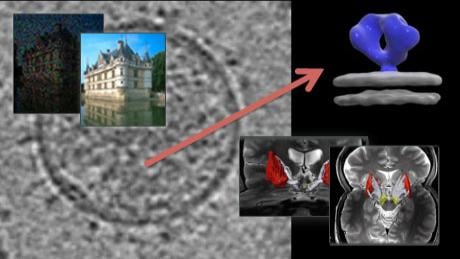
In this course, you will learn the science behind how digital images and video are made, altered, stored, and used. We will look at the vast world of digital imaging, from how computers and digital cameras form images to how digital special effects are used in Hollywood movies to how the Mars Rover was able to send photographs across millions of miles of space.

Nov 2nd 2026
5-12 Weeks