User Research and Design (Coursera)

User Research and Design (Coursera)

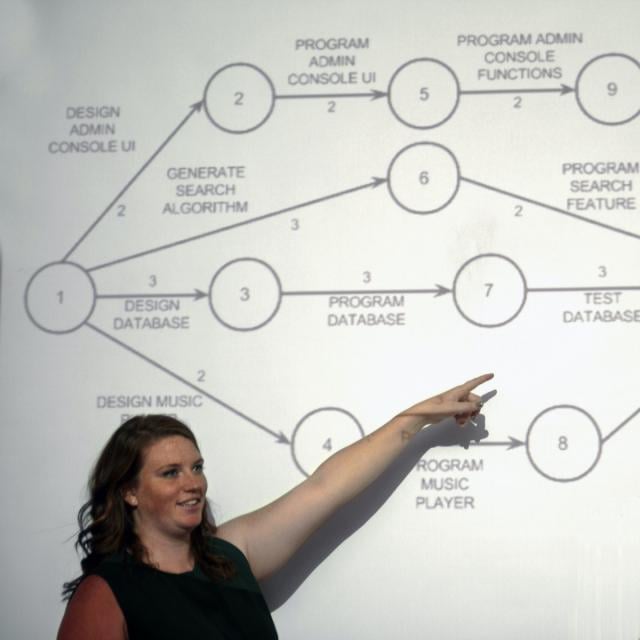
In this course you will learn and practice techniques of user research and early UI design exploration. First, you will learn and practice several techniques for user research, including in-person research and survey and log-analysis techniques. Then, you will learn to analyze and deliver user research in forms that support UI design, including personas, use cases, tasks, and scenarios. Finally, you will learn and practice ideation techniques that start from user research and broadly generate potential design ideas.

Class Deals by MOOC List - Click here and see Coursera's Active Discounts, Deals, and Promo Codes.

Course 2 of 5 in the User Interface Design Specialization.

Syllabus

WEEK 1
Preface
Note that weeks 1 and 2 form a cohesive whole, with more lecture content in week 1, and more practice (assignment and quizzing) in week 2.
User Research Methods — Part 1

WEEK 2
User Research Methods — Part 2

WEEK 3
Analyzing and Delivering User Research
The 3rd and 4th week of the course are intended to be a unit, with more lecture content in week 3, and more practice (assignment and quizzing) in week 4.

WEEK 4
Ideation and Idea Selection

Go to Class
MOOC List is learner-supported. When you buy through links on our site, we may earn an affiliate commission.

Related Courses

Networking and Security in iOS Applications (Coursera) Coursera
University of California, Irvine

Networking and Security in iOS Applications (Coursera)

You will learn to extend your knowledge of making iOS apps so that they can securely interact with web services and receive push notifications. You'll learn how to store data securely on a device using Core Data. You’ll also learn to securely deploy apps to the App Store and beta users over-the-air. The format of the course is through a series of code tutorials. We will walk you through the creation of several apps that you can keep as a personal app toolbox. When you make your own apps after this course, you can bring in these capabilities as needed. When necessary we pop out of the code tutorials to talk about concepts at a higher level so that what you are programming makes sense.

Aug 31st 2026
4 Weeks
System Validation (2): Model process behaviour (Coursera) Coursera
EIT Digital

System Validation (2): Model process behaviour (Coursera)

System Validation is the field that studies the fundamentals of system communication and information processing. It is the next logical step in computer science and improving software development in general. It allows automated analysis based on behavioural models of a system to see if a system works correctly. We want to guarantee that the systems does exactly what it is supposed to do.

Sep 14th 2026
3 Weeks
Aeroecology: Exploring Biodiversity with Radar (Coursera) Coursera
University of Leeds

Aeroecology: Exploring Biodiversity with Radar (Coursera)

Learn how aeroecology, a discipline that studies airborne life forms, has been revolutionised with the use of radar with this unique course. This course is designed to help scientists, researchers as well as ecology enthusiasts to develop skills in using radar to explore biodiversity. You will explore the origins and evolution of radar from a military technology to a powerful tool with multiple scientific applications, including aeroecology. You will then be introduced to studying global biodiversity trends and learn how to evaluate traditional methods and emerging technologies used by scientists to monitor the natural world.

Sep 7th 2026
2 Weeks
Principles of Computing (Part 2) (Coursera) Coursera
Rice University

Principles of Computing (Part 2) (Coursera)

This two-part course introduces the basic mathematical and programming principles that underlie much of Computer Science. Understanding these principles is crucial to the process of creating efficient and well-structured solutions for computational problems. To get hands-on experience working with these concepts, we will use the Python programming language. The main focus of the class will be weekly mini-projects that build upon the mathematical and programming principles that are taught in the class.

Sep 7th 2026
4 Weeks
Algorithmic Thinking (Part 2) (Coursera) Coursera
Rice University

Algorithmic Thinking (Part 2) (Coursera)

Experienced Computer Scientists analyze and solve computational problems at a level of abstraction that is beyond that of any particular programming language. This two-part class is designed to train students in the mathematical concepts and process of "Algorithmic Thinking", allowing them to build simpler, more efficient solutions to computational problems.

Sep 7th 2026
4 Weeks
Narrative Economics (Coursera) Coursera
Yale University

Narrative Economics (Coursera)

This course, Narrative Economics, is relatively short and proposes a simple concept: we need to incorporate the contagion of narratives into our economic theory. You can think of narratives as stories that shape public beliefs, which in turn influence our decision making. Understanding how people arrived at certain decisions in the past can aid our understanding of the economy today and improve our forecasts of the future.

Sep 7th 2026
4 Weeks
Approximation Algorithms Part I (Coursera) Coursera
École normale supérieure

Approximation Algorithms Part I (Coursera)

How efficiently can you pack objects into a minimum number of boxes? How well can you cluster nodes so as to cheaply separate a network into components around a few centers? These are examples of NP-hard combinatorial optimization problems. It is most likely impossible to solve such problems efficiently, so our aim is to give an approximate solution that can be computed in polynomial time and that at the same time has provable guarantees on its cost relative to the optimum.

Aug 31st 2026
5-12 Weeks
Hardware Security (Coursera) Coursera
University of Maryland, College Park

Hardware Security (Coursera)

In this course, we will study security and trust from the hardware perspective. Upon completing the course, students will understand the vulnerabilities in current digital system design flow and the physical attacks to these systems. They will learn that security starts from hardware design and be familiar with the tools and skills to build secure and trusted hardware.

Aug 31st 2026
5-12 Weeks
Foundations of Objective-C App Development (Coursera) Coursera
University of California, Irvine

Foundations of Objective-C App Development (Coursera)

An introduction to the Objective-C programming language. This will prepare you for more extensive iOS app development and build a foundation for advanced iOS development topics. Objective-C programming requires a Mac laptop or desktop computer. An iOS device is optional if the learner is willing to working exclusively with the simulator. Some learners have been able to work with an OS X virtual machine on Windows, but explaining how to do that is beyond the scope of this course.

Aug 31st 2026
4 Weeks
Studying Cities: Social Science Methods for Urban Research (Coursera) Coursera
Erasmus University Rotterdam

Studying Cities: Social Science Methods for Urban Research (Coursera)

Are you looking to learn more about how to conduct scientific research, specifically in an urban or local context? Then you have found the right course: Studying Cities: Social Science Methods for Urban Research by the Institute for Housing and Urban Development Studies (IHS), Erasmus University Rotterdam. During the course you will gain more insight in the different steps of the research cycle, and build a firm foundation for your own future research endeavors.

Sep 14th 2026
5-12 Weeks