Problem Solving, Python Programming, and Video Games (Coursera)

Offered by University of Alberta,
Problem Solving, Python Programming, and Video Games (Coursera)

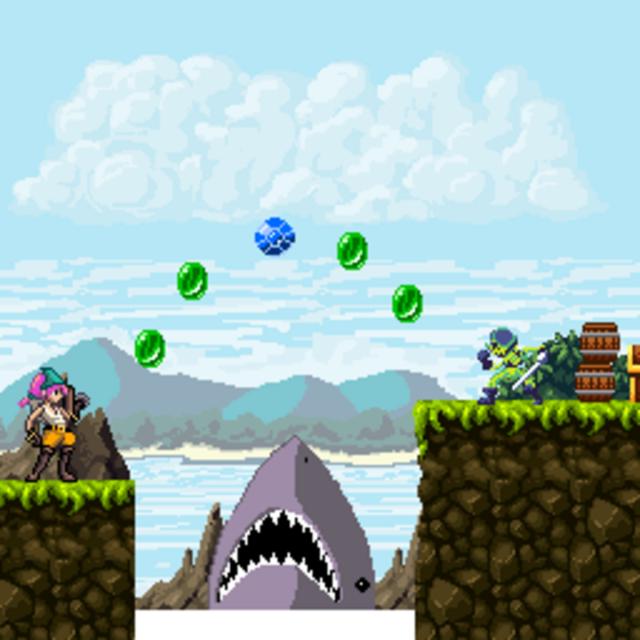
This course is an introduction to computer science and programming in Python. Important computer science concepts such as problem solving (computational thinking), problem decomposition, algorithms, abstraction, and software quality are emphasized throughout. The Python programming language and video games are used to demonstrate computer science concepts in a concrete and fun manner. However, a learner can take the knowledge and skills from this course and apply them to non-game problems, other programming languages, and other computer science courses.

Class Deals by MOOC List - Click here and see Coursera's Active Discounts, Deals, and Promo Codes.

Upon successful completion of this course, you will be able to:

  1. Take a new computational problem and develop a plan to solve it through problem understanding and decomposition.
  2. Follow a design creation process that includes specifications, algorithms, and testing.
  3. Code, test, and debug a program in Python, based on your design.

You do not need any previous programming, Python, or video game experience. However, some computer skills (e.g., mouse, keyboard, document editing), knowledge of algebra, attention to detail (as with many technical subjects), and a “just give it a try” spirit will be keys to your success. Despite the use of video games for all the programming examples, PVG is not about computer games. PVG will still provide valuable knowledge and skills for non-game computational problems.
The interactive learning objects (ILO) of the course provide automatic, context-specific guidance and feedback, like a virtual teaching assistant, as you develop problem descriptions, algorithms, and functional test plans. The course forums will be supported by the creators of the course, to help you succeed.
All videos, assessments, and ILOs are available free of charge. There is an optional certificate available for a fee.

Syllabus

Week 1
Module 0: Introduction
In Module 0, you will meet the instructional team and be introduced to the four themes of this course: computer science, problem solving, Python programming, and how to create video games.

Week 2
Module 1: Design Hacking Version 1
In Module 1, you will explore the game creation process that is used in this course. You will use this process to design Version 1 of the first game, Hacking. You will use two problem-solving techniques: problem decomposition and algorithms. You will explore five criteria for problem decomposition: experiential decomposition, feature selection, problem refinement, spatial decomposition, and temporal decomposition. To create your design for Hacking Version 1, you will use three interactive learning objects: the description builder, functional test plan builder, and algorithm builder.

Week 3
Module 2: Program Hacking Version 1
In Module 2, you will discover how lexics, syntax, and semantics can be used to understand and describe programming languages. You will use these concepts to understand your first Python statement (expression statement), first three Python expressions (literal, identifier, function call), and first five Python types (int, str, float, function, NoneType). You will use these Python constructs to write, test, and debug Hacking Version 1, a text-based game version. You will then reflect on your game version by using a third problem-solving technique called abstraction, including the specific technique of solution generalization, to solve similar problems.

Week 4
Module 3: Hacking Version 2
In Module 3, you will identify solution issues in your game. You will apply a second form of the abstraction problem-solving technique, called using templates, to solve a solution issue by using a graphics library. You will then use lexics, syntax, and semantics to learn two new Python statements (assignment, import), two new Python expressions (binary expression, attribute reference), and one new Python type (module). You will employ these Python constructs and a simple graphics library to write, test, and debug Hacking Version 2.

Week 5
Module 4: Hacking Version 3
In Module 4, you will modify your game design to support multiple gameplay paths using a new problem decomposition criteria called case-based decomposition, which utilizes a selection control structure. You will learn one new Python statement (if), one new Python expression (unary expression), and one new Python type (bool). You will employ these Python constructs to write, test, and debug Hacking Version 3.

Week 6
Module 5: Hacking Version 4 & 5
In Module 5, you will modify your game design using two new abstraction techniques, called control abstraction and data abstraction. You will explore two different control abstractions, called definite and indefinite repetition. You will learn two new Python statements (for, while), four new Python expressions (subscription expression, expression list, parenthesized expression, list display), and three new Python types (tuple, list, range). You will employ these Python constructs to write, test, and debug Hacking Version 4 and Hacking Version 5.

Week 7
Module 6: Hacking Version 6
In Module 6, you will learn a new control abstraction called a user-defined function. You will learn how to implement user-defined functions using two new Python statements (function definition, return). You will employ these Python constructs to significantly improve the quality of your code in Hacking Version 6.

Week 8
Module 7: Hacking Version 7
In Module 7, you will not learn any new problem-solving techniques or Python language features. Instead you will exercise your problem-solving skills and practice the language constructs you already know to improve your proficiency. You will add some fun features to the Hacking game by designing, coding, testing, and debugging Hacking Version 7.

Week 9
Module 8: Poke the Dots Version 1 & 2
In Module 8, you will design and implement Version 1 of a new graphical game called Poke the Dots. You will then modify your game design using data abstraction to create user-defined classes. You will learn two new Python statements (class definition, pass) that will allow you to construct your own Python types. You will employ these Python constructs to implement Poke the Dots Version 2.

Week 10
Module 9: Poke the Dots Version 3
In Module 9, you will not learn any new problem-solving techniques or Python language features. Instead you will exercise your problem-solving skills and practice the language constructs you already know to improve your proficiency. You will add some fun features to the Poke the Dots game by designing, coding, testing, and debugging Poke the Dots Version 3.

Week 11
Module 10: Poke the Dots Version 4
In Module 10, you will modify your game design using a new form of control abstraction called user-defined methods. User-defined methods allow you to restrict access to the attributes of a class to improve data abstraction. You will employ user-defined methods to implement Poke the Dots Version 4.

Week 12
Module 11: Poke the Dots Version 5
In Module 11, you will not learn any new problem-solving techniques or Python language features. Instead you will exercise your problem-solving skills and practice the language constructs you already know to improve your proficiency. You will add some fun features to the Poke the Dots game by designing, coding, testing, and debugging Poke the Dots Version 5.


Go to Class
MOOC List is learner-supported. When you buy through links on our site, we may earn an affiliate commission.

Related Courses

Character Design for Video Games (Coursera) Coursera
California Institute of the Arts

Character Design for Video Games (Coursera)

In this course you will explore concepts and approaches involved in creating successful character designs that can be applied to video games. Following a first week delving into some foundational concepts for successful character design, each of the remaining three weeks are structured as a "master class" where you will observe three professional character designers at work in the studio: Andy Ristaino (Adventure Time), Jacky Ke Jiang (Journey), and Robertryan Cory (SpongeBob SquarePants).

Jun 8th 2026
4 Weeks
Python for Data Science, AI & Development (Coursera) Coursera
IBM

Python for Data Science, AI & Development (Coursera)

Kickstart your learning of Python for data science, as well as programming in general, with this beginner-friendly introduction to Python. Python is one of the world’s most popular programming languages, and there has never been greater demand for professionals with the ability to apply Python fundamentals to drive business solutions across industries.

Jun 9th 2026
5-12 Weeks
Interfacing with the Arduino (Coursera) Coursera
University of California, Irvine

Interfacing with the Arduino (Coursera)

Arduino senses the environment by receiving inputs from add-on devices such as sensors, and can control the world around it by adjusting lights, motors, and other actuators. In this class you will learn how and when to use the different types of sensors and how to connect them to the Arduino. Since the external world uses continuous or analog signals and the hardware is digital you will learn how these signals are converted back-and-forth and how this must be considered as you program your device. You'll also learn about the use of Arduino-specific shields and the shields software libraries to interface with the real world.

Jun 8th 2026
4 Weeks
The Raspberry Pi Platform and Python Programming for the Raspberry Pi (Coursera) Coursera
University of California, Irvine

The Raspberry Pi Platform and Python Programming for the Raspberry Pi (Coursera)

The Raspberry Pi is a small, affordable single-board computer that you will use to design and develop fun and practical IoT devices while learning programming and computer hardware. In addition, you will learn how to set up up the Raspberry Pi environment, get a Linux operating system running, and write and execute some basic Python code on the Raspberry Pi. You will also learn how to use Python-based IDE (integrated development environments) for the Raspberry Pi and how to trace and debug Python code on the device.

Jun 8th 2026
4 Weeks
Analysis of Algorithms (Coursera) Coursera
Princeton University

Analysis of Algorithms (Coursera)

This course teaches a calculus that enables precise quantitative predictions of large combinatorial structures. In addition, this course covers generating functions and real asymptotics and then introduces the symbolic method in the context of applications in the analysis of algorithms and basic structures such as permutations, trees, strings, words, and mappings.

Jun 8th 2026
5-12 Weeks
Code Yourself! An Introduction to Programming (Coursera) Coursera
University of Edinburgh,Universidad ORT Uruguay

Code Yourself! An Introduction to Programming (Coursera)

Have you ever wished you knew how to program, but had no idea where to start from? This course will teach you how to program in Scratch, an easy to use visual programming language. More importantly, it will introduce you to the fundamental principles of computing and it will help you think like a software engineer.

Jun 8th 2026
5-12 Weeks
Pattern Discovery in Data Mining (Coursera) Coursera
University of Illinois at Urbana-Champaign

Pattern Discovery in Data Mining (Coursera)

Learn the general concepts of data mining along with basic methodologies and applications. Then dive into one subfield in data mining: pattern discovery. Learn in-depth concepts, methods, and applications of pattern discovery in data mining. We will also introduce methods for data-driven phrase mining and some interesting applications of pattern discovery. This course provides you the opportunity to learn skills and content to practice and engage in scalable pattern discovery methods on massive transactional data, discuss pattern evaluation measures, and study methods for mining diverse kinds of patterns, sequential patterns, and sub-graph patterns.

Jun 8th 2026
4 Weeks
Finding Hidden Messages in DNA (Bioinformatics I) (Coursera) Coursera
University of California, San Diego

Finding Hidden Messages in DNA (Bioinformatics I) (Coursera)

This course begins a series of classes illustrating the power of computing in modern biology. Please join us on the frontier of bioinformatics to look for hidden messages in DNA without ever needing to put on a lab coat. In the first half of the course, we investigate DNA replication, and ask the question, where in the genome does DNA replication begin? We will see that we can answer this question for many bacteria using only some straightforward algorithms to look for hidden messages in the genome.

Jun 8th 2026
5-12 Weeks
Machine Learning With Big Data (Coursera) Coursera
University of California, San Diego

Machine Learning With Big Data (Coursera)

Want to make sense of the volumes of data you have collected? Need to incorporate data-driven decisions into your process? This course provides an overview of machine learning techniques to explore, analyze, and leverage data. You will be introduced to tools and algorithms you can use to create machine learning models that learn from data, and to scale those models up to big data problems.

Jun 8th 2026
5-12 Weeks
Unordered Data Structures (Coursera) Coursera
University of Illinois at Urbana-Champaign

Unordered Data Structures (Coursera)

The Unordered Data Structures course covers the data structures and algorithms needed to implement hash tables, disjoint sets and graphs. These fundamental data structures are useful for unordered data. For example, a hash table provides immediate access to data indexed by an arbitrary key value, that could be a number (such as a memory address for cached memory), a URL (such as for a web cache) or a dictionary.

Jun 10th 2026
4 Weeks
Effective Problem-Solving and Decision-Making (Coursera) Coursera
University of California, Irvine

Effective Problem-Solving and Decision-Making (Coursera)

Critical thinking – the application of scientific methods and logical reasoning to problems and decisions – is the foundation of effective problem solving and decision making. Critical thinking enables us to avoid common obstacles, test our beliefs and assumptions, and correct distortions in our thought processes. Gain confidence in assessing problems accurately, evaluating alternative solutions, and anticipating likely risks. Learn how to use analysis, synthesis, and positive inquiry to address individual and organizational problems and develop the critical thinking skills needed in today’s turbulent times. Using case studies and situations encountered by class members, explore successful models and proven methods that are readily transferable on-the-job.

Jun 8th 2026
4 Weeks