Battery Storage Technology: Opportunities and Uses (FutureLearn)

Offered by EIT InnoEnergy,
Battery Storage Technology: Opportunities and Uses (FutureLearn)

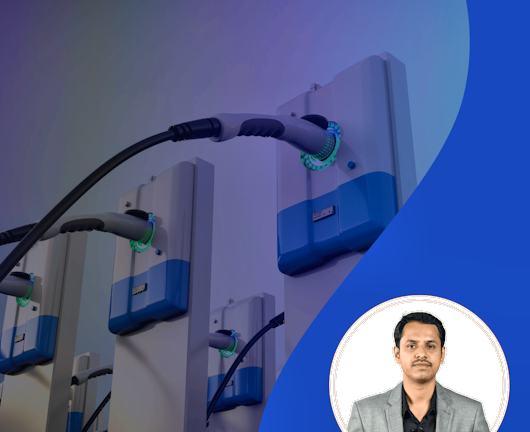
Explore battery storage technology - how and why it works, and how it could revolutionise the European energy landscape. Could battery storage technology be the answer to energy demands? Imbalances in power supply, combined with rising energy demands pose a growing risk. But the emerging field of ‘battery storage’ could be the solution.

Class Deals by MOOC List - Click here and see FutureLearn's Active Discounts, Deals, and Promo Codes.

On this course, you’ll discover promising battery storage technologies; exploring their workings, strengths, weaknesses, and possible place in Europe’s future. You’ll look into a range of uses; not only in the power sector - but in transportation, industry, the home and more.
You’ll leave the course with a better understanding of battery storage technology, the many opportunities it presents, and what’s slowing its adoption today.

What topics will you cover?

  • The need for the flexibility demand in the EU electricity industry and the role of battery storage.
  • Battery storage technologies: characteristics, potentials and limitations
  • Grid scale application of battery storage
  • Behind-the-meter application of battery storage
  • Off-grid application of battery storage
  • Battery storage application in mobility

What will you achieve?
By the end of the course, you'll be able to...

  • Explain battery storage technologies and services for 4 different types of applications in the electricity market.
  • Identify solutions to the main barriers that have been slowing down the development of the battery storage market.
  • Explore an overview of different technical characteristics of battery storage technologies.
  • Explain why different applications of battery storage require different sets of technical characteristics.
  • Explore how battery storage allows you to reduce the peak demand of your household/industry/grid and which other services to the grid can be delivered.
  • Investigate how to reduce the cost of the electricity bills at your household, or industry using battery storage.
Go to Class
MOOC List is learner-supported. When you buy through links on our site, we may earn an affiliate commission.

Related Courses

Global Resource Politics: the Past, Present and Future of Oil, Gas and Shale (FutureLearn) FutureLearn
Hanyang University

Global Resource Politics: the Past, Present and Future of Oil, Gas and Shale (FutureLearn)

Understand the critical energy challenges the world faces and analyse the political economy of the global energy industry. Energy is often said to be the lifeblood of modern society. Multiple sea changes are currently afoot in the global economy, at the heart of which lies energy.

No sessions available
5-12 Weeks
Understanding Biological Energy (FutureLearn) FutureLearn
Royal Holloway, University of London

Understanding Biological Energy (FutureLearn)

Get an introduction to energy and explore how humans and other living things obtain and use their biological energy sources. Discover applications of biological energy, from human energy to photosynthesis. On this course, you’ll learn what energy actually is and how living things acquire and convert it.

Jun 20th 2022
4 Weeks
Particle Dynamics (Coursera) Coursera
Korea Advanced Institute of Science and Technology - KAIST

Particle Dynamics (Coursera)

This course teaches dynamics, one of the basic mechanics subjects of Mechanical Engineering. Students would be able to organize their knowledge about force and motion, work-energy, impulse-momentum in view of Newton's 2nd law and its integration over time and displacement. The Engineering Dynamics consists of two parts: particle dynamics and rigid body dynamics.

Jun 22nd 2026
13-24 Weeks
Electrodynamics: In-depth Solutions for Maxwell’s Equations (Coursera) Coursera
Korea Advanced Institute of Science and Technology - KAIST

Electrodynamics: In-depth Solutions for Maxwell’s Equations (Coursera)

This course is the fourth course in the Electrodynamics series, and is directly proceeded by Electrodynamics: Electric and Magnetic Fields. Previously, we have learned about visualization of fields and solutions which were not time dependent. Here, we will return to Maxwell's Equations and use them to produce wave equations which can be used to analyze complex systems, such as oscillating dipoles. We will also introduce AC circuits, and how they can be simplified, solved, and applied.

Jun 22nd 2026
5-12 Weeks
Solving the Energy Puzzle: A Multidisciplinary Approach to Energy Transition (FutureLearn) FutureLearn
University of Groningen

Solving the Energy Puzzle: A Multidisciplinary Approach to Energy Transition (FutureLearn)

Learn how to analyse energy transition cases from technological, legal, economics, spatial, and social perspectives. Since the discovery of fire, mankind has used various energy sources to aid our development. The energy system has been continually changing, as the economy and technology progress. Today, energy systems are confronted with pressing global challenges: climate protection; economic and social development; poverty eradication; adequate food production; health for all; and the conservation of ecosystems, peace and security. A major transformation – an energy transition - is required to address these challenges.

No sessions available
5-12 Weeks
Marchés du Carbone : Examen des Politiques de l’UE pour l’Action Climatique Transnationale (FutureLearn) FutureLearn
European University Institute - EUI

Marchés du Carbone : Examen des Politiques de l’UE pour l’Action Climatique Transnationale (FutureLearn)

Explorez les politiques actuelles créées par l'UE, et évaluez leurs efficacités dans la promotion de l'action climatique mondiale. Comprendre et évaluer les mesures prises pour créer un cadre de politique climat. Alors que l’impact du changement climatique continue d’affecter notre planète, il est impératif que notre communauté mondiale se batte pour réduire ses émissions. Cependant, de nombreuses sociétés transnationales et États n’ont pas fait de changement pour réduire leur impact négatif sur la planète.

Apr 25th 2022
5-12 Weeks
Energy and Environment (Coursera) Coursera
Dartmouth College

Energy and Environment (Coursera)

This course deals with both renewable and non-renewable energy. By applying scientific principles and considering real-world examples, you will examine: 1. Non-renewable fossil fuels with a focus on coal, petroleum and natural gas and the benefits and consequences of using each. 2. Renewable fuels such as wind and solar and identify that even renewable “green” energy sources have impacts as well as benefits. 3. Biodiversity and global change, which are the integrating units of environmental science.

Jun 22nd 2026
4 Weeks
Ecological and Energy Transitions in Southern Countries (Coursera) Coursera
École normale supérieure

Ecological and Energy Transitions in Southern Countries (Coursera)

This MOOC is at the junction between the development of Southern countries and sustainable development. It has: 1) a macroeconomic and financial dimension, developed by Gael Giraud and Alain Grandjean; 2) an ecological and climatic dimension, developed by David Claessen and ENS speakers; and 3) a focus on Southern countries, developed by AFD speakers.

Jun 22nd 2026
5-12 Weeks
Electrical Industry: Production and Economics (FutureLearn) FutureLearn
University of Padova

Electrical Industry: Production and Economics (FutureLearn)

Understand how the electricity system has developed over time, see what the future holds and the need to move to decarbonisation. Discover how electricity is produced and exchanged and the reasons behind it. This innovative, three-week course from the University of Padova is designed to illustrate how electricity is produced, and exchanged, and why.

Available now
4 Weeks