Attitude Control with Momentum Exchange Devices (Coursera)

Attitude Control with Momentum Exchange Devices (Coursera)

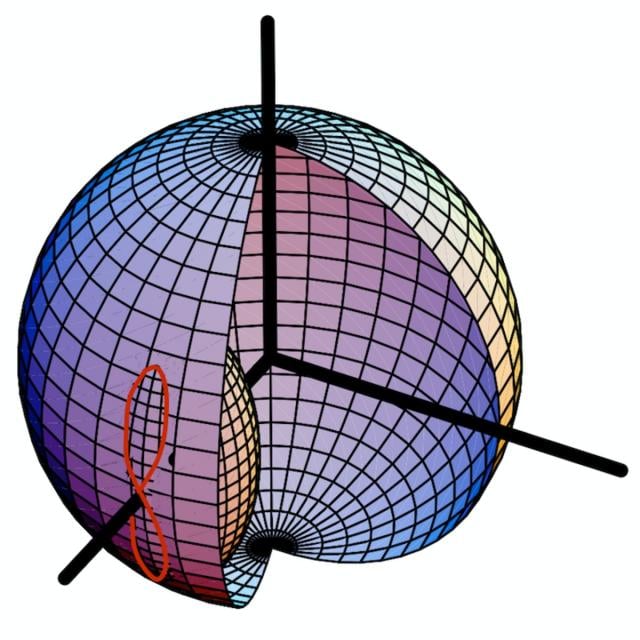
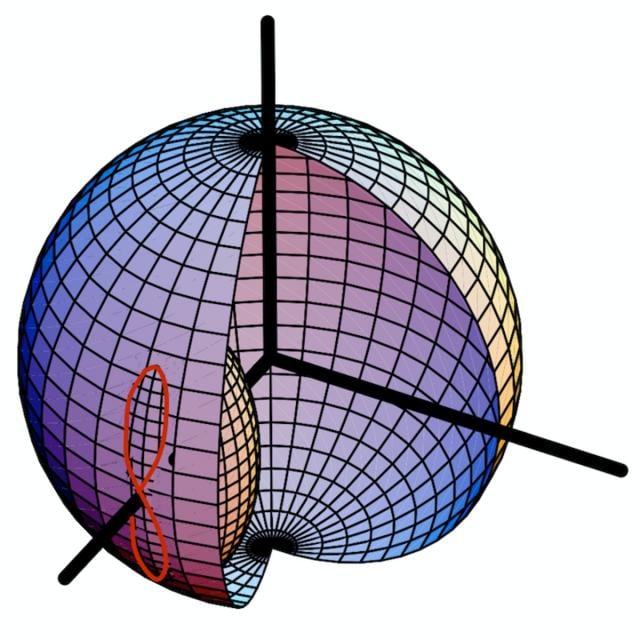
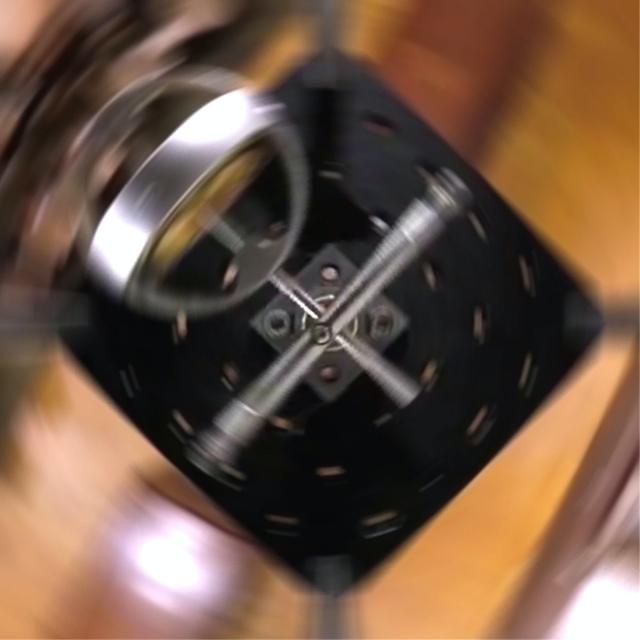
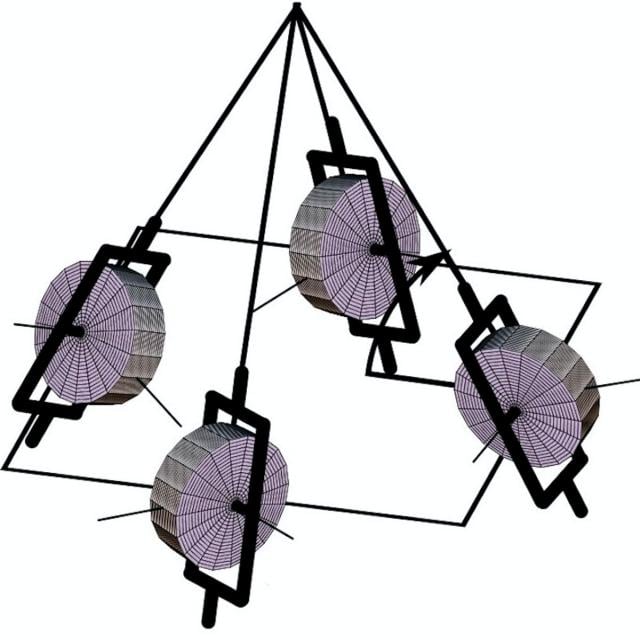
This course is part 1 of the specialization Advanced Spacecraft Dynamics and Control. It is a direct continuation of the Coursera specialization Spacecraft Dynamics and Control. This first course focuses on nonlinear attitude feedback control using a range of angular momentum devices. The course provides a comprehensive review of prerequisite material. Next it develops equations of motion of a spacecraft with momentum exchange devices such as reaction wheels (RWs), control momentum gyroscopes (CMGs) and variable speed control moment gyroscopes (VSCMGs).

Class Deals by MOOC List - Click here and see Coursera's Active Discounts, Deals, and Promo Codes.

The course discusses developing a complex spacecraft simulation with a number VSCMGs and how to approach debugging such complex software. The use of the work/energy theorem is discussed to assist with debugging the simulation by validating angular momentum, energy, changes in momentum and mechanical power.
Further, the use of null motion is explored to reconfigure the attitude control devices to avoid singularities and gimbal lock. The redundancy is exploited to seek control solutions that avoid classical CMG singularities.
What You Will Learn

  • Developing spacecraft equations of motion with momentum exchange devices
  • Writing and validating complex spacecraft simulations
  • Exploiting momentum device nullmotion to avoid singularities.

Syllabus

WEEK 1
Revisiting Basics of Spacecraft Kinematics
The prerequisite topics of spacecraft kinematics are reviewed in this module. This sequence is intended to ramp up the student on the mathematical tools and concepts required for this course. For each topic we also dig a little deeper into the subject matter.

WEEK 2
Revisiting Basics of Spacecraft Kinetics
Review of fundamental properties of a closed dynamical system leading to the development of the equations of motion.

WEEK 3
Revisiting the Basics of Nonlinear Spacecraft Control
Review of the fundamental nonlinear stability definitions, using Lyapunov's direct method, as well as discussing stability proof modifications if the system is time dependent.

WEEK 4
VSCMG Dynamics
Develop the kinematics and kinetics of the variable speed CMG devices.

WEEK 5
Momentum Based 3-Axis Attitude Control
Learn how to achieve 3-axis attitude feedback control using a series of momentum exchange devices such as reaction wheels, control moment gyroscopes (CMGs) and variable speed CMGs
Go to Class
MOOC List is learner-supported. When you buy through links on our site, we may earn an affiliate commission.

Related Courses

Physics 101 - Energy and Momentum (Coursera) Coursera
Rice University

Physics 101 - Energy and Momentum (Coursera)

This course serves as an introduction to the physics of energy and momentum. Upon completion, learners will have an understanding of how mathematical laws and conservation principles describe the motions and interactions of objects all around us. They will gain experience in solving physics problems with tools such as graphical analysis, algebra, vector analysis, and calculus.

Jun 1st 2026
4 Weeks
Analytical Mechanics for Spacecraft Dynamics (Coursera) Coursera
University of Colorado Boulder

Analytical Mechanics for Spacecraft Dynamics (Coursera)

This course is part 2 of the specialization Advanced Spacecraft Dynamics and Control. It assumes you have a strong foundation in spacecraft dynamics and control, including particle dynamics, rotating frame, rigid body kinematics and kinetics. The focus of the course is to understand key analytical mechanics methodologies to develop equations of motion in an algebraically efficient manner.

Jun 1st 2026
3 Weeks
Mastering Quantum Mechanics (edX) EdX
MIT,MITx

Mastering Quantum Mechanics (edX)

Learn the foundations of quantum mechanics – wave mechanics, spin one-half, vector spaces and linear operators, the Heisenberg uncertainty principle, quantum dynamics, two-state systems, entanglement, and angular momentum. This course offers a sophisticated view of quantum mechanics and its proper mathematical foundation. Completing the course will give you the tools needed to do research in quantum mechanics and to understand many current developments.

No sessions available
13-24 Weeks
Particle Dynamics (Coursera) Coursera
Korea Advanced Institute of Science and Technology - KAIST

Particle Dynamics (Coursera)

This course teaches dynamics, one of the basic mechanics subjects of Mechanical Engineering. Students would be able to organize their knowledge about force and motion, work-energy, impulse-momentum in view of Newton's 2nd law and its integration over time and displacement. The Engineering Dynamics consists of two parts: particle dynamics and rigid body dynamics.

May 25th 2026
13-24 Weeks
Advanced Capstone Spacecraft Dynamics and Control Project (Coursera) Coursera
University of Colorado Boulder

Advanced Capstone Spacecraft Dynamics and Control Project (Coursera)

This capstone course is the 3rd and final course of the specialization Advanced Spacecraft Dynamics and Control. It assumes you have completed the prior courses on "Attitude Control with Momentum Exchange Devices" and "Analytical Mechanics for Spacecraft Dynamics". This project course investigates the dynamics of a complex spacecraft system where there is a rigid hub onto which a hinged panel is attached. This simulates a spacecraft with a time varying geometry.

Jun 1st 2026
3 Weeks
Tesoros de la Física y sus Descubridores I (Coursera) Coursera
Universidad de los Andes

Tesoros de la Física y sus Descubridores I (Coursera)

¿Sabes cómo vuelan los aviones, tan pesados y no se caen mientras vuelan? ¿Sabes que viajamos por el espacio sobre el planeta Tierra que se traslada y gira muy rápido y no lo percibimos? ¿O acaso, notas efectos de su movimiento? ¿Cuál es nuestro lugar en el universo? ¿Podemos viajar en el tiempo? ¡Preguntas, muchas preguntas! Con espíritu de descubridores nuestra curiosidad nos motiva a buscar respuestas, a explorar nuestro entorno, a entrar a lo desconocido y hallar nuevo conocimiento.

Jun 8th 2026
5-12 Weeks
Introduction to Aerospace Structures and Materials (edX) EdX
Delft University of Technology,DelftX

Introduction to Aerospace Structures and Materials (edX)

Explore the structural and material design of aircraft and spacecraft from the viewpoint of an aerospace engineer. How do you design an aircraft or spacecraft? And in doing so, how do you keep the risk of failure minimal while bearing in mind that they will eventually fail? In this course you will be taken on a journey through the structural and material design of aircraft. You will see and understand how aircraft and spacecraft are manufactured, and learn how safety is enshrined at every stage.

Self Paced
Self-Paced
Kinetics: Studying Spacecraft Motion (Coursera) Coursera
University of Colorado Boulder

Kinetics: Studying Spacecraft Motion (Coursera)

As they tumble through space, objects like spacecraft move in dynamical ways. Understanding and predicting the equations that represent that motion is critical to the safety and efficacy of spacecraft mission development. Kinetics: Modeling the Motions of Spacecraft trains your skills in topics like rigid body angular momentum and kinetic energy expression shown in a coordinate frame agnostic manner, single and dual rigid body systems tumbling without the forces of external torque, how differential gravity across a rigid body is approximated to the first order to study disturbances in both the attitude and orbital motion, and how these systems change when general momentum exchange devices are introduced.

Jun 8th 2026
4 Weeks
Spacecraft Dynamics Capstone: Mars Mission (Coursera) Coursera
University of Colorado Boulder

Spacecraft Dynamics Capstone: Mars Mission (Coursera)

The goal of this capstone spacecraft dynamics project is to employ the skills developed in the rigid body Kinematics, Kinetics and Control courses. An exciting two-spacecraft mission to Mars is considered where a primary mother craft is in communication with a daughter vehicle in another orbit. The challenges include determining the kinematics of the orbit frame and several desired reference frames, numerically simulating the attitude dynamics of the spacecraft in orbit, and implementing a feedback control that then drives different spacecraft body frames to a range of mission modes including sun pointing for power generation, nadir pointing for science gathering, mother spacecraft pointing for communication and data transfer. Finally, an integrated mission simulation is developed that implements these attitude modes and explores the resulting autonomous closed-loop performance.

Jun 8th 2026
5-12 Weeks