EdX

Engineering the Space Shuttle (edX)

Offered by MIT, MITx,
Engineering the Space Shuttle (edX)

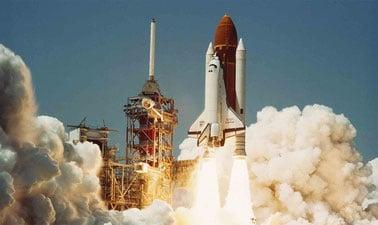
Learn all about the world’s first reusable spacecraft - the Space Shuttle - from the very people who designed, built, and operated it for 30 years. This course examines how the Space Shuttle was designed and how its design was influenced by economics and politics. The course goes into detail on many of the Shuttle’s subsystems (e.g. rocket engines, thermal protection, aerodynamics, environmental control and life support, communications, etc.) and explains how the Shuttle was operated (launch, mission control, payloads, etc.). The course also uses the Space Shuttle to present the fundamentals of Systems Engineering.

Class Deals by MOOC List - Click here and see EdX's Active Discounts, Deals, and Promo Codes.

For 30 years the Space Shuttle enabled human spaceflight in the United States and partner nations. Learn all about the Shuttle with thisunique course, which also serves as a unique historical record. Since the lecturers are the same people who designed, built and operated the Shuttle, this is a first-hand testimonial to the world’s first reusable spacecraft.
Students will gain a systems perspective on the complexities of Shuttle development and its operations. Itexplores both the Shuttle’s successes and its shortcomings and has valuable object lessons for future space initiatives.The Shuttle is a valuable case study in the advantages and difficulties involved in reusable space systems - particularly relevant today as reusability is a key requirement of many rockets and spacecraft currently under development.
In addition, understanding how the Shuttle was first conceived and how it achieved governmental approval is relevant for understanding how politics and economics interact with technology on all large public programs.
The lectures are organized in three fundamental sections: history and policy, technical design of Shuttle systems, and how the Shuttle was operated. Although the sections relate to one another, students can benefit from any of the sections independently.
This course does not require advanced mathematics.It is targeted to students with a variety of interests including the history of human spaceflight,space policy, the design of human spaceflight systems, the operation of complex space systems, and principles of systems engineering.

What you'll learn

  • Fundamentals of Systems Engineering
  • How a major technical program gets governmental approval
  • Design of human spaceflight systems
  • Operation of complex spaceflight systems

Syllabus

Section 1 Origins of the Space Shuttle Program (4 Lectures on History and Policy)
Introduction to Systems Engineering
Section 2 – Space Shuttle Subsystems
Structures and Thermal Protection
Rocket Engines
Aerodynamics
Mechanisms
Hydraulic Systems
Environmental Control and Life Support
Guidance, Navigation and Control
Section 3 – Operating the Space Shuttle
Launch Operations
Shuttle Abort Modes
Mission Control
Payload Operations
Extravehicular Activity (Spacewalking)
Shuttle Accident Investigations
Flight Testing the Space Shuttle
Go to Class
MOOC List is learner-supported. When you buy through links on our site, we may earn an affiliate commission.

Related Courses

Robot Mechanics and Control, Part II (edX) EdX
Seoul National University,SNUx

Robot Mechanics and Control, Part II (edX)

A mathematical introduction to the mechanics and control of robots. This course is Part II of a two-part mathematical introduction to the mechanics and control of robots that can be modeled as kinematic chains. Topics covered include the concept of a robot’s configuration space and degrees of freedom, static grasp analysis, the description of rigid body motions, kinematics of open and closed chains, and the basics of robot control.

No sessions available
4 Weeks
Signals and Systems, Part 1 (edX) EdX
IIT Bombay,IITBombayX

Signals and Systems, Part 1 (edX)

This course provides the basic toolkit for any signal processing application - the abstraction of signals and systems, from the point of view of analysis and characterization. We encounter signals and systems extensively in our day-to-day lives, from making a phone call, listening to a song, editing photos, manipulating audio files, using speech recognition softwares like Siri and Google now, to taking EEGs, ECGs and X-Ray images.

No sessions available
5-12 Weeks
Introduction to Quantum Transport (edX) EdX
Purdue University,PurdueX

Introduction to Quantum Transport (edX)

This course introduces the non-equilibrium Green’s function (NEGF) method widely used to describe quantum effects in nanoscale devices, along with its applications to spintronic devices. This course introduces the Schrödinger equation, using the tight-binding method to discuss the concept of bandstructure and E(k) relations, followed by an introduction to the NEGF method with simple illustrative examples. Concept of spinors is introduced along with the application of the NEGF method to spintronic devices.

Feb 12th 2024
5-12 Weeks
Hypersonics - from Shock Waves to Scramjets (edX) EdX
University of Queensland,UQx

Hypersonics - from Shock Waves to Scramjets (edX)

Understand flight at speeds greater than Mach 5 and discover how to analyse the performance of a scramjet. A flow is called hypersonic if the Mach number is greater than 5. This means that the flow speed is more than five times the speed of sound. In air at room temperature, the speed of sound is around 340 m/s, so a Mach 5 flow would have a flow speed of 1.7 km/s or just over 6,000 km/h. When a rocket launches a satellite into earth orbit, when a probe enters the atmosphere of another planet or when an aircraft is propelled by a supersonic combustion ramjet engine (a scramjet), hypersonic flows are encountered.

Self Paced
Self-Paced
Nanophotonic Modeling (edX) EdX
Purdue University,PurdueX

Nanophotonic Modeling (edX)

Learn a comprehensive set of simulation techniques to predict the performance of photonic nanostructures. This engineering course is an introduction to photonic materials and devices structured on the wavelength scale. Generally, these systems will be characterized as having critical dimensions at the nanometer scale. These can include nanophotonic, plasmonic, and metamaterial components and systems.

Feb 12th 2024
5-12 Weeks
Fundamentos de Mecánica para Ingeniería (edX) EdX
Universitat Politècnica de València,UPValenciaX

Fundamentos de Mecánica para Ingeniería (edX)

Estudiaremos la cinemática y la dinámica del punto, los conceptos de trabajo y potencia y la energía mecánica. Se aborda el estudio del universo físico analizando objetos en movimiento. Se definen y analizan todas las magnitudes y leyes físicas que permiten describir geométrica y causalmente el movimiento de cuerpos representados por un punto.

Self Paced
Self-Paced
Symmetry, Structure and Tensor Properties of Materials (edX) EdX
MIT,MITx

Symmetry, Structure and Tensor Properties of Materials (edX)

An upper-level undergraduate engineering course that explores the structure and symmetry of materials and the profound effect that structure has on physical properties of materials. In Symmetry, Structure, and Tensor Properties of Materials, you will study the underlying structures of materials and you will deepen your understanding of the relationship between the properties of materials and their structures.

No sessions available
4 Weeks