Improvisación de jazz (Coursera)

Improvisación de jazz (Coursera)

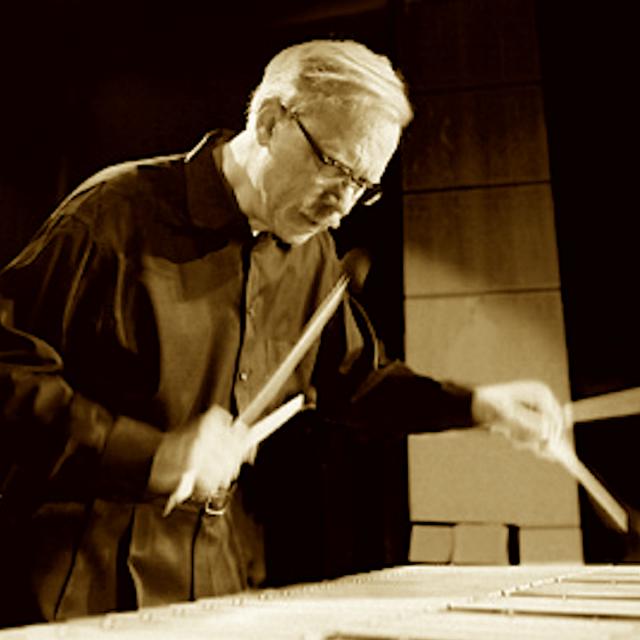
Aprenda los conceptos básicos de la improvisación con Gary Burton, uno de los improvisadores más reconocidos en el mundo del jazz, incluidos los procesos mentales, melódicos y armónicos que contribuyen a las habilidades instintivas que aplica un improvisador cuando realiza un solo.

Class Deals by MOOC List - Click here and see Coursera's Active Discounts, Deals, and Promo Codes.

Si bien a muchas personas les gusta el jazz y entienden que los músicos a veces "inventan" las notas que tocan durante una presentación, la mayoría -incluidos los mismos músicos que están aprendiendo a improvisar- no saben con claridad qué procesos específicos se llevan a cabo para que esto suceda. El propósito de este curso es introducir los conceptos básicos de la improvisación moderna y cómo dominar las distintas habilidades musicales y mentales que intervienen.
El autor del curso Gary Burton codifica un buscado abordaje de la improvisación que constituye el centro del plan de estudios de Berklee College of Music desde hace décadas. Los estudiantes que realicen el curso sabrán qué practicar y cómo practicar los diversos aspectos de la improvisación, además de entender de qué manera el improvisador se comunica espontáneamente con los oyentes a través de sus creaciones musicales.

Syllabus

WEEK 1
Bienvenida
¡Bienvenido al curso! Aquí trataremos todos los detalles acerca del curso y lo que necesitará saber para aprovechar al máximo su experiencia.
La Improvisación como idioma
Dado que todos los que toman este curso comienzan desde un lugar diferente en términos de experiencia como improvisadores, es importante que primero tratemos algunos materiales básicos. Comenzaremos nuestro viaje explorando el lenguaje utilizado por los improvisadores de jazz. La improvisación se asemeja al lenguaje en muchas formas. Con la música, adquirimos fluidez cuando el vocabulario (escalas y acordes) y la gramática (progresiones armónicas) son asimiladas al contenido de una conversación o historia (temas melódicos y estructura), y ya no tenemos que pensar de manera consciente en ellos mientras tocamos.

WEEK 2
El Vocabulario del Improvisador
En esta lección analizaremos la jerga del improvisador. Identificaremos las escalas de acordes más comunes y el tipo de armonía con el cual se relacionan, incluida mayor, menor y la 7a. de dominante.

WEEK 3
Cómo Elegir Escalas en tiempo real
Los improvisadores deben poder recordar con rapidez las escalas de acordes y tocarlas con fluidez. Esto adquiere importancia cuando se elige qué escala de acordes usar en una armonía determinada -otra cosa que debemos poder determinar de inmediato. Cuando recibimos una nueva melodía en una sesión o ensayo, no hay tiempo para llevarnos la música a casa y dedicar una hora o dos a trabajar en las escalas correctas. Los improvisadores necesitan una forma rápida y mayormente intuitiva de elegir las escalas en tiempo real, mientras está sonando la melodía. Esta semana analizaremos mi método para tomar estas rápidas decisiones musicales.

WEEK 4
Armonía para improvisadores
Es importante que un improvisador implique con claridad las armonías cuando improvisa. No es suficiente que simplemente toque las notas correctas en cada acorde. En esta lección analizaremos de qué manera el improvisador ayuda a las armonías a moverse. Parte del trabajo del improvisador es ayudar al oyente a seguir los cambios a medida que los acordes se mueven de unos a otros.

WEEK 5
Tema Y Variación
Esta semana analizaremos de qué manera el improvisador desarrolla temas melódicos en un pasaje solista. Tal como se mencionó en la semana 1, existen comparaciones naturales entre el discurso y la improvisación que muestran cómo funciona esto. La técnica más común para contar una historia musical que atraiga al oyente mientras dure su solo es utilizar un concepto tradicional llamado tema y variación. Esto es, usted introduce un tema -una frase musical- y luego lo repite con variaciones para desarrollar un argumento interesante. Un buen solo es como una explicación, o una buena historia. La explicación o historia es el contenido de la improvisación.

Go to Class
MOOC List is learner-supported. When you buy through links on our site, we may earn an affiliate commission.

Related Courses

Launching Your Music Career (Coursera) Coursera
University of Colorado Boulder

Launching Your Music Career (Coursera)

After you've acquired the various tools and strategies to build your music career, it's time to put those skills to work! In this course, you will acquire the skills to manage a variety of professional endeavors including self-management, freelance performing, and launching a private lesson studio. Perfect for the young professional or a seasoned pro looking to diversify their portfolio career.

Jun 8th 2026
5-12 Weeks
Richard Schechner's Introduction to Performance Studies (Coursera) Coursera
New York University

Richard Schechner's Introduction to Performance Studies (Coursera)

Performance Studies: An Introduction explores the wide world of performance--from theatre, dance, and music to ritual, play, political campaigns, social media, and the performances of everyday life. Performance studies also ranges across cultures--Asia, Africa, the Caribbean, Europe, the Americas. And it spans historical periods from the art of the paleolithic caves to YouTube and the avantgarde. This course is devised by Richard Schechner, one of the pioneers of performance studies, in dialogue with more than a dozen expert scholars and artists.

Jun 8th 2026
13-24 Weeks
Guitar Performance Techniques (Coursera) Coursera
Berklee College of Music

Guitar Performance Techniques (Coursera)

Your favorite guitarist didn't become your favorite guitarist without the support of other musicians. The most important skill for a guitarist to learn is the exact same skill that was so important in kindergarten: playing well with others. Guitar Performance Techniques gives guitarists the essential and practical skills to play well with others in any ensemble situation.

Jun 8th 2026
4 Weeks
Introduction to Italian Opera (Coursera) Coursera
Dartmouth College

Introduction to Italian Opera (Coursera)

This course gives us an introduction to Italian Opera right from its very beginning in Florence, Italy. You will understand how Mozart’s opera is the midpoint of opera. It explores how music tells the audience about the characters' thoughts through musical gestures. It also sheds light on the importance of close listening to understand opera thoroughly.

Jun 8th 2026
5-12 Weeks
Strategies for Success in your Music Career (Coursera) Coursera
University of Colorado Boulder

Strategies for Success in your Music Career (Coursera)

The Musician's Professional Toolbox is more than just a collection of career-building skills: professional musicians need strategies in place that maximize the impact of those skills. Designed for musicians at any point in their career, this course will provide learners with foundational skills necessary for managing your professional music career, including skill assessment, time management, goal setting and networking. The course can be taken by itself or as the first course in the Musician's Professional Toolbox.

Jun 8th 2026
4 Weeks
History of Rock, Part One (Coursera) Coursera
University of Rochester

History of Rock, Part One (Coursera)

This course, part 1 of a 2-course sequence, examines the history of rock, primarily as it unfolded in the United States, from the days before rock (pre-1955) to the end of the 1960s. This course covers the music of Elvis Presley, Chuck Berry, Phil Spector, Bob Dylan, the Beatles, the Rolling Stones, Jimi Hendrix, Cream, and many more artists, with an emphasis both on cultural context and on the music itself. We will also explore how developments in the music business and in technology helped shape the ways in which styles developed.

Jun 8th 2026
5-12 Weeks
Building Your Artistic Brand (Coursera) Coursera
University of Colorado Boulder

Building Your Artistic Brand (Coursera)

In a world where musical content of all kinds can be found anywhere and everywhere, developing a distinctive artistic brand is critical to any musician's professional success. Whether you're an emerging professional musician or a seasoned pro looking to up your game, you will gain knowledge of basic marketing principles as applied to the performing arts. These principles include using visual and design elements to define your artistic identity, strategies for effective marketing through a variety of media and channels, and developing a social media strategy for their professional brand.

Jun 8th 2026
4 Weeks
So You Think You Know Tango? (Coursera) Coursera
Emory University

So You Think You Know Tango? (Coursera)

How well do you think you know tango? This two-week mini-course is designed for music lovers, musicians, and dancers who are interested in learning more about the Argentine Tango. It will explore the many dimensions of the Argentine Tango music, including its origins, popularization during the Golden Age, dissemination abroad, evolution into an artistic music-dance form, and adoption by Argentine and international art-music composers to date.

Jun 8th 2026
2 Weeks
The Music of American English Pronunciation (Coursera) Coursera
University of California, Irvine

The Music of American English Pronunciation (Coursera)

In this third course of The Pronunciation of American English specialization, you will learn and practice the "music" of American English, the features of pronunciation such as stress, rhythm, and intonation that will help improve your listening comprehension as well as your ability to communicate more clearly. Each week you will receive practical advice from successful English learners and practice an effective technique called shadowing to improve your pronunciation of the musical features of English.

Jun 8th 2026
4 Weeks
Fundamentals of Audio and Music Engineering: Part 1 Musical Sound & Electronics (Coursera) Coursera
University of Rochester

Fundamentals of Audio and Music Engineering: Part 1 Musical Sound & Electronics (Coursera)

In this course students learn the basic concepts of acoustics and electronics and how they can applied to understand musical sound and make music with electronic instruments. Topics include: sound waves, musical sound, basic electronics, and applications of these basic principles in amplifiers and speaker design.

Jun 8th 2026
5-12 Weeks