Animals and Institutions (Coursera)

Animals and Institutions (Coursera)

This course explores animals within the context of the functional relationships that sociologists call “institutions.” We first examine the use of animals in laboratory science. We then examine the controversial transformation of animals into “livestock” and "meat." We also explore the perspectives of people committed to rejecting the construction and use of animals as food.

Class Deals by MOOC List - Click here and see Coursera's Active Discounts, Deals, and Promo Codes.

Next, we focus on some of the roles of animals in human entertainment with particular attention to dog fighting and zoos. Finally, we investigate animal health and welfare through the lens of dilemmas in veterinary medicine and decisions in animal shelters.
What You Will Learn

  • Describe the status of animals used in research.
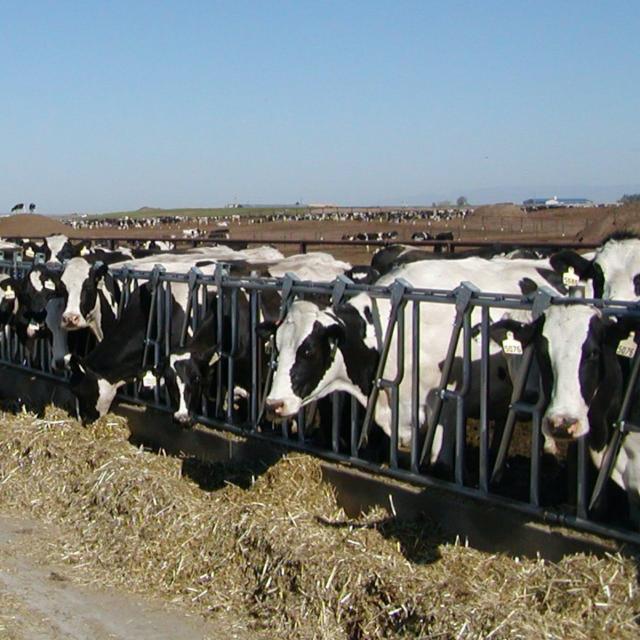
  • Identify the trends that led to modern industrial livestock production in the United States.
  • Determine the most appropriate roles of zoos in modern societies.
  • Identify dilemmas faced by veterinarians and animal shelter workers.

Course 2 of 3 in the Animals and Society Specialization.

Syllabus

WEEK 1
Science
In this module, you will gain familiarity with the issues that shape the use of animals in scientific research and underlie the controversy surrounding it.

WEEK 2
Agriculture
In this module, you will learn about the system through which animals are transformed into “livestock.”

WEEK 3
Sport, Entertainment, and Education
In this module, you will investigate how animals are central to how humans spend their leisure time.

WEEK 4
Health and Welfare
In this module, you will examine the social worlds of veterinary medicine and animal sheltering.


Go to Class
MOOC List is learner-supported. When you buy through links on our site, we may earn an affiliate commission.

Related Courses

Animals, Self, and Society (Coursera) Coursera
University of Colorado Boulder

Animals, Self, and Society (Coursera)

This course explores how animals and people are situated within the web of structures and connections known as “society.” Module 1 considers some of the key symbolic roles that animals play in society by investigating the practice of “thinking with animals.” We investigate how people construct different meanings of animals and the implications these meanings have for both animals and humans. You will gain first-hand experience of this by analyzing how animals are represented in the media.

Jun 15th 2026
4 Weeks
Chimpanzee Behavior and Conservation (Coursera) Coursera
Duke University

Chimpanzee Behavior and Conservation (Coursera)

Chimpanzees are one of our closest living relatives, yet almost nothing was known about their behavior in the wild until Jane Goodall started her groundbreaking study of the chimpanzees of Gombe, Tanzania in 1960. This study continues today, following the same chimpanzee families that Jane Goodall first encountered over 55 years ago. Guided by three course instructors who have lived and worked with the Gombe chimpanzees, you will learn how Goodall’s early discoveries changed our view of human uniqueness.

Jun 8th 2026
5-12 Weeks
Effective Livestock Production with Low Use of Antibiotics (FutureLearn) FutureLearn
Swedish University of Agricultural Sciences

Effective Livestock Production with Low Use of Antibiotics (FutureLearn)

Learn what antibiotic resistance is and how to prevent it while increasing productivity among your livestock. Understand disease prevention and antibiotic use in livestock production. Antimicrobial resistance (AMR) is an increasing problem worldwide and is a threat to the health of animals and humans. But there is still a need for a efficient livestock production, which requires healthy animals.

Aug 26th 2024
4 Weeks
Poultry Health (FutureLearn) FutureLearn
The University of Nottingham,British Hen Welfare Trust

Poultry Health (FutureLearn)

Get technically and scientifically accurate information on how to care for non-commercial poultry. Identify the clinical features of diseased birds and when they need treatment. On this veterinary course, you’ll get expert advice on how to recognise when poultry are unwell, and the options available to you for treatment.

May 16th 2022
5-12 Weeks
Sharks! (edX) EdX
University of Queensland,CornellX,Cornell University,UQx

Sharks! (edX)

Learn about the most fascinating animals on Earth, their sophisticated senses and how sharks and their relatives have impacted human history and culture. Did you know that you can track some sharks’ movements on Twitter? Or that the scales on their skin have influenced the way humans design boats, planes, and even swimsuits? Or that sharks have more senses than humans?

Jul 3rd 2023
4 Weeks
Introduction to Horses (BHI) Box Hill Institute
Box Hill Institute

Introduction to Horses (BHI)

This course is an introduction to horses, demonstrating basic tasks that you would carry out on a daily basis with a horse. This course can help you to form your decision to enter the wonderful world of horses.

Self Paced
1 Week
Global Sociology (edX) EdX
Wellesley College,WellesleyX

Global Sociology (edX)

Connect your personal biography to global history as you develop your sociological imagination. Ever wondered why some countries are rich and others poor? Or why some people believe hard work results in upward mobility and others don’t? To answer these questions, you need to “see” the world sociologically.

No sessions available
4 Weeks
Animal Advocacy Introductory Course (Animal Advocacy Careers) Other Providers
Animal Advocacy Careers

Animal Advocacy Introductory Course (Animal Advocacy Careers)

This online course will walk you through some of the key considerations involved in working to help animals and will help you plan your next steps. it will provide you with the knowledge that you need to start working out which career path will enable you to maximise your positive impact for animals. You will be supported to use this knowledge in creating a career plan and working out which actions you should take next.

Nov 15th 2021
13-24 Weeks
International Law in Action: the Arbitration of International Disputes (Coursera) Coursera
Leiden University

International Law in Action: the Arbitration of International Disputes (Coursera)

‘The Arbitration of International Disputes’ is the third course of Leiden University’s series on International Law in Action. The first course covered generalities on the international courts and tribunals in The Hague, while the second course provided an insider's perspective into the work of international criminal courts and tribunals. This third course explores the major aspects of international arbitration as one of the most common method of international dispute settlement .

Apr 6th 2026
4 Weeks
One Health: Connecting Humans, Animals and the Environment (FutureLearn) FutureLearn
University of Basel

One Health: Connecting Humans, Animals and the Environment (FutureLearn)

BBecome familiar with One Health, a promising concept, and the effective solutions it provides for urgent health problems. Expand how you address health issues, learning from top One Health experts. In today’s globalised world, old diseases persist and new illnesses spread faster than ever thanks to interconnected ecosystems and the close ties between humans and animals.

Oct 9th 2023
5-12 Weeks
Race and Cultural Diversity in American Life and History (Coursera) Coursera
University of Illinois at Urbana-Champaign

Race and Cultural Diversity in American Life and History (Coursera)

Learners will deepen their understanding and appreciation of ways in which race, ethnicity and cultural diversity have shaped American institutions, ideology, law, and social relationships from the colonial era to the present. Race and ethnicity are ideological and cultural categories that include all groups and individuals. Hence, this course is designed in significant part to take a broad look at the ideology of race and cultural diversity in America’s past and present.

Jun 15th 2026
4 Weeks
Global Health at the Human-Animal-Ecosystem Interface (Coursera) Coursera
University of Geneva

Global Health at the Human-Animal-Ecosystem Interface (Coursera)

The University of Geneva, Institute Pasteur, University of Montreal and Centre Virchow-Villermé/University Paris Descartes welcome you to this new MOOC on "Global Health at the Human-Animal-Ecosystem Interface"! Over the next 5 weeks, you will explore and learn about some of the major and current Global Health Challenges at the Human-Animal-Ecosystem Interface: zoonotic emerging infections (e.g. Ebola, Nipah, MERS, Avian Influenza), antimicrobial resistance, neglected tropical diseases (e.g. rabies, leishmaniasis, zoonotic TB), snakebite and other human-animal conflicts etc.

Jun 1st 2026
5-12 Weeks