FUN

Anatomie du Bois (FUN)

Anatomie du Bois (FUN)

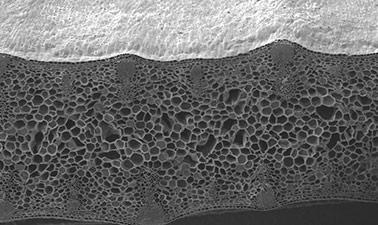
Par ses multiples expériences, l’homme a découvert quelles étaient les meilleures essences de bois pour répondre à chacun de ses besoins en matériaux ou en sources d’énergie. Le premier objectif de ce MOOC est de relier le bois en tant que tissu dans l’arbre et le bois en tant que matériau dans la vie des hommes. A la croisée de ces deux mondes, se trouve l’anatomie, c’est-à-dire la structure cellulaire, qui permet de comprendre presque toutes les propriétés du bois.

L’anatomie permet aussi d’identifier les différentes essences de bois et c’est le deuxième objectif du MOOC : apprendre à reconnaître les bois à deux échelles différentes, celle du microscope et celle de notre œil.
Pas question ici de se promener dans les bois, mais dans LE BOIS.

Format
Le cours se déroule sur 5 semaines. Une thématique nouvelle vous sera présentée chaque semaine à travers une série de vidéos et de documents explicatifs.
Vous pourrez vérifier votre compréhension des sujets traités grâce aux exercices d’auto-évaluation qui accompagneront chacune des vidéos de cours. Ces activités de compréhension ne seront pas notées.
Le forum vous permettra de poser vos questions, d’échanger et de débattre autour des thématiques abordées.

Plan du cours

Semaine 1 : Croissance des arbres et formation du bois
Chapitre 1 - Les cernes du bois
Chapitre 2 - Les directions et plans de référence dans le bois
Chapitre 3 - Les rôles du bois dans l'arbre : conduction de la sève brute
Chapitre 4 - Les rôles du bois dans l'arbre : soutien et contrôle de la posture
Chapitre 4bis - Parenthèse technologique: largeur de cernes, densité du bois et classements
Chapitre 5 - Les rôles du bois dans l'arbre : réserve et défense
Chapitre 5bis - Parenthèse technologique: durabilité naturelle, imprégnabilité et choix des bois en fonction des emplois

Semaine 2 : Croissance des arbres et formation du bois (suite)
Chapitre 6 - Composition chimique et propriétés du bois associées
Chapitre 7 - La paroi cellulaire
Chapitre 7bis - Parenthèse technologique: conséquences de la structure de la paroi sur le retrait et le gonflement du bois
Chapitre 8 - La croissance des arbres: primaire et secondaire
Chapitre 9 - Les cellules de bois formées par le cambium chez les résineux et les feuillus
Chapitre 10 - Le cambium : cellules et divisions
Chapitre 11 - La différenciation d'une cellule de bois

Semaine 3 : Anatomie et identification à l'échelle microscopique du bois de résineux
Chapitre 12 - Classification et appellations des résineux
Chapitre 13 - La trachéide
Chapitre 14 - Les rayons ligneux
Chapitre 15 - Le parenchyme longitudinal
Chapitre 16 - Les canaux résinifères
Chapitre 17 - Reconnaissance des résineux à l'échelle microscopique

Semaine 4 : Anatomie et identification à l'échelle microscopique du bois de feuillus
Chapitre 18 - Classification et appellations des feuillus
Chapitre 19 - Les vaisseaux et les trachéides
Chapitre 20 - Les fibres
Chapitre 21 - Le parenchyme longitudinal
Chapitre 22 - Les rayons ligneux
Chapitre 23 - Reconnaissance des feuillus à l'échelle microscopique

Semaine 5 : Identification à l'échele macroscopique du bois de résineux et du bois de feuillus
Chapitre 24 - La reconnaissance à l'échelle macroscopique des résineux
Chapitre 25 - La reconnaissance à l'échelle macroscopique des feuillus à zone initiale poreuse et zone semi-poreuse des régions tempérées
Chapitre 26 - La reconnaissance à l'échelle macroscopique des feuillus homogènes à pores diffus des régions tempérées
Go to Class
MOOC List is learner-supported. When you buy through links on our site, we may earn an affiliate commission.

Related Courses

Vital Signs: Understanding What the Body Is Telling Us (Coursera) Coursera
University of Pennsylvania

Vital Signs: Understanding What the Body Is Telling Us (Coursera)

The vital signs – heart rate, blood pressure, body temperature, respiration rate, and pain – communicate important information about the physiological status of the human body. In this six-part course we explore the anatomy and physiology underlying the vital signs so that you will develop a systematic, integrated understanding of how the body functions.

Jun 1st 2026
5-12 Weeks
Medical Terminology, Anatomy, and Physiology Fundamentals (Coursera) Coursera
MedCerts

Medical Terminology, Anatomy, and Physiology Fundamentals (Coursera)

In this Introduction to Medical Terminology and the Human Body course, you will learn about the medical language that is used to describe the human body. Throughout each Lesson, the roots of terms are explained to help students understand how medical terminology works in healthcare and to increase their knowledge and understanding of the material discussed.

Jun 1st 2026
4 Weeks
Anatomy: Human Neuroanatomy (edX) EdX
University of Michigan,MichiganX

Anatomy: Human Neuroanatomy (edX)

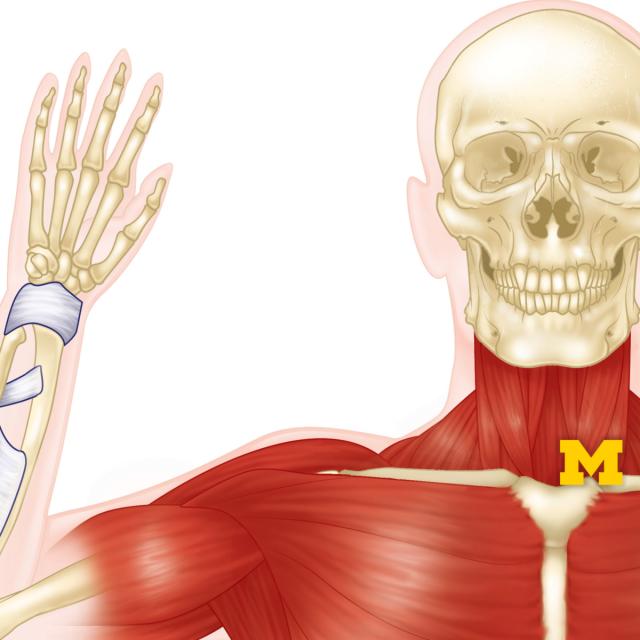
Learn about the different parts of the central nervous system and how they work together with the entire body. In this anatomy course, part of the Anatomy XSeries, you will be introduced to the central and peripheral nervous systems. You will learn about basic neuroanatomy, sensory pathways, motor pathways and the autonomic nervous system.

Self Paced
Self-Paced
So You Want to Study Life Science? (FutureLearn) FutureLearn
University of Glasgow

So You Want to Study Life Science? (FutureLearn)

Explore the exciting subjects within life sciences and the rewarding careers that studying life sciences at university lead to. This short, free online course will introduce you to studying life sciences at university level.We’ll take you on a whistle stop tour of the exciting world of life sciences, exploring the vast array of subjects within the discipline – from anatomy to zoology and everything in between, including immunology, cellular and molecular biology, genetics, physiology and parasitology.

No sessions available
2 Weeks
Mini Medical School: Introduction to Medical Science (FutureLearn) FutureLearn
University of Colorado System

Mini Medical School: Introduction to Medical Science (FutureLearn)

Discover the science underpinning modern medical practice today and how to maintain and promote good physical and mental health. Master the basics of medicine with the University of Colorado School of Medicine. This three-week course offers you a fascinating and informative introduction to modern medicine.

Jul 5th 2021
3 Weeks
De l'atome à l'humain : à la racine des mots scientifiques (FUN) FUN
Université de Lorraine

De l'atome à l'humain : à la racine des mots scientifiques (FUN)

Ce cours en ligne gratuit porte donc sur l’étymologie du vocabulaire scientifique et médical. Il s’adresse aux lycéens se préparant à la PACES, aux formations paramédicales, aux études scientifiques, aux STAPS... Il s’adresse également aux étudiants de ces différentes filières, ainsi qu’à toute personne intéressée par l’étymologie.

Sep 27th 2021
4 Weeks
Anatomy of the Upper and Lower Extremities (Coursera) Coursera
Yale University

Anatomy of the Upper and Lower Extremities (Coursera)

This course has two main parts, one for the lower extremity and the other for the upper extremity. We will show how the various systems that supply and organize the limb control its function. There are a set of introductory lectures which will allow more experienced students to refresh their knowledge of the limbs and a guide to those with less experience. These lectures will be followed by detailed dissections of the extremities emphasizing locomotion for the lower extremities and hand positioning and function for the upper extremities.

Jun 1st 2026
5-12 Weeks
Advanced Neurobiology I (Coursera) Coursera
Peking University

Advanced Neurobiology I (Coursera)

Hello everyone! Welcome to advanced neurobiology! Neuroscience is a wonderful branch of science on how our brain perceives the external world, how our brain thinks, how our brain responds to the outside of the world, and how during disease or aging the neuronal connections deteriorate. We’re trying to understand the molecular, cellular nature and the circuitry arrangement of how nervous system works.

Jun 1st 2026
5-12 Weeks
Anatomy of the Abdomen and Pelvis; a journey from basis to clinic. (Coursera) Coursera
Leiden University,Leiden University Medical Center

Anatomy of the Abdomen and Pelvis; a journey from basis to clinic. (Coursera)

In this anatomy course you will explore the organs involved in our food digestion and discover the common causes of abdominal and pelvic pain. The latest graphics and animations will help you to find new insights and understanding of this part of the body, that has been the focus of anatomical research for centuries and presently arouses renewed scientific interest. You will explore the 3D anatomy of the organs from a basic level, providing thorough anatomical understanding, to its advanced application in surgical procedures.

May 18th 2026
5-12 Weeks