Agricultura urbana y periurbana (Coursera)

Agricultura urbana y periurbana (Coursera)

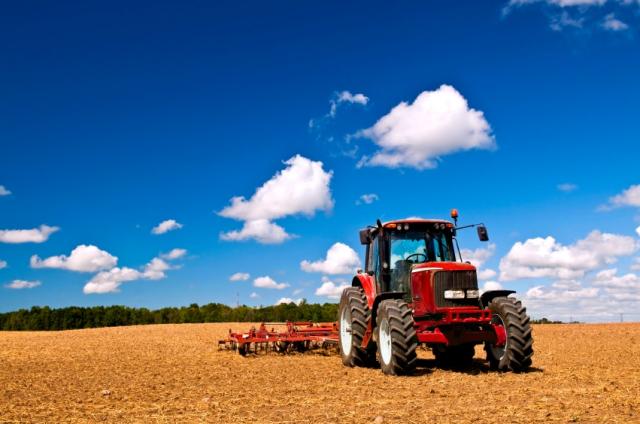
Este curso explica un conjunto de conceptos y herramientas básicas y necesarias para la producción de alimentos agrícolas y pecuarios en pequeños espacios haciendo énfasis en la sustentabilidad de los mismos. Revisando temas como plagas y enfermedades, promueve el rescate de conocimientos tradicionales que, con bajo costo, permiten grandes beneficios encaminados a la seguridad alimentaria y crecimiento de huertas familiares.

Class Deals by MOOC List - Click here and see Coursera's Active Discounts, Deals, and Promo Codes.

La Agricultura Urbana y periurbana no es resultado de una moda sino de una posible solución a los problemas de inseguridad alimentaria que muchos países enfrentan, por lo que hay conceptos, teorías y metodologías que explican su existencia y orientan su práctica. Apropiarse de dichas nociones aunado a una implementación adecuada permite obtener los resultados esperados que impacten la seguridad alimentaria, la salud, el trabajo y los ingresos económicos de las familias que decidan efectuarla.

Syllabus

WEEK 1
Diseño de espacios productivos para la AUP
¡Bienvenid@ al curso! ¡Es momento de comenzar! En este primer módulo revisaremos los contenidos y la forma de trabajo que tendremos a lo largo de cuatro semanas. Con videos y documentos específicos, estudiaremos la importancia de la Agricultura urbana y periurbana (AUP), la cual, es una posible solución a los problemas de inseguridad alimentaria que muchos países enfrentan. También estudiaremos las características y beneficios que esta práctica tiene como la viabilidad económica, protección del medio ambiente y la aceptación cultural. Por último, también aprenderemos los principios básicos para comenzar a practicar la AUP ¡Comencemos!

WEEK 2
Tecnologías sustentables
La producción de alimentos en espacios urbanos y periurbanos involucra recursos naturales. Al evitar su deterioro pueden ser aprovechados para generar una actividad productiva sustentable. En este módulo revisaremos cómo residuos que parecen desperdicios, así como otros recursos naturales pueden ser utilizados para abonar cultivos, huertas y contribuir a la producción de alimentos en pequeñas superficies de tierra.

WEEK 3
Manejo agroecológico de plagas en la AUP
Los insectos forman parte de todos los ecosistemas y los agrosistemas no son la excepción. En la agricultura urbana y periurbana tendremos que convivir y lidiar con algunos insectos, plagas y enfermedades que pueden resentir nuestra producción hortícola, o bien, resultar nocivos para nuestras plantas medicinales y frutales. Es por eso que debemos identificar algunos productos que resulten nutritivos para nuestra producción pero que, también, combatan las plagas en nuestros espacios.

WEEK 4
Manejo de aves de corral en la AUP
En este tema se describen los principales puntos de la crianza de aves de corral, donde se incluye el manejo y cuidado, la alimentación y componentes de la dieta de las aves, las condiciones adecuadas para su alojamiento, así como el manejo sanitario con énfasis en las principales enfermedades y un adecuado calendario de vacunación.
Go to Class
MOOC List is learner-supported. When you buy through links on our site, we may earn an affiliate commission.

Related Courses

Sustainable Development in the 21st Century with Ban Ki-moon (Coursera) Coursera
Yonsei University

Sustainable Development in the 21st Century with Ban Ki-moon (Coursera)

The course is designed for people that want to learn about the latest development agenda the international community agreed to achieve by 2030. Structured around the five pillars of Agenda 2030 – people, prosperity, planet, peace and justice, and partnership, students will learn that these pillars are interconnected and need to be integrated in practical policy-making and operational activities for development, in both developed and developing country settings.

Jun 8th 2026
5-12 Weeks
Agriculture, Economics and Nature (Coursera) Coursera
University of Western Australia

Agriculture, Economics and Nature (Coursera)

Sound economic thinking is crucial for farmers because they depend on good economic decision making to survive. Governments depend on economic information to make good policy decisions on behalf of the community. This course will help you to contribute to better decision making by farmers, or by agencies servicing agriculture, and it will help you to understand why farmers respond to policies and economic opportunities in the ways they do.

Jun 8th 2026
5-12 Weeks
Herramientas de la Economía Circular (Coursera) Coursera
Universidad de los Andes

Herramientas de la Economía Circular (Coursera)

La Economía Circular representa una perspectiva de mejoramiento continuo para la transformación de sistemas de producción y consumo sostenibles. Aprender de sus herramientas, agrega un valor agregado concreto, a las competencias de profesionales interesados en la sostenibilidad ambiental y social. El presente curso ofrece aprender de la importancia de la Economía Circular a través de sus herramientas, útiles para el diseño de proyectos.

Jun 8th 2026
5-12 Weeks
Energy, Environment, and Everyday Life (Coursera) Coursera
University of Illinois at Urbana-Champaign

Energy, Environment, and Everyday Life (Coursera)

This course teaches you everything you need to know about energy, the environment, and at least a number of things in everyday life. It starts by talking about energy itself and where it comes from. This includes how much we have, who has it, who uses it, and what that all means. The video clips are produced in a fast-paced multimedia format during which Professor Ruzic throws in fun and demonstrations. There are multiple-choice questions to check your understanding and some more in-depth exercises to guide you deeper into the subject.

Jun 8th 2026
5-12 Weeks
Sustainable Business Enterprises (Coursera) Coursera
University of Illinois at Urbana-Champaign

Sustainable Business Enterprises (Coursera)

This course will explore current challenges and opportunities facing firms in the area of environmental sustainability. It will begin with an introduction to sustainability, with a particular focus on how environmental sustainability is relevant to business. Topics such as unsustainable consumption/consumer behavior, market research sustainable product design, sustainable value chains and communications will be covered. The bottom-up approach in terms of immersion, emersion, and design as applied to sustainable business enterprise will be covered.

Jun 8th 2026
4 Weeks
Securing Investment Returns in the Long Run (Coursera) Coursera
University of Geneva

Securing Investment Returns in the Long Run (Coursera)

In this course, you will learn about the famous dichotomy between active and passive investing, how to appropriately measure and analyze investment performance and what the future trends in the investment management industry are. You will first learn about absolute and relative performance, risk-adjusted returns and how to decompose investment performance. The focus will then shift to the two main categories of investment vehicles, active and passive funds, and what they entail in terms of expected performance.

Jun 8th 2026
4 Weeks
Global sustainability and corporate social responsibility: Be sustainable (Coursera) Coursera
Macquarie University

Global sustainability and corporate social responsibility: Be sustainable (Coursera)

It is no longer acceptable for organisations to focus entirely on financial success if they are to be competitive on the global stage. As corporate scandals continue to make headlines, you will expand your strategic thinking beyond your organisation’s competitive financial environment to consider its broader impact on society. You will grapple with the conflicting outcomes of maximising financial return and societal impact as you develop the skills to create a balance that is sustainable.

Jun 8th 2026
5-12 Weeks
Climate Adaptation in Africa (Coursera) Coursera
University of Cape Town

Climate Adaptation in Africa (Coursera)

This course explores why climate change adaptation is important in the African context. Africa is considered one to be one of the most vulnerable regions to climate change. Historically, climate-related hazards such as drought, flooding, pest and disease outbreaks, coastal storms and heat waves have had devastating impacts on people and the environment in which they live.

Jun 8th 2026
5-12 Weeks
Solar Energy Codes, Permitting and Zoning (Coursera) Coursera
University at Buffalo

Solar Energy Codes, Permitting and Zoning (Coursera)

This course equips learners to identify national code and zoning rules specific to photovoltaic (PV) systems, as well as key design elements and points for inspection. Curriculum includes zoning variances, critical elements of the permitting process, planning documents necessary for PV system installation and recommendations for permitting offices to streamline the permit process. Learners gain a code inspector’s perspective in relation to building and electrical code requirements.

Jun 8th 2026
4 Weeks
Introduction to Sustainability (Coursera) Coursera
University of Illinois at Urbana-Champaign

Introduction to Sustainability (Coursera)

This course introduces the academic approach of Sustainability and explores how today’s human societies can endure in the face of global change, ecosystem degradation and resource limitations. The course focuses on key knowledge areas of sustainability theory and practice, including population, ecosystems, global change, energy, agriculture, water, environmental economics and policy, ethics, and cultural history.

Jun 8th 2026
5-12 Weeks
The Economics of Agro-Food Value Chains (Coursera) Coursera
Technische Universität München - TUM

The Economics of Agro-Food Value Chains (Coursera)

In this course, you learn how the agro-food value chain approaches the challenge of constantly improving its competitiveness by producing high quality food and products and also aiming to attain greater sustainability. Some of the topics of this course are: the notion of quality for food and agricultural products and consumer value; how to conduct market research in this field; labelling, branding and pricing strategies, as-well as innovation in the agro-food sector; how sustainability can be used as a competitive advantage through corporate social responsibility: the role and different types of industrial standards; the different forms of coordination in the chain, in particular with regard to the retailing and distribution sector.

Jun 10th 2026
5-12 Weeks
Oceanography: a key to better understand our world (Coursera) Coursera
University of Barcelona,Barcelona Foundation for Ocean Sailing - FNOB

Oceanography: a key to better understand our world (Coursera)

The course for a round the world regatta leads the boats through the Mediterranean Sea and the Atlantic, Southern Indian and South Pacific Oceans. On their voyage, the skippers come across a large variety of oceanographic situations: strong currents, floating ice, wave formations of every kind and biological diversity. In this course the student will learn about the foundations of the science of oceanography. You'll learn about the classification and formation of the ocean floor, how current sea satellite analysis systems work, the chemistry of the oceans and the processes that led to its formation.

Jun 8th 2026
5-12 Weeks