Advanced Organic Chemistry (saylor.org)

Offered by Saylor.org,
Advanced Organic Chemistry (saylor.org)

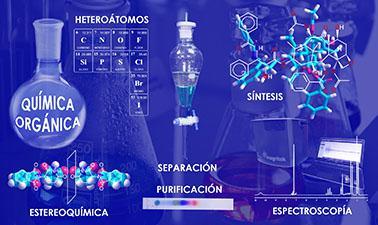
Remember that organic chemistry is the discipline that studies the properties and reactions of organic, carbon-based compounds. This course is intended to be taken after the first two semesters of organic chemistry. Many of the topics within this outline have been covered in the first two semesters of organic chemistry; however, this course will explore these topics in much greater depth.

Remember that organic chemistry is the discipline that studies the properties and reactions of organic, carbon-based compounds. This course is intended to be taken after the first two semesters of organic chemistry. Many of the topics within this outline have been covered in the first two semesters of organic chemistry; however, this course will explore these topics in much greater depth. It is important to make sure that you have a good grasp of the concepts from earlier organic chemistry courses before moving on to this course.

We begin by studying a unit on ylides, benzyne, and free radicals. Many free radicals affect life processes. For example, oxygen-derived radicals may be overproduced in cells, such as white blood cells that try to defend against infection in a living organism. In the first unit, you will learn about free radicals, including oxygen-containing compounds. Afterward we move into a comprehensive examination of stereochemistry, as well as the kinetics of substitution and elimination reactions. After learning the information in that unit, you will be able to describe reaction mechanisms. The course wraps up with a final unit, which is a survey of various hetereocyclic structures, including their MO theory, aromaticity, and reactivity.

Upon successful completion of this course, you will be able to:

Describe free radicals in terms of stability, kinetics, and bond dissociation energies.
Describe the stereochemistry and orbitals involved in photochemical reactions.
Describe enantiomers, diastereomers, pro-S and pro-R hydrogens, and Re/Si faces of carbonyls.
Perform conformational analysis of alkanes and cyclohexanes.
Describe reaction mechanisms in terms of variousparameters (i.e.,kinetics, Curtin-Hammet principle, Hammond postulate,etc.).
Describe the chemistry of the heterocycles listed in Unit 3in terms of molecular orbital theory, aromaticity, and reactions.
Go to Class
MOOC List is learner-supported. When you buy through links on our site, we may earn an affiliate commission.

Related Courses

Thermodynamics (saylor.org) Saylor Academy
Saylor.org

Thermodynamics (saylor.org)

There are many different ways that you can go about solving engineering problems. One of the most important methods is energy analysis. Energy is a physical property that allows work of any kind to be done; without it, there would be no motion, no heat, and no life. You wouldn’t be able to get out of bed in the morning, but it wouldn’t matter, because there would be no sun. Without energy, our world would not exist as it does.

Legacy Course
Self-Paced
Introduction to Industrial Bioprocess Development (Coursera) Coursera
Technical University of Denmark - DTU

Introduction to Industrial Bioprocess Development (Coursera)

Bioprocesses make use of microorganisms, animal cells, or enzymes to manufacture new products or complete a chemical transformation. Since ancient days, humans have been using microorganisms to transform biological materials for the production of alcoholic beverages and other fermented foods. Since then, bioprocesses have been developed for an enormous range of commercial products, from relatively cheap products such as organic solvents and industrial alcohol, to expensive specialty chemicals such as therapeutic proteins, antibiotics, and vaccines. Nowadays, the development of bioprocesses is an essential part of a large number of chemical, food, and pharmaceutical industries. The main purpose of the course “Introduction to Industrial Bioprocess Development” is to provide an overview of the common stages involved in this type of processes.

Jun 15th 2026
5-12 Weeks
Chemical Hazards: Toxicology & Reactivity (Coursera) Coursera
University of California, Davis

Chemical Hazards: Toxicology & Reactivity (Coursera)

This course aims to provide process safety experience for engineers, particularly relevant to chemical engineering but applicable to any field involving process operations. This course introduces you to the important, practical, value-added skills and information that will aid your career, or preparation for a career, in chemical process engineering.

Jun 22nd 2026
4 Weeks
Formulación y nomenclatura de compuestos químicos (edX) EdX
Universitat Politècnica de València,UPValenciaX

Formulación y nomenclatura de compuestos químicos (edX)

Aprenderemos cómo establecer las fórmulas de los compuestos químicos inorgánicos y orgánicos más usuales y las reglas para nombrarlos. Toda la materia está formada por elementos o compuestos químicos que son resultado de la combinación de átomos. Cada compuesto presenta una determinada composición que se corresponde con una fórmula y se identifica con un nombre.

Self Paced
Self-Paced
General Chemistry I (saylor.org) Saylor Academy
Saylor.org

General Chemistry I (saylor.org)

This chemistry survey is designed to introduce students to the world of chemistry. The principles of chemistry were first identified, studied, and applied by ancient Egyptians in order to extract metal from ores, make alcoholic beverages, glaze pottery, turn fat into soap, and much more.

Self Paced
Self-Paced
Materials Data Sciences and Informatics (Coursera) Coursera
Georgia Institute of Technology

Materials Data Sciences and Informatics (Coursera)

This course aims to provide a succinct overview of the emerging discipline of Materials Informatics at the intersection of materials science, computational science, and information science. Attention is drawn to specific opportunities afforded by this new field in accelerating materials development and deployment efforts.

Jun 15th 2026
5-12 Weeks