Fluid Mechanics (saylor.org)

Offered by Saylor.org,
Fluid Mechanics (saylor.org)

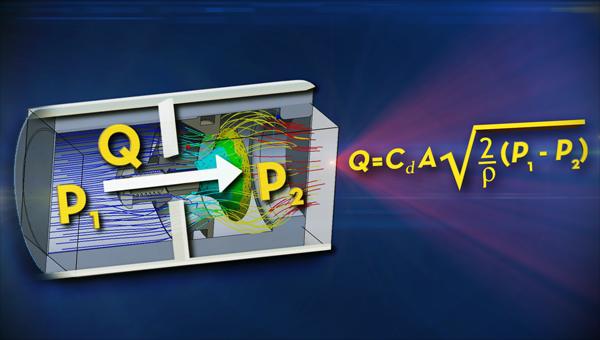
In this course you will first learn about the definition of a fluid and the properties of a fluid, such as density, compressibility, and viscosity. You will then see how these properties influence the way in which fluids flow in response to pressure and velocity variations. You will study this dependence via conservation equations for mass, momentum, and energy. Use and solution of these equations for many situations allows the determination of many details of the fluid flow.

Please note: this legacy course does not offer a certificate and may contain broken links and outdated information. Although archived, it is open for learning without registration or enrollment.
You may think at first that the words “fluid” and “mechanics” should not go together. However, the ways in which fluids (gases and liquids and a few other materials) respond to forces, exert forces, and move from one place to another (their mechanics) are crucially important to many aspects of our experience and our ability to build tools. Consider, for example, the following areas in which fluid mechanics play an important, if not fundamental, role: - Meteorology and ocean dynamics (tsunamis, hurricanes, and tornados) - Fluid flow within living systems (blood flow, lymph flow, air flow) - Hydraulic machinery (jacks, pumps, lifts, steering mechanisms) - Chemical processing and piping (pumps, reactors, separators, pipelines) - Turbomachinery (jet engines, power plants) - Aeronautical and ship machinery (airplanes, helicopters, boats and ships).
This course focuses on applications to two specialized situations: flow in pipes and flow around submerged objects (wings for example). In particular, you will learn to calculate pressure drops in piping systems and forces around submerged objects when exposed to flow. The course concludes with a brief introduction to the complexities of compressible flow, as opposed to flow in which the fluid density is constant.
Upon successful completion of this course, the student will be able to:

  • Formulate basic equations for fluid engineering problems.
  • Use the Poiseuille equation, Reynolds number correlations, and Moody charts for description of laminar and turbulent pipe flows.
  • Use tables, figures, and energy equations to predict pressure drop in pipes, across fittings and through pumps and turbines.
  • Perform dimensional analysis and identify important parameters.
  • Calculate pressure distributions, forces on surfaces, and buoyancy.
  • Analyze flow situations and use appropriate methods to obtain quantitative information for engineering applications.
Go to Class
MOOC List is learner-supported. When you buy through links on our site, we may earn an affiliate commission.

Related Courses

Cyber Security in Manufacturing (Coursera) Coursera
University at Buffalo,The State University of New York

Cyber Security in Manufacturing (Coursera)

The nature of digital manufacturing and design (DM&D), and its heavy reliance on creating a digital thread of product and process data and information, makes it a prime target for hackers and counterfeiters. This course will introduce students to why creating a strong and secure infrastructure should be of paramount concern for anyone operating in the DM&D domain, and measures that can be employed to protect operational technologies, systems and resources.

Jun 1st 2026
4 Weeks
Advanced Manufacturing Enterprise (Coursera) Coursera
University at Buffalo,The State University of New York

Advanced Manufacturing Enterprise (Coursera)

Enterprises that seek to become proficient in advanced manufacturing must incorporate manufacturing management tools and integrate data throughout the supply chain to be successful. This course will make students aware of what a digitally connected enterprise is, as they learn about the operational complexity of enterprises, business process optimization and the concept of an integrated product-process-value chain.

Jun 1st 2026
4 Weeks
Engineering Systems in Motion: Dynamics of Particles and Bodies in 2D Motion (Coursera) Coursera
Georgia Institute of Technology

Engineering Systems in Motion: Dynamics of Particles and Bodies in 2D Motion (Coursera)

This course is an introduction to the study of bodies in motion as applied to engineering systems and structures. We will study the dynamics of particle motion and bodies in rigid planar (2D) motion. This will consist of both the kinematics and kinetics of motion. Kinematics deals with the geometrical aspects of motion describing position, velocity, and acceleration, all as a function of time. Kinetics is the study of forces acting on these bodies and how it affects their motion.

May 18th 2026
5-12 Weeks
Modern Robotics, Course 1: Foundations of Robot Motion (Coursera) Coursera
Northwestern University

Modern Robotics, Course 1: Foundations of Robot Motion (Coursera)

Do you want to know how robots work? Are you interested in robotics as a career? Are you willing to invest the effort to learn fundamental mathematical modeling techniques that are used in all subfields of robotics? If so, then the "Modern Robotics: Mechanics, Planning, and Control" specialization may be for you. This specialization, consisting of six short courses, is serious preparation for serious students who hope to work in the field of robotics or to undertake advanced study. It is not a sampler.

Jun 1st 2026
4 Weeks
Machine Design Part I (Coursera) Coursera
Georgia Institute of Technology

Machine Design Part I (Coursera)

“Machine Design Part I” is the first course in an in-depth three course series of “Machine Design.” The “Machine Design” Coursera series covers fundamental mechanical design topics, such as static and fatigue failure theories, the analysis of shafts, fasteners, and gears, and the design of mechanical systems such as gearboxes. Throughout this series of courses we will examine a number of exciting design case studies, including the material selection of a total hip implant, the design and testing of the wing on the 777 aircraft, and the impact of dynamic loads on the design of an bolted pressure vessel. In this first course, you will learn robust analysis techniques to predict and validate design performance and life.

May 25th 2026
5-12 Weeks
Pipe Material Specification (Coursera) Coursera
L&T EduTech

Pipe Material Specification (Coursera)

This particular course entitled “Pipe Material Specification” under the specialization entitled “Design of Industrial Piping Systems” is mainly aimed at piping system design aspects. The major differences between tube and pipe should be known to the designer first. The right selection of the straight pipe for a given process requirement is entirely based on the sound knowledge of the designer on pipe manufacturing techniques, pipe ends, pipe materials, and ASME B31 pressure piping series.

Jun 8th 2026
4 Weeks
Modern Robotics, Course 6: Capstone Project, Mobile Manipulation (Coursera) Coursera
Northwestern University

Modern Robotics, Course 6: Capstone Project, Mobile Manipulation (Coursera)

The capstone project of the Modern Robotics specialization is on mobile manipulation: simultaneously controlling the motion of a wheeled mobile base and its robot arm to achieve a manipulation task. This project integrates several topics from the specialization, including trajectory planning, odometry for mobile robots, and feedback control. Beginning from the Modern Robotics software library provided to you (written in Python, Mathematica, and MATLAB), and software you have written for previous courses, you will develop software to plan and control the motion of a mobile manipulator to perform a pick and place task.

Jun 8th 2026
4 Weeks