Your World and What Shapes It (Coursera)

Your World and What Shapes It (Coursera)

Thriving organizations strive for equity at all levels. Dynamic global DEI initiatives strengthen connectivity within individual teams and foster cross-cultural collaboration and mutual understanding while encouraging the inclusion of employees from all regions. Broader global relations aside, there also exist country-specific ethnic dynamics that make DEI a critical conversation. Global dynamics present a possible risk (and opportunity) for organizations. In this course, we will explore the complex topics that shape your views and ideas by exploring historical narratives while working on your journey towards improving cultural competence.

Class Deals by MOOC List - Click here and see Coursera's Active Discounts, Deals, and Promo Codes.

This course can be taken for academic credit as part of CU Boulder’s Master of Engineering in Engineering Management (ME-EM) degree offered on the Coursera platform. The ME-EM is designed to help engineers, scientists, and technical professionals move into leadership and management roles in the engineering and technical sectors. With performance-based admissions and no application process, the ME-EM is ideal for individuals with a broad range of undergraduate education and/or professional experience.
Course 1 of 3 in the Global Perspectives of DEI in the Workplace Specialization.

What You Will Learn

  • Recognize and reflect on life experiences that shape your beliefs.
  • Discover how ideas about race, sex, and culture shape your environment.
  • Identify strategies for resisting and surviving marginalization.
  • Establish awareness to support marginalized populations.

Syllabus

WEEK 1
Understanding Yourself
In this module, you will focus on setting the foundation for this course and the specialization by gaining awareness of yourself, your culture, and your environment.

WEEK 2
Uncovering Historical Narratives
In this module, we will build on understanding the exclusion of populations and how this leads to bias and lack of support for these communities. During this process, we will reflect on our own role in marginalizing others.

WEEK 3
Recognizing Personal Bias
This course examines the implicit bias with emphasis on differentiating and understanding while working on your journey toward improving your cultural competence.

WEEK 4
Developing Relationships
This module focuses more on the label of ‘different’ and understanding the intersectionality and complexity of those who are marginalized.

WEEK 5
Rediscovering Yourself
This module concludes by combining the learnings of the historical narratives and terminology by allowing time for deeper reflection.


Go to Class
MOOC List is learner-supported. When you buy through links on our site, we may earn an affiliate commission.

Related Courses

Meditation: A way to achieve your goals in your life (Coursera) Coursera
Korea Advanced Institute of Science and Technology - KAIST

Meditation: A way to achieve your goals in your life (Coursera)

Do we truly think that we have lived for ourselves? Perhaps we have lived for money, love, fame, family and pride etc.? Therefore, we don’t seem to be satisfied even though we are full of those things. It is because that we don’t know ourselves. Eric Fromm talked about human nature as two modes of being: “To Have” and “To Be”. If we are “Having” the nature of possessions, we are not satisfied, and feel empty and futile. Then, how can we be “Being” the nature of our inner-selves? Sometimes, we happened to be aware of this “Being” nature and try to change ourselves, but fail. But, because of our daily routines, it’s easily forgotten. And more it is hard to escape from our unwanted minds controlling us.

Sep 28th 2026
5-12 Weeks
Artificial Intelligence Data Fairness and Bias (Coursera) Coursera
LearnQuest

Artificial Intelligence Data Fairness and Bias (Coursera)

In this course, we will explore fundamental issues of fairness and bias in machine learning. As predictive models begin making important decisions, from college admission to loan decisions, it becomes paramount to keep models from making unfair predictions. From human bias to dataset awareness, we will explore many aspects of building more ethical models.

Sep 7th 2026
3 Weeks
Decision-Making: Blending Art & Science (Coursera) Coursera
Dartmouth College

Decision-Making: Blending Art & Science (Coursera)

Why do smart people sometimes think they are right when they are very, very wrong? Our brains are designed to make quick decisions, and sometimes we miss out on what’s really going on. Knowing this, Professor Sydney Finkelstein walks you through the neuroscience behind decision-making, and teaches you to make conscious decisions that are right for you at work and in life. By teaching you to reflect and move forward even better than before, Professor Finkelstein will help you to be the best you possibly can at whatever you do.

Sep 7th 2026
4 Weeks
Asian American History and Identity: An Anti-Racism Toolkit (Coursera) Coursera
University of Colorado Boulder

Asian American History and Identity: An Anti-Racism Toolkit (Coursera)

In this course, students will develop a greater understanding of Asian American history and identities, explore the problematic history of anti-Asian discrimination in the US, and develop skill sets that they can use to address anti-Asian hate and violence in their community. Target learners include students interested in Asian American history and Anti-Racism, but also any learner interested in creating more inclusive communities for AAPI Americans and stopping racism, hate, and violence in their community.

Sep 14th 2026
4 Weeks
Ecosystem Services: a Method for Sustainable Development (Coursera) Coursera
University of Geneva

Ecosystem Services: a Method for Sustainable Development (Coursera)

Ecosystem services are a way of thinking about – and evaluating – the goods and services provided by nature that contribute to the well-being of humans. This MOOC will cover scientific (technical), economic, and socio-political dimensions of the concept through a mix of theory, case-studies, interviews with specialists and a serious-game.

Sep 7th 2026
5-12 Weeks
Overcoming Bias (Coursera) Coursera
University of California, Irvine

Overcoming Bias (Coursera)

This course is for anyone that wants to learn more about bias and how it can affect business, relationships, and communities. The course begins with an exploration of the word bias and its many definitions. The course then covers workplace bias and strategies for overcoming personal bias. The course ends with an activity in which the learner creates an action plan for a bias free workplace.

Sep 14th 2026
4 Weeks
Human Decision Making and its Biases (Coursera) Coursera
Fractal Analytics

Human Decision Making and its Biases (Coursera)

This course discusses the biases and limitations of the human brain ,strategies to overcome these biases, and critically analyzes data while making decisions and recommendations. Analyzing data effectively and objectively is a long journey and the first step is to be aware of these biases, prejudices and perceptions.

Sep 7th 2026
4 Weeks
Introduction to Systematic Review and Meta-Analysis (Coursera) Coursera
Johns Hopkins University

Introduction to Systematic Review and Meta-Analysis (Coursera)

We will introduce methods to perform systematic reviews and meta-analysis of clinical trials. We will cover how to formulate an answerable research question, define inclusion and exclusion criteria, search for the evidence, extract data, assess the risk of bias in clinical trials, and perform a meta-analysis.

Sep 21st 2026
5-12 Weeks
Anti-Racism I (Coursera) Coursera
University of Colorado Boulder

Anti-Racism I (Coursera)

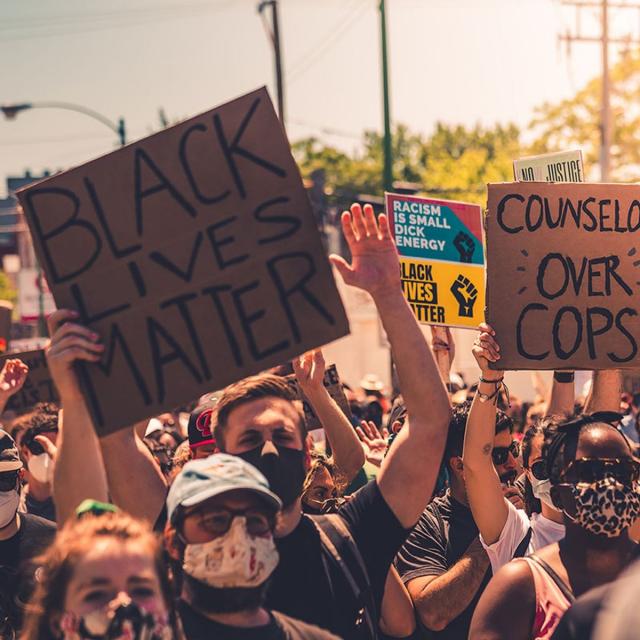
Anti-Racism I is an introduction to the topic of race and racism in the United States. The primary audience for this course is anyone who is interested in learning about race/racism in the US who has never taken a course in critical race or ethnic studies or affiliated fields (indeed, who may not know what the fields of critical race studies or ethnic studies are), who has never read a book about race/racism, or attended any race equity or diversity trainings on the topic of race/racism.

Sep 14th 2026
3 Weeks
'Their' World and How You Define It (Coursera) Coursera
University of Colorado Boulder

'Their' World and How You Define It (Coursera)

Thriving organizations strive for equity at all levels. Dynamic global DEI initiatives strengthen connectivity within individual teams and foster cross-cultural collaboration and mutual understanding while encouraging the inclusion of employees from all regions. Broader global relations aside, there also exist country-specific ethnic dynamics that make DEI a critical conversation. Global dynamics present a possible risk (and opportunity) for organizations. In this course, we will develop a more profound knowledge and understanding of diverse groups by hearing actual accounts from various marginalized populations and adopting an approach of first looking inward, then confronting ignorances, biases, and stereotypes of marginalized populations, and ending each lesson with a personal reflection.

Sep 14th 2026
5-12 Weeks
Build Better Generative Adversarial Networks (GANs) (Coursera) Coursera
DeepLearning.AI

Build Better Generative Adversarial Networks (GANs) (Coursera)

In this course, you will: Assess the challenges of evaluating GANs and compare different generative models; Use the Fréchet Inception Distance (FID) method to evaluate the fidelity and diversity of GANs; Identify sources of bias and the ways to detect it in GANs; Learn and implement the techniques associated with the state-of-the-art StyleGANs.

Sep 14th 2026
3 Weeks