Overcoming Bias (Coursera)

Overcoming Bias (Coursera)

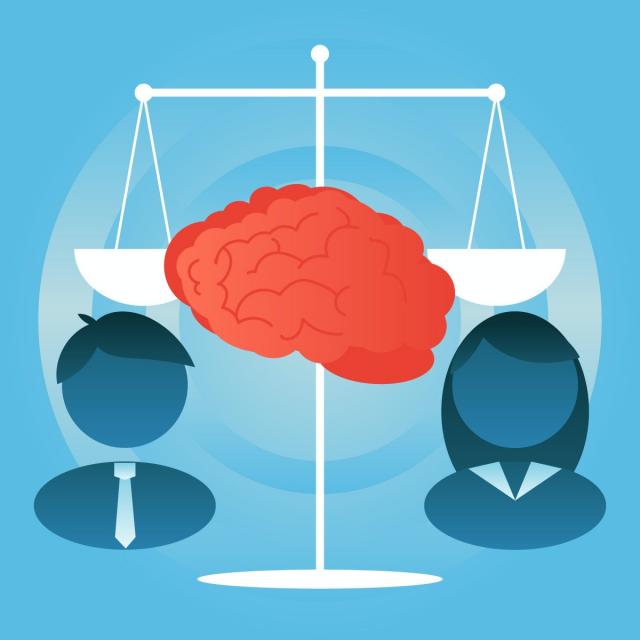
This course is for anyone that wants to learn more about bias and how it can affect business, relationships, and communities. The course begins with an exploration of the word bias and its many definitions. The course then covers workplace bias and strategies for overcoming personal bias. The course ends with an activity in which the learner creates an action plan for a bias free workplace.

Class Deals by MOOC List - Click here and see Coursera's Active Discounts, Deals, and Promo Codes.

What You Will Learn

  • You will learn the meaning of the word bias and how it affects the workplace. You will also learn strategies for overcoming bias.

Syllabus

WEEK 1
What Is Bias?
Bias is a word we hear on a regular basis. We hear it at work when we are asked to attend training sessions. We hear it on the news when we learn about instances of prejudice and insensitivity. However, bias is not a simple word. Bias takes on several different forms and can have several different effects. In this module, we will explore the meaning of the word bias. We will learn that it has both a psychological and social meaning. We will also learn that bias is a normal part of life. The module concludes with an activity that allows learners to explore their own bias and reflect on how it influences the decision making process.

WEEK 2
9 to 5 Bias
For many people, the workplace is like a second home. After all, we spend a significant amount of our day and week at our places of business. For these reasons, everyone wants to have a harmonious workplace. However, bias can upset an office environment and have a negative effect on morale, productivity, and overall well-being. In this module, we will read articles that describe workplace bias. We will also explore strategies for eliminating it. The module ends with a chance for you to think about how you would implement changes for a bias free workplace.

WEEK 3
Bias 360
In the previous modules, we explored the definition of bias and how it affects the workplace. Now, it is time to take a more comprehensive approach to overcoming bias. To do so, we will start to look more closely at ourselves and our own personal relationship to bias. Whether you are the person being impacted or the person projecting a bias, self awareness is the key to effective bias management. In this module, you will learn how to measure your own bias. You will also learn strategies for overcoming personal bias and how self improvement translates to happier workplaces and communities.

WEEK 4
Creating a Bias Neutral Work Environment
Overcoming bias should be important to all organizations. Having a bias free environment makes the workplace more fun and more productive. Furthermore, creating a bias neutral environment is simply the right, humane thing to do. Throughout this course, we have learned the meaning of the word bias as well as the different types of bias. We have explored management strategies for workplace bias and personal bias. Now, it is time to put these ideas into action. In our final module, we will focus on applying ideas that eliminate bias. We will focus on effective communication methods and how to measure outcomes so that we know bias initiatives are working properly. This module concludes with a peer reviewed activity in which you will build your own plan for a bias neutral workplace.

Go to Class
MOOC List is learner-supported. When you buy through links on our site, we may earn an affiliate commission.

Related Courses

Emotional and Social Intelligence (Coursera) Coursera
University of California, Davis

Emotional and Social Intelligence (Coursera)

"We are wired to connect. Neuroscience has discovered that our brains very design makes it sociable, inexorably drawn into an intimate brain to brain linkup whenever we engage with another person." Daniel Goleman – Prologue – Social Intelligence. In this course, we will explain the value of emotional and social intelligence for professional success. We'll assess current emotional and social intelligence skills and you will discover the Foundational 4 Quadrants of Emotional and Social Intelligence (ESI) to understand, use and manage emotions. We will explain how stress can impact application of emotional and social intelligence skills, and reflect upon needed actions to take to create connections and build relationships for greater professional effectiveness.

Jun 22nd 2026
4 Weeks
Build Better Generative Adversarial Networks (GANs) (Coursera) Coursera
DeepLearning.AI

Build Better Generative Adversarial Networks (GANs) (Coursera)

In this course, you will: Assess the challenges of evaluating GANs and compare different generative models; Use the Fréchet Inception Distance (FID) method to evaluate the fidelity and diversity of GANs; Identify sources of bias and the ways to detect it in GANs; Learn and implement the techniques associated with the state-of-the-art StyleGANs.

Jun 22nd 2026
3 Weeks
Prepare Data for Exploration (Coursera) Coursera
Google

Prepare Data for Exploration (Coursera)

This is the third course in the Google Data Analytics Certificate. These courses will equip you with the skills needed to apply to introductory-level data analyst jobs. As you continue to build on your understanding of the topics from the first two courses, you’ll also be introduced to new topics that will help you gain practical data analytics skills. You’ll learn how to use tools like spreadsheets and SQL to extract and make use of the right data for your objectives and how to organize and protect your data. Current Google data analysts will continue to instruct and provide you with hands-on ways to accomplish common data analyst tasks with the best tools and resources.

Jun 15th 2026
5-12 Weeks
Adaptability and Resiliency (Coursera) Coursera
University of California, Davis

Adaptability and Resiliency (Coursera)

To survive in today’s constantly changing business landscape requires being comfortable in uncertainty. Adaptability is what allows people and businesses to solve problems, overcome challenges and move back from the edge of attrition to the more stable ground of relevance. Adaptability is everything. — Jeff Boss, Forbes. Adaptability refers to your ability change your actions, course, or approach in order to suit different conditions or environments. Adaptability implies a sense of personal choice, of purposefully navigating—rather than being driven by—changing circumstances. Resilience is the capacity to recover quickly from difficulties. Resilience gives you the ability to bounce forward with new insights and learning you can carry into the future.

Jun 22nd 2026
4 Weeks
Empathy for Self and Others (Coursera) Coursera
Arizona State University

Empathy for Self and Others (Coursera)

Empathy is something people must use every day. Empathy isn't limited to understanding other people; it's also about understanding yourself. An important key to understanding the emotions of others is understanding how you feel those emotions. Emotional intelligence and empathy aren't innate things that are fixed; they're skills that can be learned, and anyone has the potential to excel at them. This course will help you unlock that potential.

Jun 22nd 2026
5-12 Weeks
English for Media Literacy (Coursera) Coursera
University of Pennsylvania

English for Media Literacy (Coursera)

Welcome to English for Media Literacy! This course is designed for non-native English speakers who are interested in learning more about U.S. media literacy. In this course, you will explore different types of mass media; such as, newspapers, magazines, television, and social media. This course will also give you the opportunity to develop a broader understanding of the role media plays in our lives, while building your vocabulary and giving you the language skills needed to analyze what you read and watch.

Jun 22nd 2026
5-12 Weeks
What is Palliative Care? (Coursera) Coursera
University of Colorado System

What is Palliative Care? (Coursera)

Palliative care provides invaluable help for patients living with serious or life-limiting illness and their family caregivers. Palliative care should be part of healthcare services to improve quality of life, the ability to tolerate and benefit from treatment and improve survival. In this course, you will learn about the nature of suffering and how this concept can help you understand the experience of people living with serious illness.

Jun 22nd 2026
5-12 Weeks
Fundamentals of Cross-Functional Collaboration (Coursera) Coursera
University of Colorado Boulder

Fundamentals of Cross-Functional Collaboration (Coursera)

Our ability to cultivate and lead cross-functional collaboration strongly depends on our level of self-awareness. In this course, you will develop an understanding of basic cross-functional collaboration concepts and definitions, create a leadership self-awareness profile, and learn how to navigate and manage four most prevalent collaboration dynamics.

Jun 26th 2026
4 Weeks
Digital Strategies: Managing Sociotechnological Co-Evolution (Coursera) Coursera
University of California, Davis

Digital Strategies: Managing Sociotechnological Co-Evolution (Coursera)

Unravel the mysteries behind the accelerating pace of technological change, exploring mathematical principles and historical precedents behind AI and large learning models (LLM). Gain insights into the dichotomy of continuous innovation versus disruptive breakthroughs, and evaluate their profound impact on industries and economies worldwide. Investigate the societal implications of technological diffusion, analyzing inequalities and proposing viable policy solutions.

Jun 22nd 2026
5-12 Weeks
Artificial Intelligence Data Fairness and Bias (Coursera) Coursera
LearnQuest

Artificial Intelligence Data Fairness and Bias (Coursera)

In this course, we will explore fundamental issues of fairness and bias in machine learning. As predictive models begin making important decisions, from college admission to loan decisions, it becomes paramount to keep models from making unfair predictions. From human bias to dataset awareness, we will explore many aspects of building more ethical models.

Jun 15th 2026
3 Weeks
Biases and Portfolio Selection (Coursera) Coursera
Rice University

Biases and Portfolio Selection (Coursera)

Investors tend to be their own worst enemies. In this third course, you will learn how to capitalize on understanding behavioral biases and irrational behavior in financial markets. You will start by learning about the various behavioral biases – mistakes that investors make and understand their reasons. You will learn how to recognize your own mistakes as well as others’ and understand how these mistakes can affect investment decisions and financial markets. You will also explore how different preferences and investment horizons impact the optimal asset allocation choice.

Jun 15th 2026
4 Weeks