Working with Version Control (Coursera)

Offered by University of Leeds,
Working with Version Control (Coursera)

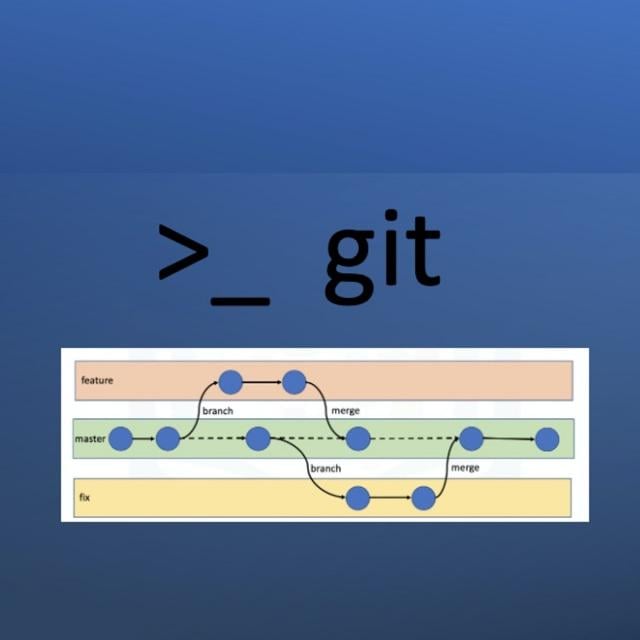
Version control is a crucial tool for managing code. Explore the basics of version control and learn how to use it in software development projects. In this course, you will explore Git, a popular version control tool which you will learn to use to create repositories, make commits, and ensure your code is organised and up-to-date.

Class Deals by MOOC List - Click here and see Coursera's Active Discounts, Deals, and Promo Codes.

You will also practice Markdown, a widely-used markup language, used to create professional and concise documentation for your software projects. You will explore Markdown syntax essentials, enabling you to create headings, lists, links, and images. By the end, you'll be equipped to produce polished documentation that complements your code repositories.
Gaining confidence in version control and Markdown, you'll adhere to best practices in organising, updating, and maintaining your code.

What you'll learn

  • Describe the meaning and purpose of version control, understanding its role in managing and tracking changes in software development projects.
  • Identify the benefits for developers when using version control.
  • Learn to generate/ utilise SSH keys, use basic Git commands, access public repositories, set up project boards and use issue trackers.
  • Leverage Github's markdown language for formatting text and bios.

Syllabus

Week 1: Introduction to version control
Module 1
This week, we'll be getting started with the basics of version control and learning how to use Git, one of the most popular version control systems used by developers worldwide. You'll learn how to create repositories, track changes to your code and collaborate with others using branches and public repositories. By the end of the week, you'll have a solid understanding of the fundamentals of version control and be ready to take your coding skills to the next level!

Week 2: Documenting with Markdown
Module 2
This week, we'll be exploring collaboration and documentation with Markdown. You'll learn how to use Markdown to create polished and professional-looking documentation for your software projects. Markdown is designed to be easy to read and write, even for non-experts. You don't need any special software or knowledge to use it, and it's widely supported by many popular platforms and apps. So let's go!

Week 3. Using GitHub Projects and Issue Tracker
Module 3
This week, you will learn about GitHub Projects and Issue Tracker, and discover how they can help you manage and track issues and tasks within your project. Together, GitHub Projects and Issue Tracker provide a powerful suite of tools for managing your software development projects. With them, you can stay organised, collaborate more effectively with your team and track your progress as you work towards your goals. Get ready to take your collaboration and documentation skills to the next level!

Go to Class
MOOC List is learner-supported. When you buy through links on our site, we may earn an affiliate commission.

Related Courses

Automate Cybersecurity Tasks with Python (Coursera) Coursera
Google

Automate Cybersecurity Tasks with Python (Coursera)

This is the seventh course in the Google Cybersecurity Certificate. These courses will equip you with the skills you need to apply for an entry-level cybersecurity job. You’ll build on your understanding of the topics that were introduced in the sixth Google Cybersecurity Certificate course. In this course, you will be introduced to the Python programming language and apply it in a cybersecurity setting to automate tasks.

Jun 1st 2026
4 Weeks
Continuous Integration and Deployment with ASP.NET Core (Coursera) Coursera
EDUCBA

Continuous Integration and Deployment with ASP.NET Core (Coursera)

This comprehensive course covers the foundational principles of Continuous Integration (CI) and Continuous Deployment (CD), emphasizing the integral role of automation in the software development lifecycle. Gain essential knowledge and practical skills to navigate and optimize CI/CD workflows, ensuring seamless automation throughout development.

Jun 8th 2026
4 Weeks
Exploiting and Securing Vulnerabilities in Java Applications (Coursera) Coursera
University of California, Davis

Exploiting and Securing Vulnerabilities in Java Applications (Coursera)

In this course, we will wear many hats. With our Attacker Hats on, we will exploit Injection issues that allow us to steal data, exploit Cross Site Scripting issues to compromise a users browser, break authentication to gain access to data and functionality reserved for the ‘Admins’, and even exploit vulnerable components to run our code on a remote server and access some secrets.

Jun 8th 2026
4 Weeks
Writing, Running, and Fixing Code in C (Coursera) Coursera
Duke University

Writing, Running, and Fixing Code in C (Coursera)

Building on the course Programming Fundamentals, this course will teach you how to write code by first planning what your program should do—an important approach for novice and professional programmers. You will learn how to compile and run your program, and then how to test and debug it. This course builds on the Seven Steps you have already learned and provides a framework for systematically testing for problems and fixing them, so you can find and fix problems efficiently.

Jun 1st 2026
4 Weeks
Mastering the Software Engineering Interview (Coursera) Coursera
University of California, San Diego

Mastering the Software Engineering Interview (Coursera)

You’ve hit a major milestone as a computer scientist and are becoming a capable programmer. You now know how to solve problems, write algorithms, and analyze solutions; and you have a wealth of tools (like data structures) at your disposal. You may now be ready for an internship or (possibly) an entry-level software engineering job. But can you land the internship/job? It depends in part on how well you can solve new technical problems and communicate during interviews. How can you get better at this? Practice!

Jun 8th 2026
4 Weeks
JavaScript Interview Challenges (Coursera) Coursera
Scrimba

JavaScript Interview Challenges (Coursera)

Your essential tech interview preparation pack! Practice solving problems and honing the skills you need to succeed in a frontend coding interview. Are you applying for frontend developer roles? Do you wish to test out your JavaScript knowledge? Do you love solving code challenges? If any of the above applies to you, JavaScript Interview Challenges should be your next Scrimba course!

Jun 1st 2026
3 Weeks
The Unix Workbench (Coursera) Coursera
Johns Hopkins University

The Unix Workbench (Coursera)

Unix forms a foundation that is often very helpful for accomplishing other goals you might have for you and your computer, whether that goal is running a business, writing a book, curing disease, or creating the next great app. The means to these goals are sometimes carried out by writing software. Software can’t be mined out of the ground, nor can software seeds be planted in spring to harvest by autumn. Software isn’t produced in factories on an assembly line. Software is a hand-made, often bespoke good. If a software developer is an artisan, then Unix is their workbench.

Jun 8th 2026
4 Weeks
DevOps, DataOps, MLOps (Coursera) Coursera
Duke University

DevOps, DataOps, MLOps (Coursera)

Learn how to apply Machine Learning Operations (MLOps) to solve real-world problems. The course covers end-to-end solutions with Artificial Intelligence (AI) pair programming using technologies like GitHub Copilot to build solutions for machine learning (ML) and AI applications. This course is for people working (or seeking to work) as data scientists, software engineers or developers, data analysts, or other roles that use ML.

Jun 8th 2026
5-12 Weeks
Introduction to Visual Basic Programming (Coursera) Coursera
LearnQuest

Introduction to Visual Basic Programming (Coursera)

This course is the second course in a series that aims to prepare you for a role working as a programmer. In this course, you will be introduced to the five main concepts in procedural programming: user input, console output, variable declaration and assignment, decision branching and iteration. Labs will allow the students to apply the material in the lectures in simple computer programs designed to re-enforce the material in the lesson.

Jun 1st 2026
4 Weeks
Introduction to Python (Coursera) Coursera
Arizona State University

Introduction to Python (Coursera)

This specialization introduces the basics of the Python programming language and teaches how to implement solutions to real-world problems using Python syntax. Topics in this course range from utilizing integrated development environments (IDEs) to implementing Python syntax in scripts. Some of the position titles that may benefit from this course are computer scientist, computer engineer, software engineer, software developer, software tester, electrical engineer, mechanical engineer, chemical engineer and aerospace engineer.

Jun 1st 2026
5-12 Weeks
Introduction to Web Development with HTML, CSS, JavaScript (Coursera) Coursera
IBM

Introduction to Web Development with HTML, CSS, JavaScript (Coursera)

Want to take the first steps to become a Cloud Application Developer? This course will lead you through the languages and tools you will need to develop your own Cloud Apps. Beginning with an explanation of how internet servers and clients work together to deliver applications to users, this course then takes you through the context for application development in the Cloud, introducing front-end, back-end, and full-stack development.

Jun 1st 2026
5-12 Weeks
The Data Scientist's Toolbox (Coursera) Coursera
Johns Hopkins University

The Data Scientist's Toolbox (Coursera)

In this course you will get an introduction to the main tools and ideas in the data scientist's toolbox. The course gives an overview of the data, questions, and tools that data analysts and data scientists work with. There are two components to this course. The first is a conceptual introduction to the ideas behind turning data into actionable knowledge. The second is a practical introduction to the tools that will be used in the program like version control, markdown, git, GitHub, R, and RStudio.

Jun 8th 2026
4 Weeks