Full Stack Software Developer Assessment (Coursera)

Offered by IBM,
Full Stack Software Developer Assessment (Coursera)

This is the final course in the Full Stack Professional Certificate. It will test your knowledge and the skills you’ve acquired so far. This course contains the graded final examination covering content from nine of the eleven courses in the certificate. You will be assessed on topics such as core cloud computing concepts; languages such as HTML, CSS, JavaScript, and Python; frameworks such as Node.js and React; and backend technologies such as Docker, Kubernetes, OpenShift, SQL, Django, and Serverless.

Class Deals by MOOC List - Click here and see Coursera's Active Discounts, Deals, and Promo Codes.

Course 12 of 12 in the IBM Full Stack Software Developer Professional Certificate.

What You Will Learn

  • Demonstrate mastery of skills and knowledge acquired in the IBM Full Stack Software Developer Professional Certificate.
  • Apply understanding of common technologies related to full-stack, front-end and back-end application development .
  • Explain concepts in cloud computing, web development, HTML, CSS, JavaScript GitHub, Python & Django programming, microservices and containers
  • Analyze and troubleshoot issues in software design, development, deployment and operations.

Syllabus

WEEK 1: Assessment for Application Cloud Developer

Go to Class
MOOC List is learner-supported. When you buy through links on our site, we may earn an affiliate commission.
Related Courses

An Introduction to Interactive Programming in Python (Part 2) (Coursera) Coursera
Rice University

An Introduction to Interactive Programming in Python (Part 2) (Coursera)

This two-part course is designed to help students with very little or no computing background learn the basics of building simple interactive applications. Our language of choice, Python, is an easy-to learn, high-level computer language that is used in many of the computational courses offered on Coursera. To make learning Python easy, we have developed a new browser-based programming environment that makes developing interactive applications in Python simple.

Nov 2nd 2026
4 Weeks
Algorithmic Thinking (Part 1) (Coursera) Coursera
Rice University

Algorithmic Thinking (Part 1) (Coursera)

Experienced Computer Scientists analyze and solve computational problems at a level of abstraction that is beyond that of any particular programming language. This two-part class is designed to train students in the mathematical concepts and process of "Algorithmic Thinking", allowing them to build simpler, more efficient solutions to computational problems.

Nov 2nd 2026
4 Weeks
Uso de bases de datos con Python (Coursera) Coursera
University of Michigan

Uso de bases de datos con Python (Coursera)

Este curso presentará a los estudiantes los conceptos básicos del lenguaje de consulta estructurado (Structured Query Language, SQL), así como el diseño básico de bases de datos para almacenar datos como parte de una iniciativa de varios pasos para recopilar, analizar y procesar datos. El curso utilizará SQLite3 como base de datos. También crearemos rastreadores web y procesos de visualización y recopilación de datos de varios pasos. Utilizaremos la biblioteca D3.js para realizar la visualización básica de datos.

Nov 9th 2026
5-12 Weeks
Estructuras de datos de Python (Coursera) Coursera
University of Michigan

Estructuras de datos de Python (Coursera)

Este curso presentará las estructuras de datos básicas del lenguaje de programación Python. Veremos los conceptos básicos de la programación de procedimientos y exploraremos cómo podemos usar las estructuras de datos integrados de Python, como listas, diccionarios y tuplas, para realizar análisis de datos cada vez más complejos. Este curso abarcará los capítulos 6 a 10 del libro de texto “Python para todos”. Este curso cubre Python 3.

Nov 9th 2026
5-12 Weeks
Global Warming II: Create Your Own Models in Python (Coursera) Coursera
University of Chicago

Global Warming II: Create Your Own Models in Python (Coursera)

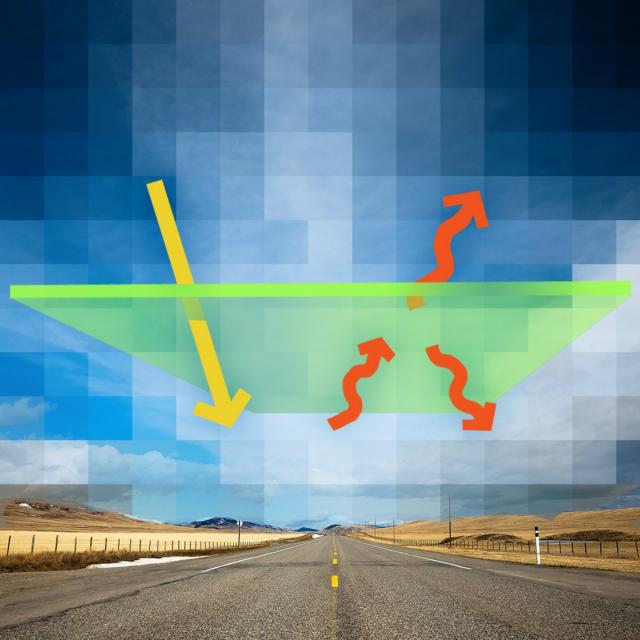
This class provides a series of Python programming exercises intended to explore the use of numerical modeling in the Earth system and climate sciences. The scientific background for these models is presented in a companion class, Global Warming I: The Science and Modeling of Climate Change. This class assumes that you are new to Python programming (and this is indeed a great way to learn Python!), but that you will be able to pick up an elementary knowledge of Python syntax from another class or from on-line tutorials.

Nov 2nd 2026
5-12 Weeks
Machine Learning Rapid Prototyping with IBM Watson Studio (Coursera) Coursera
IBM

Machine Learning Rapid Prototyping with IBM Watson Studio (Coursera)

An emerging trend in AI is the availability of technologies in which automation is used to select a best-fit model, perform feature engineering and improve model performance via hyperparameter optimization. This automation will provide rapid-prototyping of models and allow the Data Scientist to focus their efforts on applying domain knowledge to fine-tune models. This course will take the learner through the creation of an end-to-end automated pipeline built by Watson Studio’s AutoAI experiment tool, explaining the underlying technology at work as developed by IBM Research.

Nov 9th 2026
4 Weeks
Learn JavaScript (Coursera) Coursera
Scrimba

Learn JavaScript (Coursera)

This is perhaps the most interactive JavaScript course ever recorded. It contains 140+ coding challenges, meaning that you will finally build that ever-so-important JavaScript muscle memory. You will solve the challenges directly in the browser thanks to Scrimba's interactive video technology, so there's not setup needed. Say goodbye to "tutorial hell" and get ready to start feeling your JavaScript superpowers grow exponentially.

Nov 9th 2026
4 Weeks
Azure Infrastructure Fundamentals (Coursera) Coursera
LearnQuest

Azure Infrastructure Fundamentals (Coursera)

Microsoft Azure is a service created by Microsoft to provide cloud computing for creating and managing applications and services using a cloud environment. Azure provides software as a service (SaaS), platform as a service (PaaS) and infrastructure as a service (IaaS). The platform supports many programming languages and frameworks and can be used alone or in a multi-vendor cloud environment.

Nov 9th 2026
5-12 Weeks