Creative Coding for Designers Using Python (Coursera)

Creative Coding for Designers Using Python (Coursera)

Creative Coding for Designers Using Python,marks the final installment in the comprehensive three-course specialization, aimed at significantly enhancing the programming capabilities of designers, artists, and visual thinkers through Python. As the advanced course in the series, Creative Coding for Designers Using Python adopts a project-based learning strategy to consolidate and apply the skills acquired from the first two courses. In this course, you’ll focus on dynamic simulations and procedural content generation, offering a deeper dive into Python's application in visual design and digital art.

Class Deals by MOOC List - Click here and see Coursera's Active Discounts, Deals, and Promo Codes.

Designed for individuals who have grasped the basics of Python, including its syntax, data structures, and object-oriented programming principles, this course delves into sophisticated topics. Leveraging the Processing platform with Python, you’ll engage in interactive projects that transform theoretical knowledge into tangible outputs, bridging the gap between technical proficiency and artistic creativity.
Creative Coding for Designers Using Python is structured as an educational journey that combines technology and art, equipping participants with the skills to explore advanced digital design techniques. This course offers the tools and conceptual understanding necessary for the innovative application of Python in creating digital art and design projects.
This is the third and final course in a three-part series, Programming for Designers, aimed at equipping designers with essential computational design skills.
This course is part of the Programming for Designers Specialization.

What you'll learn

  • Create particle systems in Python to form dynamic visual patterns
  • Create vector fields in Processing using indexes and Perlin Noise remapping to create flowing patterns
  • Apply algorithms to perform procedural generation to craft intricate tile-based patterns with customizable textures

Syllabus

Project 1: Particle Systems
Our first project introduces particle systems, a fundamental concept in simulation and visual effects that can create complex and dynamic patterns from simple rules. Through a series of videos, we'll cover the creation of particles, their behaviors, and how to control and animate them to produce complex visual effects. This week sets the foundation for understanding how individual elements can work together to create intricate designs.

Project 2: Vector Fields
Building on our knowledge of particle systems, week two explores vector fields and their application in guiding the movement of particles. You'll learn how to create vector fields and use them to influence the navigation and behavior of particles within a system. This week enhances our ability to simulate natural phenomena and create dynamic, flowing patterns in our designs.

Project 3: Ecosystem Simulations
In our third project, we dive into ecosystem simulations, a complex and fascinating application of creative coding that models interactions within ecosystems. You'll learn how to simulate different entities within an ecosystem and their interactions, such as predation and reproduction. This week challenges us to think about systems, their rules, and how to represent them visually in engaging ways.

Project 4: Pathfinding
Pathfinding is crucial in many design and gaming applications, allowing objects to navigate through environments in an intelligent manner. This week, we focus on the A-Star (A) algorithm, a popular pathfinding algorithm known for its efficiency and accuracy. You'll learn how to implement A to enable characters or objects to find the shortest path between two points, overcoming obstacles and optimizing movement within your projects.

Project 5: Wave Function Collapse
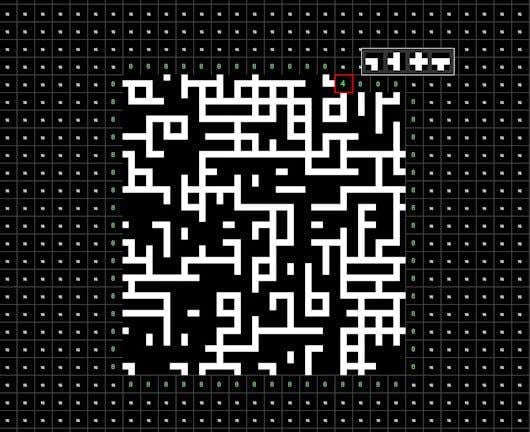
Our final project explores the wave function collapse algorithm, an advanced technique for procedural generation that's particularly useful in tile-based generative design. You'll learn how to implement this algorithm to create complex patterns and landscapes, offering a powerful tool for architectural design, game development, and digital art. This week culminates our exploration, showcasing how algorithms can inspire creativity and innovation in design.
Go to Class
MOOC List is learner-supported. When you buy through links on our site, we may earn an affiliate commission.

Related Courses

Machine Learning: Regression (Coursera) Coursera
University of Washington

Machine Learning: Regression (Coursera)

Case Study - Predicting Housing Prices. In our first case study, predicting house prices, you will create models that predict a continuous value (price) from input features (square footage, number of bedrooms and bathrooms,...). This is just one of the many places where regression can be applied. Other applications range from predicting health outcomes in medicine, stock prices in finance, and power usage in high-performance computing, to analyzing which regulators are important for gene expression.

Jun 8th 2026
5-12 Weeks
Interactivity with JavaScript (Coursera) Coursera
University of Michigan

Interactivity with JavaScript (Coursera)

If you want to take your website to the next level, the ability to incorporate interactivity is a must. But adding some of these types of capabilities requires a stronger programming language than HTML5 or CSS3, and JavaScript can provide just what you need. With just a basic understanding of the language, you can create a page that will react to common events such as page loads, mouse clicks & movements, and even keyboard input.

Jun 8th 2026
4 Weeks
Mastering the Software Engineering Interview (Coursera) Coursera
University of California, San Diego

Mastering the Software Engineering Interview (Coursera)

You’ve hit a major milestone as a computer scientist and are becoming a capable programmer. You now know how to solve problems, write algorithms, and analyze solutions; and you have a wealth of tools (like data structures) at your disposal. You may now be ready for an internship or (possibly) an entry-level software engineering job. But can you land the internship/job? It depends in part on how well you can solve new technical problems and communicate during interviews. How can you get better at this? Practice!

Jun 8th 2026
4 Weeks
Interfacing with the Raspberry Pi (Coursera) Coursera
University of California, Irvine

Interfacing with the Raspberry Pi (Coursera)

The Raspberry Pi uses a variety of input/output devices based on protocols such as HDMI, USB, and Ethernet to communicate with the outside world. In this class you will learn how to use these protocols with other external devices (sensors, motors, GPS, orientation, LCD screens etc.) to get your IoT device to interact with the real world.

Jun 8th 2026
4 Weeks
Python for Data Science, AI & Development (Coursera) Coursera
IBM

Python for Data Science, AI & Development (Coursera)

Kickstart your learning of Python for data science, as well as programming in general, with this beginner-friendly introduction to Python. Python is one of the world’s most popular programming languages, and there has never been greater demand for professionals with the ability to apply Python fundamentals to drive business solutions across industries.

Jun 9th 2026
5-12 Weeks
The Raspberry Pi Platform and Python Programming for the Raspberry Pi (Coursera) Coursera
University of California, Irvine

The Raspberry Pi Platform and Python Programming for the Raspberry Pi (Coursera)

The Raspberry Pi is a small, affordable single-board computer that you will use to design and develop fun and practical IoT devices while learning programming and computer hardware. In addition, you will learn how to set up up the Raspberry Pi environment, get a Linux operating system running, and write and execute some basic Python code on the Raspberry Pi. You will also learn how to use Python-based IDE (integrated development environments) for the Raspberry Pi and how to trace and debug Python code on the device.

Jun 8th 2026
4 Weeks
Introduction to HTML5 (Coursera) Coursera
University of Michigan

Introduction to HTML5 (Coursera)

Thanks to a growing number of software programs, it seems as if anyone can make a webpage. But what if you actually want to understand how the page was created? There are great textbooks and online resources for learning web design, but most of those resources require some background knowledge. This course is designed to help the novice who wants to gain confidence and knowledge. We will explore the theory (what actually happens when you click on a link on a webpage?), the practical (what do I need to know to make my own page?), and the overlooked (I have a page, what do I do now?).

Jun 8th 2026
3 Weeks
Deploying Machine Learning Models (Coursera) Coursera
University of California, San Diego

Deploying Machine Learning Models (Coursera)

In this course we will learn about Recommender Systems (which we will study for the Capstone project), and also look at deployment issues for data products. By the end of this course, you should be able to implement a working recommender system (e.g. to predict ratings, or generate lists of related products), and you should understand the tools and techniques required to deploy such a working system on real-world, large-scale datasets.

Jun 8th 2026
4 Weeks
Advanced Styling with Responsive Design (Coursera) Coursera
University of Michigan

Advanced Styling with Responsive Design (Coursera)

It used to be the case that everyone viewed webpages on about the same size screen. But with the explosion of the use of smartphones to access the Internet, the landscape of design has completely changed. People viewing your site will now expect that it will perform regardless of the platform (smartphone, tablet, laptop, or desktop computer). This ability to respond to any platform is called responsive design.

Jun 8th 2026
4 Weeks
Basic Data Processing and Visualization (Coursera) Coursera
University of California, San Diego

Basic Data Processing and Visualization (Coursera)

This is the first course in the four-course specialization Python Data Products for Predictive Analytics, introducing the basics of reading and manipulating datasets in Python. In this course, you will learn what a data product is and go through several Python libraries to perform data retrieval, processing, and visualization.

Jun 8th 2026
5-12 Weeks
Computational Thinking for Problem Solving (Coursera) Coursera
University of Pennsylvania

Computational Thinking for Problem Solving (Coursera)

Computational thinking is the process of approaching a problem in a systematic manner and creating and expressing a solution such that it can be carried out by a computer. But you don't need to be a computer scientist to think like a computer scientist! In fact, we encourage students from any field of study to take this course. Many quantitative and data-centric problems can be solved using computational thinking and an understanding of computational thinking will give you a foundation for solving problems that have real-world, social impact.

Jun 8th 2026
4 Weeks