Getting Started with Git and GitHub (Coursera)

Offered by IBM,
Getting Started with Git and GitHub (Coursera)

Get started with Git and GitHub in this self-paced, introductory course! You’ll become familiar with collaborative version control and popular Git platforms. Collaboration and social coding are crucial parts of contemporary Software Engineering practices and the DevOps culture.

Class Deals by MOOC List - Click here and see Coursera's Active Discounts, Deals, and Promo Codes.

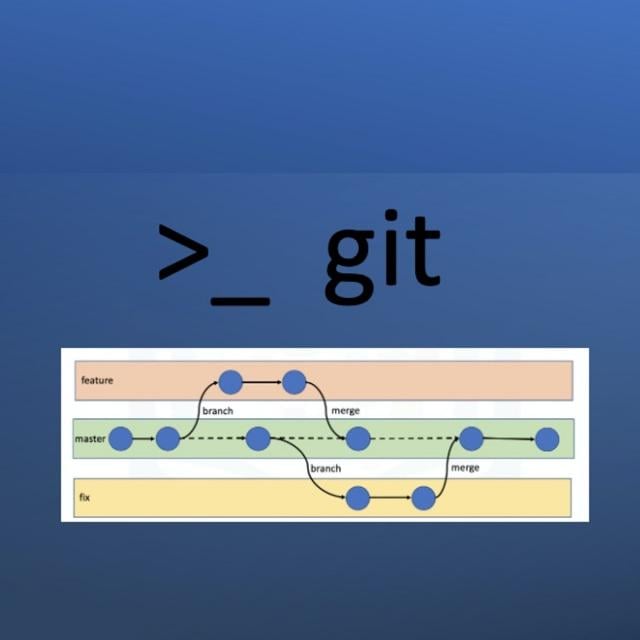
You will begin this course with an overview of Git and Github fundamentals and explore key Git concepts such as branching and repositories, as well as the use of Git commands. You will also learn and practice various Git concepts such as forking, cloning and merging workflows using hands-on labs. And you’ll learn to use GitHub to work effectively as a team, and perform common Git operations, such as Pull Requests, from both the Web UI and command line.
The course wraps up with a final project where you will start building your portfolio by creating and sharing a public/open-source GitHub project. By completing this course you will demonstrate your Git and Github skills as well as add a project to your resume!
All hands-on activities in this course can be performed using web-browser based tools and interfaces. Installation of any specialized software is NOT required on your own computer in order to complete the course.
This course is part of the following programs:

What You Will Learn

  • Describe version control and its place in social and collaborative coding and in DevOps.
  • Explain basic Git concepts such as repositories, branches, and project management.
  • Use GitHub and Git commands to collaborate on a team project.
  • Build your portfolio by creating and sharing an open-source project on GitHub.

Syllabus

Git and GitHub Fundamentals
Application developers rarely work alone. Large web/cloud/mobile development and data science projects will include many people – front-end developers, back-end developers, database administrators, repository administrators, and others. Every change by every contributor must be tracked and controlled to enable collaboration, accountability and version management. This type of distributed version control is extremely important when managing both small and large software projects. In this module you will learn about some of the popular version control tools, create a GitHub account and use the GitHub web interface to create a repository, add a file to it and commit your changes.

Using Git Commands and Managing GitHub Projects
Branches are the heart of workflows in Git-based version control systems like GitHub. In this module you will become familiar with creating and using branches, and merging your changes to the main branch with Pull Requests. As you start working with GitHub repositories and automating workflows, using the web interface can be limiting and more time-consuming. This is where Git commands come in. You can use from your own desktop or a Cloud IDE - wherever you develop your code. In this module you will also become familiar with and utilize various Git commands to clone and fork repositories, as well as commit, push and pull your changes using the command line.

Final Project
Now that you are familiar working with GitHub repositories, Branches, and Git commands, in this final project you will apply your knowledge and skills to create a GitHub Project, add few files to it such as an open-source license, and share it publicly.


Go to Class
MOOC List is learner-supported. When you buy through links on our site, we may earn an affiliate commission.

Related Courses

Continuous Integration and Deployment with ASP.NET Core (Coursera) Coursera
EDUCBA

Continuous Integration and Deployment with ASP.NET Core (Coursera)

This comprehensive course covers the foundational principles of Continuous Integration (CI) and Continuous Deployment (CD), emphasizing the integral role of automation in the software development lifecycle. Gain essential knowledge and practical skills to navigate and optimize CI/CD workflows, ensuring seamless automation throughout development.

Jun 22nd 2026
4 Weeks
Full Stack Software Developer Assessment (Coursera) Coursera
IBM

Full Stack Software Developer Assessment (Coursera)

This is the final course in the Full Stack Professional Certificate. It will test your knowledge and the skills you’ve acquired so far. This course contains the graded final examination covering content from nine of the eleven courses in the certificate. You will be assessed on topics such as core cloud computing concepts; languages such as HTML, CSS, JavaScript, and Python; frameworks such as Node.js and React; and backend technologies such as Docker, Kubernetes, OpenShift, SQL, Django, and Serverless.

Jun 15th 2026
1 Week
Introduction to Git and GitHub (Coursera) Coursera
Google

Introduction to Git and GitHub (Coursera)

In this course, you’ll learn how to keep track of the different versions of your code and configuration files using a popular version control system (VCS) called Git. We'll also go through how to setup an account with a service called GitHub so that you can create your very own remote repositories to store your code and configuration.

Jun 23rd 2026
4 Weeks
Introduction to Test Driven Development (TDD) (Coursera) Coursera
IBM

Introduction to Test Driven Development (TDD) (Coursera)

Successful developers need to not only build the right software but build it right. To know your software works correctly, you need to test each unit of code. One of the best methods for this unit-level testing is test driven development. This course provides a detailed overview of test driven development (TDD). First, you’ll learn what automated testing is and why it is essential for building robust applications resilient to failure. You’ll explore the basics of testing, including test cases, testing levels, and the traditional release cycle.

Jun 22nd 2026
4 Weeks
Making Data Science Work for Clinical Reporting (Coursera) Coursera
Genentech

Making Data Science Work for Clinical Reporting (Coursera)

This course is aimed to demonstrate how principles and methods from data science can be applied in clinical reporting. By the end of the course, learners will understand what requirements there are in reporting clinical trials, and how they impact on how data science is used. The learner will see how they can work efficiently and effectively while still ensuring that they meet the needed standards.

Jun 15th 2026
4 Weeks
Introduction to Cloud Computing (Coursera) Coursera
IBM

Introduction to Cloud Computing (Coursera)

Start your cloud computing journey with this self-paced introductory course! Whether you need general cloud computing knowledge for school or business, or you are considering a career change, this beginner-friendly course is right for you. In this course you’ll learn about essential characteristics of cloud computing and emerging technologies supported by cloud. You’ll explore cloud service models, including Infrastructure as a Service (IaaS), Platform as a Service (PaaS), Software as a Service (SaaS), and Public, Private, and Hybrid deployment models.

Jun 15th 2026
5-12 Weeks
DevOps Capstone Project (Coursera) Coursera
IBM

DevOps Capstone Project (Coursera)

In this course you will apply your skills and knowledge acquired during previous courses in the PC to demonstrate your proficiency in DevOps practices by developing, testing, deploying, monitoring, and enhancing a secure microservices-based application on Cloud, over the course of several sprints, using a variety of Agile, Cloud Native, and CI/CD technologies and tools.

Jun 15th 2026
5-12 Weeks
Spring Data Repositories (Coursera) Coursera
LearnQuest

Spring Data Repositories (Coursera)

This course is aimed at students wishing to learn how Java interacts with databases in a modern framework. The course uses the very popular Spring Boot Framework, with Micro services, as a setting for our database interactions using Java Persistence Framework (JPA) and Spring Data Repositories to abstract away JPA. Students will then learn how to expose Repositories as Rest Web services in their own right using Hypermedia as the Engine of Application State or HATEAOS concepts.

Jun 15th 2026
2 Weeks
Version Control with Git (Coursera) Coursera
Atlassian

Version Control with Git (Coursera)

The Version Control with Git course provides you with a solid, hands-on foundation for understanding the Git version control system. Git is open source software originally created by Linus Torvalds. Git manages team files for large and small projects. This allows the team to continuously improve its product. It is used by most major technology companies, and is assumed knowledge for many modern programming and IT jobs. It is a core component of DevOps, continuous delivery pipelines and cloud-native computing. You could also use Git to manage the many continuously improving revisions of that book that you are writing.

Jun 15th 2026
4 Weeks
Fundamentals of Web Development (Coursera) Coursera
Illinois Tech

Fundamentals of Web Development (Coursera)

This course will cover the creation of Web pages and sites using HTML, CSS, Javascript, jQuery, and graphical applications as well as the client and server architecture of the Internet and related web technologies. The creation and deployment of modern, standards-compliant web pages are addressed. Students create and deploy a Web site with multiple pages and cross-linked structures.

Jun 15th 2026
5-12 Weeks