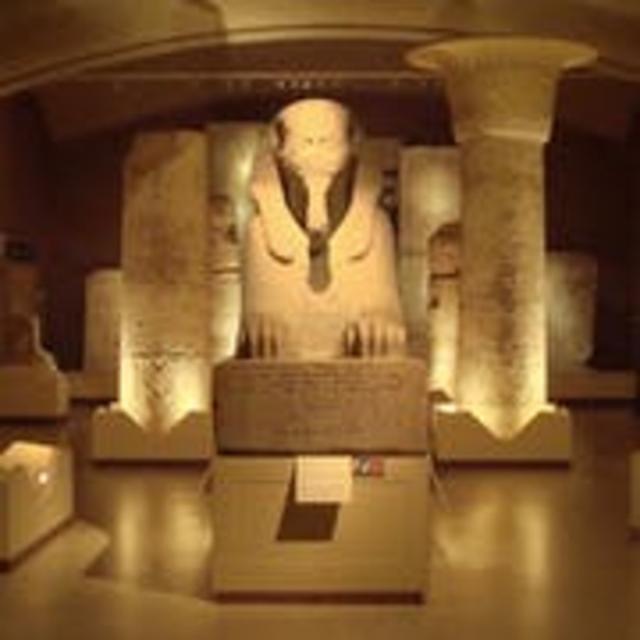
Wonders of Ancient Egypt (Coursera)

Wonders of Ancient Egypt (Coursera)

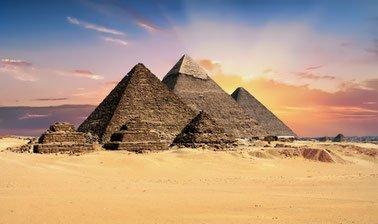
Colossal pyramids, imposing temples, golden treasures, enigmatic hieroglyphs, powerful pharaohs, strange gods, and mysterious mummies are features of Ancient Egyptian culture that have fascinated people over the millennia. The Bible refers to its gods, rulers, and pyramids. Neighboring cultures in the ancient Near East and Mediterranean wrote about its god-like kings and its seemingly endless supply of gold. The Greeks and Romans describe aspects of Egypt's culture and history.

Class Deals by MOOC List - Click here and see Coursera's Active Discounts, Deals, and Promo Codes.

As the 19th century began, the Napoleonic campaign in Egypt highlighted the wonders of this ancient land, and public interest soared. Not long after, Champollion deciphered Egypt's hieroglyphs and paved the way for other scholars to reveal that Egyptian texts dealt with medicine, dentistry, veterinary practices, mathematics, literature, and accounting, and many other topics. Then, early in the 20th century, Howard Carter discovered the tomb of Tutankhamun and its fabulous contents. Exhibitions of this treasure a few decades later resulted in the world's first blockbuster, and its revival in the 21st century has kept interest alive.
Join Dr. David Silverman, Professor of Egyptology at Penn, Curator in Charge of the Egyptian Section of the Penn Museum, and curator of the Tutankhamun exhibitions on a guided tour of the mysteries and wonders of this ancient land. He has developed this online course and set it in the galleries of the world famous Penn Museum. He uses many original Egyptian artifacts to illustrate his lectures as he guides students as they make their own discovery of this fascinating culture.
This course focused on five key areas in the study of Ancient Egypt: 1) Principles of Egyptian Art, 2) The Basics of the Language of Ancient Egypt: Hieroglyphs, 3) Egyptian Magic, 4) Akhenaten, Tutankhamun, and the Religion of the Aten, and 5) The Burial of Tutankhamun and the Search for his Tomb.

Syllabus

WEEK 1: Welcome to the Course
WEEK 2: Principles of Egyptian Art
WEEK 3: The Basics of the Language of Ancient Egypt: Hieroglyphs
WEEK 4: Egyptian Magic
WEEK 5: Akhenaten, Tutankhamun, and the Religion of the Aten
WEEK 6: The Burial of Tutankhamun and the Search for his Tomb

Go to Class
MOOC List is learner-supported. When you buy through links on our site, we may earn an affiliate commission.

Related Courses

Constitutional Struggles in the Muslim World (Coursera) Coursera
University of Copenhagen

Constitutional Struggles in the Muslim World (Coursera)

Learn what motivates the restive Muslim youth from Tunis to Tehran, what political positions Islamists from Mali to Chechnya are fighting for, where the seeming obsession with Islamic law comes from, where the secularists have vanished to, and whether it makes sense to speak of an Islamic state. This course is a survey of the constitutional ideas and institutions that have developed since the mid 19th century throughout predominantly Muslim countries, but its focus will lie on the actors that have dominated this discourse and shaped its outcomes. We will look at the large body of classical writings on the Islamic state only in so far as it is necessary to understand the contemporary debate, but concentrate on the legal and political developments of the 20th and 21st centuries.

Jun 22nd 2026
5-12 Weeks
Warfare and Weapons in Ancient Egypt (Canvas net) Canvas Network
University of Manchester

Warfare and Weapons in Ancient Egypt (Canvas net)

Dynastic Egypt united in approximately 3100 B.C. It remained an independent land for much of its 3,000 year history, before becoming absorbed into the Roman Empire in 30 B.C. This course, led by expert Egyptologist and author, Dr. Joyce Tyldesley, explores the art, archaeology, and technology of Egyptian warfare and weapons from the Predynastic Period (Dynasty 0) to the end of the New Kingdom (Dynasty 20).

Jan 11th 2016
4 Weeks
Art of Ancient Greece and Rome (saylor.org) Saylor Academy
Saylor.org

Art of Ancient Greece and Rome (saylor.org)

In this course, we will study the art of Classical Antiquity. The different units of the course reflect the main chronological stages in art development in Ancient Greece and Rome, from the coming together of the Greek city-state and the emergence of “geometric art” (around 900 B.C.) to the fourth century A.D. shift that took place within Roman culture and art due to the growing influence of Christianity.

Legacy Course
Self-Paced
Women in Arts: From 1900 until today (FutureLearn) FutureLearn
Centre Pompidou

Women in Arts: From 1900 until today (FutureLearn)

Discover the women creators who shaped modern and contemporary art and those who continue to make huge impacts today. Delve into art history through the extraordinary works of women artists. On this seven-week course, you’ll journey through an alternative history of modern and contemporary art – one that is centred on the brilliant women creators in the movement.

Nov 15th 2021
5-12 Weeks
Western and Chinese Art: Masters and Classics (edX) EdX
Tsinghua University,TsinghuaX

Western and Chinese Art: Masters and Classics (edX)

From da Vinci to Zhang Xu, Wu Daozi and Warhol, explore immortal works of Western and Chinese art and gain an appreciation of culture, history and civilization. Throughout human history, art has served as a window into current events, traditions, societies and culture. And, Chinese and Western civilizations have produced some of the most famous artworks by world-renowned artists.

Self Paced
Self-Paced
Biblical Archaeology: The archaeology of ancient Israel and Judah (edX) EdX
IsraelX

Biblical Archaeology: The archaeology of ancient Israel and Judah (edX)

Join me as I share with you my passion for archaeological discovery and learn about the exciting methods of modern archaeology. Explore how archaeology illuminates biblical Israel and Judah, and the archaeological finds relate to the bible. Join me for an introductory course on biblical archaeology of ancient Israel and Judah during the Iron Age (ca. 1200-586 BCE).

Nov 1st 2022
5-12 Weeks
El Valle de los Reyes (Coursera) Coursera
Universitat Autònoma de Barcelona

El Valle de los Reyes (Coursera)

Este curso va dirigido a todos los amantes de la historia y arqueología, en general, y de manera particular a todos los interesados en egiptología, independientemente de su nivel de conocimiento inicial. El Valle de los Reyes constituye uno de los yacimientos arqueológicos más importantes de Egipto y su estudio, desde diferentes enfoques, resulta muy atractivo para cualquier aficionado o profesional de la egiptología. Con este curso nos proponemos conocer su historia y evolución a lo largo de las dinastías XVIII-XX del Reino Nuevo egipcio, desde su origen hasta su abandono y desmantelamiento.

Jun 8th 2026
5-12 Weeks
What Is Contemporary Art? (Coursera) Coursera
The Museum of Modern Art

What Is Contemporary Art? (Coursera)

What is contemporary art? In this course, you’ll consider this question through more than 70 works of art made between 1980 and the present, with a focus on art from the past decade. You’ll hear directly from artists, architects, and designers from around the globe about their creative processes, materials, and inspiration.

Jun 22nd 2026
5-12 Weeks
Sexing the Canvas: Art and Gender (Coursera) Coursera
University of Melbourne

Sexing the Canvas: Art and Gender (Coursera)

What do paintings tell us about sex? How is art gendered? In this course we will study some of the world’s most beloved pictures guided by expert curators and art historians who step outside of the square, bringing a gendered reading to the masterpieces contained in the magnificent collections that we have been lucky enough to bring to the Coursera platform.

Oct 24th 2022
5-12 Weeks
Age of Cathedrals (Coursera) Coursera
Yale University

Age of Cathedrals (Coursera)

An introduction to some of the most astonishing architectural monuments the world has ever known—Gothic cathedrals. We shall study the art, literature, intellectual life, economics, and new social arrangements that arose in the shadow of the cathedrals and that were such an important part of the revival of cities in the twelfth and thirteenth centuries. The goal of the course is a better appreciation of the High Middle Ages, a world that is still recognizably our own.

Jun 8th 2026
5-12 Weeks