EdX

Women Making History: Ten Objects, Many Stories (edX)

Women Making History: Ten Objects, Many Stories (edX)

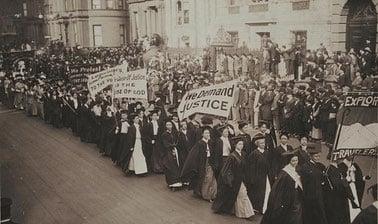
Learn how American women created, confronted, and embraced change in the 20th century while exploring ten objects from Radcliffe’s Schlesinger Library. As we approach the centennial of the passage of women’s suffrage in 1920, there has been a recent burst of activism among American women. Women are running for political office in record numbers. Women are organizing and taking to the streets to demand change. Women are grappling with inclusion and intersectionality.

Class Deals by MOOC List - Click here and see EdX's Active Discounts, Deals, and Promo Codes.

While some of this activity may have been a response to the 2016 presidential elections, its roots lie deep in 20th-century history — a history richly preservedin Harvard’s Schlesinger Library building on the library’s 75th Anniversary Exhibit.
This course exemplifies the importance of archives in themaking of history. Professors Laurel Ulrich and Jane Kamensky, along with colleagues from across Harvard University and beyond, show how women in the 20th-century United States pushed boundaries, fought for new rights, and challenged contemporary notions of what women could and should do.
Through the exploration of ten iconic objects from the Schlesinger collection, they demonstrate how women created change by embracing education, adopting new technologies, and creating innovative works of art; pushing against discrimination and stepping into new roles in public and in private.

What you'll learn

  • The many ways ordinary people have created change
  • The centrality of women in American history
  • How history is complex, nonlinear, and in constant conversation with the present
  • How objects can embody stories of change
  • How our understanding of history is shaped by which stories are told

Go to Class
MOOC List is learner-supported. When you buy through links on our site, we may earn an affiliate commission.

Related Courses

Magic in the Middle Ages (Coursera) Coursera
University of Barcelona

Magic in the Middle Ages (Coursera)

Magical thought has always attracted human imagination. In this course we will introduce you to the Middle Ages through a wide conception of magic. Students will have an approach to medieval culture, beliefs and practices from the perspective of History and History of Science. Popular magic, as well as learned magic (alchemy, geomancy and necromancy) will be addressed. Moreover, we will also deal with how eastern practices and texts influenced western culture. In July 2016, the course will contain a brand-new module devoted to astrology. Magic in the Middle Ages offers a captivating overview of medieval society and promotes reflection about certain stereotypes associated with this period.

Aug 17th 2026
5-12 Weeks
China’s First Empires and the Rise of Buddhism (edX) EdX
HarvardX,Harvard University

China’s First Empires and the Rise of Buddhism (edX)

Learn about the Qin and Han dynasties, and how Buddhism and ideas of self-realization influenced the medieval period. This course, the second in a collection on Chinese history and culture, addresses how the Qin dynasty conquered China and established a new system of government and how the Han dynasty built a stable, centralized empire that lasted for hundreds of years. We cover the early history of Buddhism in China and how the rising feudal aristocracy responded to the loss of empire by looking inward.

Self Paced
Self-Paced
Søren Kierkegaard - Subjectivity, Irony and the Crisis of Modernity (Coursera) Coursera
University of Copenhagen

Søren Kierkegaard - Subjectivity, Irony and the Crisis of Modernity (Coursera)

In this course created by former associate professor at the Søren Kierkegaard Research Centre, Jon Stewart, we will explore how Kierkegaard deals with the problems associated with relativism, the lack of meaning and the undermining of religious faith that are typical of modern life. His penetrating analyses are still highly relevant today and have been seen as insightful for the leading figures of Existentialism, Post-Structuralism and Post-Modernism.

Aug 17th 2026
5-12 Weeks
A Global History of Architecture (edX) EdX
MIT,MITx

A Global History of Architecture (edX)

Learn about humanity’s rich architectural history on this journey around the globe – from 100,000 BCE to ca. 1,600 CE. How do we understand architecture? One way of answering this question is by looking through the lens of history, beginning with First Societies and extending to the 16th century. This course in architectural history is not intended as a linear narrative, but rather aims to provide a more global view, by focusing on different architectural "moments."

Oct 18th 2023
5-12 Weeks
Casing the Joint: Introducing Histories of Australian Crime (edX) EdX
The University of Newcastle, Australia,NewcastleX

Casing the Joint: Introducing Histories of Australian Crime (edX)

Learn about approaches to the study of the history of crime and punishment, especially in Australia. Crime holds a special place in Australian history, having facilitated colonisation, provided its most celebrated anti-hero in Ned Kelly and been used to sell millions of newspapers, books and movie tickets. Drawing upon a rich array of digital history resources, this course offers you a guided tour of the origins of Australian underworlds and of the study of the history of crime and punishment.

No sessions available
3 Weeks
La España de El Quijote (edX) EdX
Universidad Autonoma de Madrid,UAMx

La España de El Quijote (edX)

La España de El Quijote es un viaje a nuestro esplendor cultural. A un Siglo de Oro que elevó las artes y las letras hispanas a la excelencia mundial. En un lugar de la UAM, cuyo nombre merece recordar, habita la España de El Quijote. Un espacio en el que su monarquía creó el primer imperio global de la Historia. Un tiempo, entre los siglos XVI y XVII, en el que su sociedad alcanzó la excelencia en las artes y las letras.

Self Paced
Self-Paced
Globalization: Past and Future (edX) EdX
SDGAcademyX,SDG Academy

Globalization: Past and Future (edX)

Is globalization a new phenomenon or a cyclical pattern throughout human history? In this four-part mini-course, Professor Jeffrey Sachs argues that we have always lived in a global world. He takes students on a historical and anthropological tour of six distinct waves of globalization and outlines the key factors that drove innovation, technology dispersal and development during these epochs.

Self Paced
Self-Paced
PredictionX: Diviner’s Guide (edX) EdX
HarvardX,Harvard University

PredictionX: Diviner’s Guide (edX)

This course is an overview of divination systems, ranging from ancient Chinese bone burning to modern astrology. Humans have always sought to know their own future, be it the destiny of an empire or an individual's fate. Across cultures and history, we find people trying to find their place in the Universe by attempting to gaze into the future.

Self Paced
Self-Paced
The History of Medieval Medicine Through Jewish Manuscripts (edX) EdX
University of Pennsylvania,PennX

The History of Medieval Medicine Through Jewish Manuscripts (edX)

Learn about medieval Jewish medical training and thought by exploring and interpreting medical manuscripts. This mini-course is a general introduction to both to medieval medicine and to the value of using manuscripts. Professor Y. Tzvi Langermann presents a case study that builds from a unique 15th-century volume in which three important medical manuscripts in Hebrew and Judeo-Arabic (Arabic in Hebrew characters) are sewn together.

Self-Paced
Self-Paced
Was Alexander Great? The Life, Leadership, and Legacies of History’s Greatest Warrior (edX) EdX
Wellesley College,WellesleyX

Was Alexander Great? The Life, Leadership, and Legacies of History’s Greatest Warrior (edX)

Was Alexander Great? If so, how? If not, why not? This course explores the life, leadership, and legacies of history’s greatest warrior. Alexander the Great conquered most of the world known to the ancient Greeks, fused the eastern and western peoples of his empire, and became a god – before his 33rd birthday.

No sessions available
4 Weeks