What is Climate Change? (Coursera)

What is Climate Change? (Coursera)

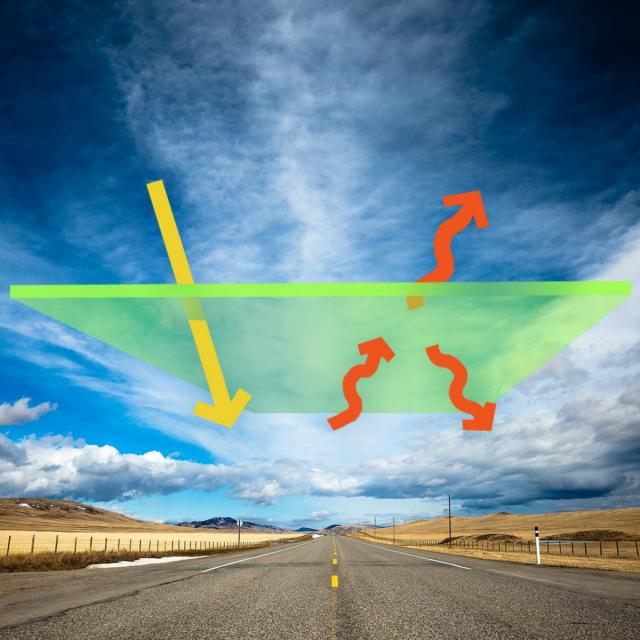
In this course, learners will become familiar with the scientific evidence that demonstrates human-caused climate change. We will explore how greenhouse gases cause the Earth to warm, and why our recent warming is attributed to human activities. We will also discuss where our climate is headed, including anticipated future temperature, precipitation, and sea level. Learners will engage with the consequences of these changes on our ecosystems, infrastructure, and communities.

Class Deals by MOOC List - Click here and see Coursera's Active Discounts, Deals, and Promo Codes.

We will also identify how political beliefs influence our attitudes about climate change, and apply that knowledge to become better climate communicators.
What You Will Learn

  • Identify the major components of the climate system
  • Explain the role of anthropogenic greenhouse gas emissions as the drivers of global climate change
  • Identify the primary physical and ecological impacts of climate change
  • Explain the unique process by which scientific information is produced

Course 1 of 3 in the Exploring Our Responses to Climate Change Specialization

Syllabus

WEEK 1
The Climate System and Climate Change
Climate change is real. Scientists agree that human activities are causing the climate to change. Warming will continue in the 21st century, and the amount of warming will be determined by our emissions of greenhouse gases.

WEEK 2
Impacts of Climate Change
The net impact of climate change on ecosystems, infrastructure, and communities is expected to be negative. Many impacts are already occurring, and we expect future warming to exacerbate their effects.

WEEK 3
Attitudes About Climate Change
To stay informed about climate change, it is important to know where to get credible information. It’s also important to understand how scientific information is unique from other types of knowledge. Also, it can be helpful to recognize that others’ opinions on climate are heavily influenced by political affiliation. When engaging with others on climate, information needs to be tailored to take into account your audiences concerns and world views.
Go to Class
MOOC List is learner-supported. When you buy through links on our site, we may earn an affiliate commission.

Related Courses

An Introduction to the U.S. Food System: Perspectives from Public Health (Coursera) Coursera
Johns Hopkins University

An Introduction to the U.S. Food System: Perspectives from Public Health (Coursera)

A food system encompasses the activities, people and resources involved in getting food from field to plate. Along the way, it intersects with aspects of public health, equity and the environment. In this course, we will provide a brief introduction to the U.S. food system and how food production practices and what we choose to eat impacts the world in which we live. Through several case studies, we will discuss some key historical and political factors that have helped shape the current food system and consider alternative approaches from farm to fork.

Sep 14th 2026
5-12 Weeks
Introduction to Sustainability (Coursera) Coursera
University of Illinois at Urbana-Champaign

Introduction to Sustainability (Coursera)

This course introduces the academic approach of Sustainability and explores how today’s human societies can endure in the face of global change, ecosystem degradation and resource limitations. The course focuses on key knowledge areas of sustainability theory and practice, including population, ecosystems, global change, energy, agriculture, water, environmental economics and policy, ethics, and cultural history.

Aug 31st 2026
5-12 Weeks
Climate Change and Water in Mountains: A Global Concern (Coursera) Coursera
University of Geneva

Climate Change and Water in Mountains: A Global Concern (Coursera)

What is climate change? How are mountain regions affected by the evolution of water resources and their uses? What kind of risks need to be considered? Mountains are recognized as particularly sensitive physical environments where intense and rapid changes have in the past, and may increasingly in the future, place pressure on their resource base.

Sep 7th 2026
5-12 Weeks
Climate Aware Investing (Coursera) Coursera
EDHEC Business School

Climate Aware Investing (Coursera)

Finance may have a central role to play against climate change on the condition that risks are properly measured and managed. In this course you will be introduced to the latest academic research findings and the most commonly used methods in industry to cope with climate change financial risks. How do we assess these kinds of risks? Can our portfolios perform well and at the same time contribute to the transition towards a low-carbon economy? How do climate change risks affect financial markets?

Aug 24th 2026
5-12 Weeks
Global Warming I: The Science and Modeling of Climate Change (Coursera) Coursera
University of Chicago

Global Warming I: The Science and Modeling of Climate Change (Coursera)

This class describes the science of global warming and the forecast for humans’ impact on Earth’s climate. Intended for an audience without much scientific background but a healthy sense of curiosity, the class brings together insights and perspectives from physics, chemistry, biology, earth and atmospheric sciences, and even some economics—all based on a foundation of simple mathematics (algebra).

Aug 24th 2026
5-12 Weeks
Global Arctic (Coursera) Coursera
École Polytechnique Fédérale de Lausanne

Global Arctic (Coursera)

The GlobalArctic MOOC introduces you the dynamics between global changes and changes in the Arctic. This course aims to highlight the effects of climate change in the Polar region. In turn, it will underline the impacts of a warmer Arctic on the planet Earth. For human civilization, the Arctic stands both as a laboratory and a warning for human kind.

Sep 11th 2026
4 Weeks
Climate change and Indigenous People and local communities (Coursera) Coursera
Universitat Autònoma de Barcelona

Climate change and Indigenous People and local communities (Coursera)

Climate change is a global phenomenon, but its impacts vary among different social groups, who perceive and adapt to climate change impacts in different ways. In this course, you will: a) understand the different debates around climate change impacts on Indigenous Peoples and local communities (IPLC); b) familiarize yourself with different impacts of climate change on IPLC, with the IPLC understanding of climate change impacts and with their strategies to adapt to climate change; and c) learn about different strategies to incorporate Indigenous peoples and local communities in climate change research and policy.

Aug 31st 2026
5-12 Weeks
Our Earth's Future (Coursera) Coursera
American Museum of Natural History

Our Earth's Future (Coursera)

Our Earth’s Future is about the science of climate change and how to talk about it. You will learn from scientists in the fields of climatology, oceanography, Earth science, and anthropology who study how climate change is affecting people, populations, and ways of life. Explore the multiple lines of evidence for the human-induced climate change that is happening today, and consider what that means for the future of our planet. At the end of this course you will be able to understand key scientific principles, identify and address misconceptions, and contribute confidently to conversations about climate change.

Sep 7th 2026
5-12 Weeks
Energy, Environment, and Everyday Life (Coursera) Coursera
University of Illinois at Urbana-Champaign

Energy, Environment, and Everyday Life (Coursera)

This course teaches you everything you need to know about energy, the environment, and at least a number of things in everyday life. It starts by talking about energy itself and where it comes from. This includes how much we have, who has it, who uses it, and what that all means. The video clips are produced in a fast-paced multimedia format during which Professor Ruzic throws in fun and demonstrations. There are multiple-choice questions to check your understanding and some more in-depth exercises to guide you deeper into the subject.

Aug 31st 2026
5-12 Weeks
How Do We Manage Climate Change? (Coursera) Coursera
University of Colorado Boulder

How Do We Manage Climate Change? (Coursera)

In this course, learners will identify the types of actions that we can pursue to address climate change. These actions fall into two broad categories: 1) mitigation, which refers to efforts to reduce greenhouse gas emissions or enhance carbon sinks, and 2) adaptation, which refers to our preparations for climate impacts. We will explore the technologies, programs, and policies related to both mitigation and adaptation. Learners should leave the course with an improved ability to identify and evaluate climate actions undertaken by communities, governments, and businesses.

Aug 24th 2026
3 Weeks
Act on Climate: Steps to Individual, Community, and Political Action (Coursera) Coursera
University of Michigan

Act on Climate: Steps to Individual, Community, and Political Action (Coursera)

Are you concerned about climate change? Would you like to learn how to address and respond to this challenge? If so, this course is for you. Act on Climate: Steps to Individual, Community, and Political Action is intended to help learners understand, address and respond to climate change as individuals and in partnership with their communities and political leaders.

Sep 7th 2026
5-12 Weeks