Visual Perception (Coursera)

Offered by Columbia University,
Visual Perception (Coursera)

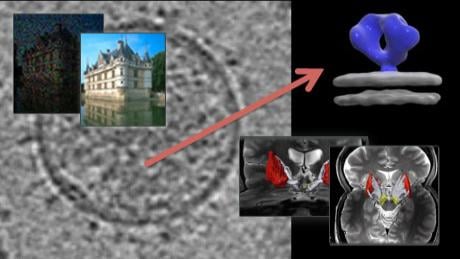
The ultimate goal of a computer vision system is to generate a detailed symbolic description of each image shown. This course focuses on the all-important problem of perception. We first describe the problem of tracking objects in complex scenes. We look at two key challenges in this context. The first is the separation of an image into object and background using a technique called change detection.

Class Deals by MOOC List - Click here and see Coursera's Active Discounts, Deals, and Promo Codes.

The second is the tracking of one or more objects in a video. Next, we examine the problem of segmenting an image into meaningful regions. In particular, we take a bottom-up approach where pixels with similar attributes are grouped together to obtain a region.
Finally, we tackle the problem of object recognition. We describe two approaches to the problem. The first directly recognize an object and its pose using the appearance of the object. This method is based on the concept of dimension reduction, which is achieved using principal component analysis. The second approach is to use a neural network to solve the recognition problem as one of learning a mapping from the input (image) to the output (object class, object identity, activity, etc.). We describe how a neural network is constructed and how it is trained using the backpropagation algorithm.

What You Will Learn

  • Design algorithms for detecting meaningful changes in a scene
  • Develop methods for tracking objects in a video while the object undergoes changes in pose and illumination
  • Learn several approaches to segmenting an image into meaningful regions
  • Create an end-to-end pipeline for learning and recognizing objects based on their visual appearance

Course 5 of 5 in the First Principles of Computer Vision Specialization

Syllabus

WEEK 1: Getting Started: Visual Perception
WEEK 2: Object Tracking
WEEK 3: Image Segmentation
WEEK 4: Appearance Matching
WEEK 5: Neural Networks


Go to Class
MOOC List is learner-supported. When you buy through links on our site, we may earn an affiliate commission.

Related Courses

Introduction to Trading, Machine Learning & GCP (Coursera) Coursera
New York Institute of Finance,Google Cloud

Introduction to Trading, Machine Learning & GCP (Coursera)

In this course, you’ll learn about the fundamentals of trading, including the concept of trend, returns, stop-loss, and volatility. You will learn how to identify the profit source and structure of basic quantitative trading strategies. This course will help you gauge how well the model generalizes its learning, explain the differences between regression and forecasting, and identify the steps needed to create development and implementation backtesters. By the end of the course, you will be able to use Google Cloud Platform to build basic machine learning models in Jupyter Notebooks.

Jun 15th 2026
4 Weeks
Image and video processing: From Mars to Hollywood with a stop at the hospital (Coursera) Coursera
Duke University

Image and video processing: From Mars to Hollywood with a stop at the hospital (Coursera)

In this course, you will learn the science behind how digital images and video are made, altered, stored, and used. We will look at the vast world of digital imaging, from how computers and digital cameras form images to how digital special effects are used in Hollywood movies to how the Mars Rover was able to send photographs across millions of miles of space.

Jun 15th 2026
5-12 Weeks
Introduction to Computer Vision with Watson and OpenCV (Coursera) Coursera
IBM

Introduction to Computer Vision with Watson and OpenCV (Coursera)

Computer Vision is one of the most exciting fields in Machine Learning and AI. It has applications in many industries such as self-driving cars, robotics, augmented reality, face detection in law enforcement agencies. In this beginner-friendly course you will understand about computer vision, and will learn about its various applications across many industries.

Jun 15th 2026
4 Weeks
Image Segmentation, Filtering, and Region Analysis (Coursera) Coursera
MathWorks

Image Segmentation, Filtering, and Region Analysis (Coursera)

In this course, you will build on the skills learned in Introduction to Image Processing to work through common complications such as noise. You’ll use spatial filters to deal with different types of artifacts. You’ll learn new approaches to segmentation such as edge detection and clustering. You’ll also analyze regions of interest and calculate properties such as size, orientation, and location.

Jun 22nd 2026
4 Weeks
Introduction to Deep Learning & Neural Networks with Keras (Coursera) Coursera
IBM

Introduction to Deep Learning & Neural Networks with Keras (Coursera)

Looking to start a career in Deep Learning? Look no further. This course will introduce you to the field of deep learning and help you answer many questions that people are asking nowadays, like what is deep learning, and how do deep learning models compare to artificial neural networks? You will learn about the different deep learning models and build your first deep learning model using the Keras library.

Jun 22nd 2026
5-12 Weeks
Deep Learning Applications for Computer Vision (Coursera) Coursera
University of Colorado Boulder

Deep Learning Applications for Computer Vision (Coursera)

This course can be taken for academic credit as part of CU Boulder’s Master of Science in Data Science (MS-DS) degree offered on the Coursera platform. The MS-DS is an interdisciplinary degree that brings together faculty from CU Boulder’s departments of Applied Mathematics, Computer Science, Information Science, and others. With performance-based admissions and no application process, the MS-DS is ideal for individuals with a broad range of undergraduate education and/or professional experience in computer science, information science, mathematics, and statistics.

Jun 22nd 2026
5-12 Weeks
Internet of Things: Multimedia Technologies (Coursera) Coursera
University of California, San Diego

Internet of Things: Multimedia Technologies (Coursera)

Content is an eminent example of the features that contributed to the success of wireless Internet. Mobile platforms such as the Snapdragon™ processor have special hardware and software capabilities to make acquisition, processing and rendering of multimedia content efficient and cost-effective.

Jun 22nd 2026
3 Weeks
Visual Perception for Self-Driving Cars (Coursera) Coursera
University of Toronto

Visual Perception for Self-Driving Cars (Coursera)

Welcome to Visual Perception for Self-Driving Cars, the third course in University of Toronto’s Self-Driving Cars Specialization. This course will introduce you to the main perception tasks in autonomous driving, static and dynamic object detection, and will survey common computer vision methods for robotic perception. By the end of this course, you will be able to work with the pinhole camera model, perform intrinsic and extrinsic camera calibration, detect, describe and match image features and design your own convolutional neural networks.

Jun 15th 2026
5-12 Weeks
Introduction to TensorFlow for Artificial Intelligence, Machine Learning, and Deep Learning (Coursera) Coursera
DeepLearning.AI

Introduction to TensorFlow for Artificial Intelligence, Machine Learning, and Deep Learning (Coursera)

If you are a software developer who wants to build scalable AI-powered algorithms, you need to understand how to use the tools to build them. This course is part of the upcoming Machine Learning in Tensorflow Specialization and will teach you best practices for using TensorFlow, a popular open-source framework for machine learning.

Jun 22nd 2026
4 Weeks
Computational Vision (Coursera) Coursera
University of Colorado Boulder

Computational Vision (Coursera)

In this course, we will expand on vision as a cognitive problem space and explore models that address various vision tasks. We will then explore how the boundaries of these problems lead to a more complex analysis of the mind and the brain and how these explorations lead to more complex computational models of understanding.

Jun 15th 2026
4 Weeks
Natural Language Processing with Probabilistic Models (Coursera) Coursera
DeepLearning.AI

Natural Language Processing with Probabilistic Models (Coursera)

In Course 2 of the Natural Language Processing Specialization, offered by deeplearning.ai, you will: a) Create a simple auto-correct algorithm using minimum edit distance and dynamic programming; b) Apply the Viterbi Algorithm for part-of-speech (POS) tagging, which is important for computational linguistics, c) Write a better auto-complete algorithm using an N-gram language model, and d) Write your own Word2Vec model that uses a neural network to compute word embeddings using a continuous bag-of-words model.

Jun 15th 2026
4 Weeks