Camera and Imaging (Coursera)

Offered by Columbia University,
Camera and Imaging (Coursera)

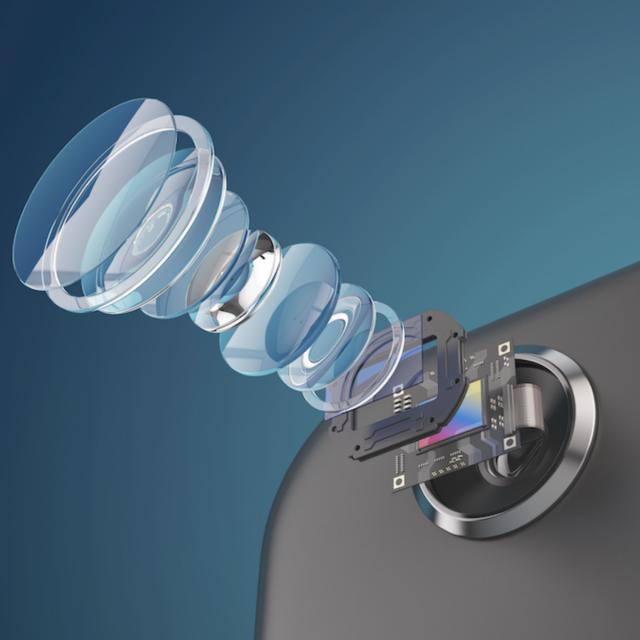
This course covers the fundamentals of imaging – the creation of an image that is ready for consumption or processing by a human or a machine. Imaging has a long history, spanning several centuries. But the advances made in the last three decades have revolutionized the camera and dramatically improved the robustness and accuracy of computer vision systems. We describe the fundamentals of imaging, as well as recent innovations in imaging that have had a profound impact on computer vision.

Class Deals by MOOC List - Click here and see Coursera's Active Discounts, Deals, and Promo Codes.

This course starts with examining how an image is formed using a lens camera. We explore the optical characteristics of a camera such as its magnification, F-number, depth of field and field of view. Next, we describe how solid-state image sensors (CCD and CMOS) record images, and the key properties of an image sensor such as its resolution, noise characteristics and dynamic range. We describe how image sensors can be used to sense color as well as capture images with high dynamic range. In certain structured environments, an image can be thresholded to produce a binary image from which various geometric properties of objects can be computed and used for recognizing and locating objects. Finally, we present the fundamentals of image processing – the development of computational tools to process a captured image to make it cleaner (denoising, deblurring, etc.) and easier for computer vision systems to analyze (linear and non-linear image filtering methods).

What You Will Learn

  • Learn how a camera works and how an image is formed using a lens
  • Understand how an image sensor works and its key characteristics
  • Design cameras that capture high dynamic range and wide angle images
  • Learn to create binary images and use them to build a simple object recognition system

Course 1 of 5 in the First Principles of Computer Vision Specialization

Syllabus

WEEK 1: Getting Started: Camera and Imaging
WEEK 2: Image Formation
WEEK 3: Image Sensing
WEEK 4: Binary Images
WEEK 5: Image Processing I
WEEK 6: Image Processing II

Go to Class
MOOC List is learner-supported. When you buy through links on our site, we may earn an affiliate commission.

Related Courses

From Brand to Image: Creating High Impact Campaigns That Tell Brand Stories (Coursera) Coursera
IE Business School

From Brand to Image: Creating High Impact Campaigns That Tell Brand Stories (Coursera)

There are many different ways to approach clients to assess their needs and develop creative campaigns which fulfill your creative desires. Many agencies have established methodology, terminology and processes, and oftentimes, have spent decades or even years developing these processes. However, whether you are a freelancer, designer, illustrator, photographer or marketing director, or perhaps a small business owner, you will be looking to develop a simple process to create campaigns for yourself or your client.

Jun 22nd 2026
4 Weeks
Copyright for Multimedia (Coursera) Coursera
Duke University,Emory University,University of North Carolina

Copyright for Multimedia (Coursera)

Copyright questions about different formats (data, images, music and video) can be especially difficult. Sometimes the law specifically distinguishes between these different formats, and in most cases there are media-specific considerations that impact a copyright analysis. In this course we will look at four different media, paying special attention to the unique issues for each one and the kinds of information that is important when making copyright decisions for each type of material.

Jun 22nd 2026
4 Weeks
Visualizing the Living Body: Diagnostic Imaging (Coursera) Coursera
Yale University

Visualizing the Living Body: Diagnostic Imaging (Coursera)

This course teaches learners the underlying principles behind conventional radiography, computerized axial tomography (CT), magnetic resonance imaging (MRI), and ultrasound. The radiology of chest, abdomen, pelvis, extremities, spine and brain are taught in this course using a combination of lectures and extensive practical activities and assessments.

Jun 15th 2026
5-12 Weeks
Internet of Things: Multimedia Technologies (Coursera) Coursera
University of California, San Diego

Internet of Things: Multimedia Technologies (Coursera)

Content is an eminent example of the features that contributed to the success of wireless Internet. Mobile platforms such as the Snapdragon™ processor have special hardware and software capabilities to make acquisition, processing and rendering of multimedia content efficient and cost-effective.

Jun 22nd 2026
3 Weeks
Image and video processing: From Mars to Hollywood with a stop at the hospital (Coursera) Coursera
Duke University

Image and video processing: From Mars to Hollywood with a stop at the hospital (Coursera)

In this course, you will learn the science behind how digital images and video are made, altered, stored, and used. We will look at the vast world of digital imaging, from how computers and digital cameras form images to how digital special effects are used in Hollywood movies to how the Mars Rover was able to send photographs across millions of miles of space.

Jun 15th 2026
5-12 Weeks
Introduction to Deep Learning for Computer Vision (Coursera) Coursera
MathWorks

Introduction to Deep Learning for Computer Vision (Coursera)

Starting with zero deep learning knowledge, this foundational course will guide you to effectively train cutting-edge models for image classification purposes. From analyzing medical images to recognizing traffic signs, classification is important for many applications. Classification models also serve as the backbone for more complicated object detection models.

Jun 22nd 2026
4 Weeks
Graphic Elements of Design: Color Theory and Image Formats (Coursera) Coursera
University of Colorado Boulder

Graphic Elements of Design: Color Theory and Image Formats (Coursera)

Examining and exploring the various types of images and graphic elements will be the focus of this course. We will start with color theory to distinguish between CMYK, Pantone and RGB color options and their usages. Then we will review the various types of images used in both print and digital design projects. Finally we will look at logo designs to determine what makes for the best images and graphic elements for corporate branding and imaging.

Jun 15th 2026
3 Weeks
Object Localization with TensorFlow (Coursera) Coursera
Coursera Project Network

Object Localization with TensorFlow (Coursera)

Welcome to this 2 hour long guided project on creating and training an Object Localization model with TensorFlow. In this guided project, we are going to use TensorFlow's Keras API to create a convolutional neural network which will be trained to classify as well as localize emojis in images. Localization, in this context, means the position of the emojis in the images. This means that the network will have one input and two outputs.

Jun 22nd 2026
Self-Paced
Visual Perception for Self-Driving Cars (Coursera) Coursera
University of Toronto

Visual Perception for Self-Driving Cars (Coursera)

Welcome to Visual Perception for Self-Driving Cars, the third course in University of Toronto’s Self-Driving Cars Specialization. This course will introduce you to the main perception tasks in autonomous driving, static and dynamic object detection, and will survey common computer vision methods for robotic perception. By the end of this course, you will be able to work with the pinhole camera model, perform intrinsic and extrinsic camera calibration, detect, describe and match image features and design your own convolutional neural networks.

Jun 15th 2026
5-12 Weeks
Modelling and simulation of mechanical systems (Coursera) Coursera
University of Naples Federico II

Modelling and simulation of mechanical systems (Coursera)

The course provides the principles of modelling and simulation of modern mechatronic systems, which are mechanical systems integrated with several types of sensors and actuators. The aim of the course is to show different methodologies to improve the potential of mechanical systems by transforming them into mechatronic systems based on virtual models. In particular, the lessons will be focused on case studies in three engineering fields: robotics, controlled electro-hydraulic actuators and smart devices.

Jun 22nd 2026
3 Weeks