Trees, SVM and Unsupervised Learning (Coursera)

Trees, SVM and Unsupervised Learning (Coursera)

"Trees, SVM and Unsupervised Learning" is designed to provide working professionals with a solid foundation in support vector machines, neural networks, decision trees, and XG boost. Through in-depth instruction and practical hands-on experience, you will learn how to build powerful predictive models using these techniques and understand the advantages and disadvantages of each. The course will also cover how and when to apply them to different scenarios, including binary classification and K > 2 classes.

Class Deals by MOOC List - Click here and see Coursera's Active Discounts, Deals, and Promo Codes.

Additionally, you will gain valuable experience in generating data representations through PCA and clustering. With a focus on practical, real-world applications, this course is a valuable asset for anyone looking to upskill or move into the field of data science.
Course 3 of 3 in the Statistical Learning for Data Science Specialization.

What You Will Learn

  • Describe the advantages and disadvantages of trees, and how and when to use them.
  • Apply SVMs for binary classification or K > 2 classes.
  • Analyze the strengths and weaknesses of neural networks compared to other machine learning algorithms, such as SVMs.

Syllabus

WEEK 1
Welcome!
The module provides an introductory overview of the course and introduces the course instructor.

WEEK 2
Support Vector Machines (SVMs)
To begin the course, we will learn about support vector machines (SVMs). SVMs have become a popular method in the field of statistical learning due to their ability to handle non-linear and high-dimensional data. SVMs seek to maximize the margin, or distance between the decision boundary and the closest data points, to improve generalization performance. Throughout the week, you will learn how to apply SVMs to classify or predict outcomes in a given dataset, select appropriate kernel functions and parameters, and evaluate model performance

WEEK 3
Introduction to Neural Networks
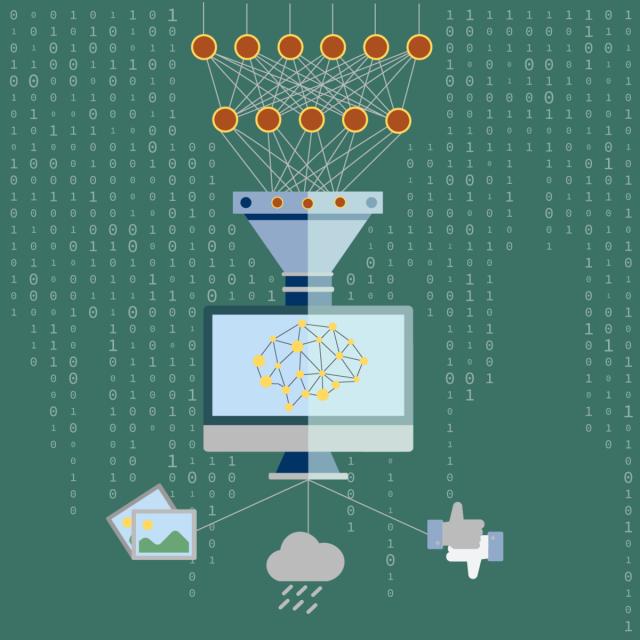
Neural Networks have become increasingly popular in the field of statistical learning due to their ability to model complex relationships in data. In this module, we will cover introductory concepts of neural networks, such as activation functions and backpropagation. You will have the opportunity to apply Neural Networks to classify or predict outcomes in a given dataset and evaluate model performance in the labs for this module.

WEEK 4
Decision Trees-Bagging-Random Forests
Welcome to the final module for the course. This module will focus on the ensemble methods decision trees, bagging, and random forests, which combine multiple models to improve prediction accuracy and reduce overfitting. Decision Trees are a popular machine learning method that partitions the feature space into smaller regions and models the response variable in each region using simple rules. However, Decision Trees can suffer from high variance and instability, which can be addressed by Bagging and Random Forests. Bagging involves generating multiple trees on bootstrapped samples of the data and averaging their predictions, while Random Forests further decorrelate the trees by randomly selecting subsets of features for each tree.


Go to Class
MOOC List is learner-supported. When you buy through links on our site, we may earn an affiliate commission.

Related Courses

Algorithms on Graphs (Coursera) Coursera
University of California, San Diego,Higher School of Economics - HSE University

Algorithms on Graphs (Coursera)

If you have ever used a navigation service to find optimal route and estimate time to destination, you've used algorithms on graphs. Graphs arise in various real-world situations as there are road networks, computer networks and, most recently, social networks! If you're looking for the fastest time to get to work, cheapest way to connect set of computers into a network or efficient algorithm to automatically find communities and opinion leaders in Facebook, you're going to work with graphs and algorithms on graphs.

Jun 22nd 2026
5-12 Weeks
Bayesian Statistics: From Concept to Data Analysis (Coursera) Coursera
University of California, Santa Cruz

Bayesian Statistics: From Concept to Data Analysis (Coursera)

This course introduces the Bayesian approach to statistics, starting with the concept of probability and moving to the analysis of data. We will learn about the philosophy of the Bayesian approach as well as how to implement it for common types of data. We will compare the Bayesian approach to the more commonly-taught Frequentist approach, and see some of the benefits of the Bayesian approach.

Jun 22nd 2026
4 Weeks
Introduction to Deep Learning & Neural Networks with Keras (Coursera) Coursera
IBM

Introduction to Deep Learning & Neural Networks with Keras (Coursera)

Looking to start a career in Deep Learning? Look no further. This course will introduce you to the field of deep learning and help you answer many questions that people are asking nowadays, like what is deep learning, and how do deep learning models compare to artificial neural networks? You will learn about the different deep learning models and build your first deep learning model using the Keras library.

Jun 22nd 2026
5-12 Weeks
Machine Learning With Big Data (Coursera) Coursera
University of California, San Diego

Machine Learning With Big Data (Coursera)

Want to make sense of the volumes of data you have collected? Need to incorporate data-driven decisions into your process? This course provides an overview of machine learning techniques to explore, analyze, and leverage data. You will be introduced to tools and algorithms you can use to create machine learning models that learn from data, and to scale those models up to big data problems.

Jun 22nd 2026
5-12 Weeks
Six Sigma Advanced Define and Measure Phases (Coursera) Coursera
University System of Georgia

Six Sigma Advanced Define and Measure Phases (Coursera)

This course is for you if you are looking to dive deeper into Six Sigma or strengthen and expand your knowledge of the basic components of green belt level of Six Sigma and Lean. Six Sigma skills are widely sought by employers both nationally and internationally. These skills have been proven to help improve business processes and performance. This course will take you deeper into the principles and tools associated with the "Design" and "Measure" phases of the DMAIC structure of Six Sigma.

Jun 22nd 2026
5-12 Weeks
Introduction to TensorFlow for Artificial Intelligence, Machine Learning, and Deep Learning (Coursera) Coursera
DeepLearning.AI

Introduction to TensorFlow for Artificial Intelligence, Machine Learning, and Deep Learning (Coursera)

If you are a software developer who wants to build scalable AI-powered algorithms, you need to understand how to use the tools to build them. This course is part of the upcoming Machine Learning in Tensorflow Specialization and will teach you best practices for using TensorFlow, a popular open-source framework for machine learning.

Jun 22nd 2026
4 Weeks
A Crash Course in Causality: Inferring Causal Effects from Observational Data (Coursera) Coursera
University of Pennsylvania

A Crash Course in Causality: Inferring Causal Effects from Observational Data (Coursera)

We have all heard the phrase “correlation does not equal causation.” What, then, does equal causation? This course aims to answer that question and more! Over a period of 5 weeks, you will learn how causal effects are defined, what assumptions about your data and models are necessary, and how to implement and interpret some popular statistical methods. Learners will have the opportunity to apply these methods to example data in R (free statistical software environment).

Jun 22nd 2026
5-12 Weeks
Machine Learning with Python (Coursera) Coursera
IBM

Machine Learning with Python (Coursera)

This course dives into the basics of machine learning using an approachable, and well-known programming language, Python. In this course, we will be reviewing two main components: First, you will be learning about the purpose of Machine Learning and where it applies to the real world. Second, you will get a general overview of Machine Learning topics such as supervised vs unsupervised learning, model evaluation, and Machine Learning algorithms.

Jun 22nd 2026
5-12 Weeks
Introduction to Recommender Systems: Non-Personalized and Content-Based (Coursera) Coursera
University of Minnesota

Introduction to Recommender Systems: Non-Personalized and Content-Based (Coursera)

This course, which is designed to serve as the first course in the Recommender Systems specialization, introduces the concept of recommender systems, reviews several examples in detail, and leads you through non-personalized recommendation using summary statistics and product associations, basic stereotype-based or demographic recommendations, and content-based filtering recommendations.

Jun 22nd 2026
4 Weeks
Introduction to Probability and Data with R (Coursera) Coursera
Duke University

Introduction to Probability and Data with R (Coursera)

This course introduces you to sampling and exploring data, as well as basic probability theory and Bayes' rule. You will examine various types of sampling methods, and discuss how such methods can impact the scope of inference. A variety of exploratory data analysis techniques will be covered, including numeric summary statistics and basic data visualization.

Jun 22nd 2026
5-12 Weeks