Computer Vision with Embedded Machine Learning (Coursera)

Offered by Edge Impulse,
Computer Vision with Embedded Machine Learning (Coursera)

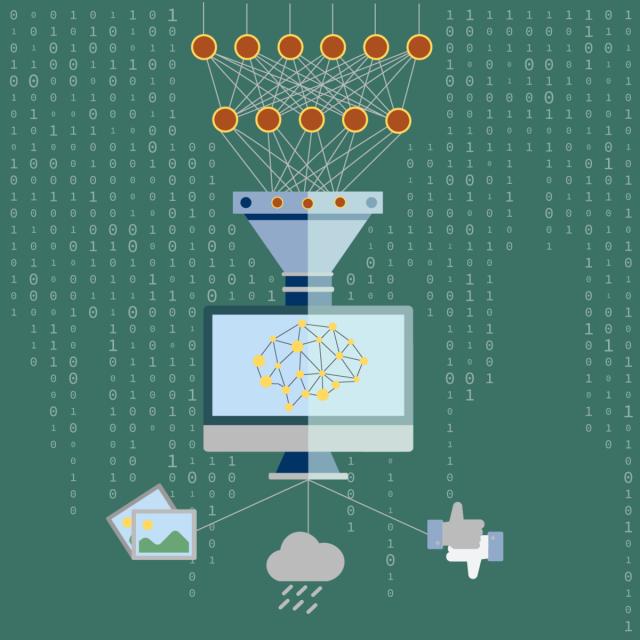
Computer vision (CV) is a fascinating field of study that attempts to automate the process of assigning meaning to digital images or videos. In other words, we are helping computers see and understand the world around us! A number of machine learning (ML) algorithms and techniques can be used to accomplish CV tasks, and as ML becomes faster and more efficient, we can deploy these techniques to embedded systems.

Class Deals by MOOC List - Click here and see Coursera's Active Discounts, Deals, and Promo Codes.

This course will give you an understanding of how deep learning with neural networks can be used to classify images and detect objects in images and videos. You will have the opportunity to deploy these machine learning models to embedded systems, which is known as embedded machine learning or TinyML.
Familiarity with the Python programming language and basic ML concepts (such as neural networks, training, inference, and evaluation) is advised to understand some topics as well as complete the projects. Some math (reading plots, arithmetic, algebra) is also required for quizzes and projects. If you have not done so already, taking the "Introduction to Embedded Machine Learning" course is recommended.
This course covers the concepts and vocabulary necessary to understand how convolutional neural networks (CNNs) operate, and it covers how to use them to classify images and detect objects. The hands-on projects will give you the opportunity to train your own CNNs and deploy them to a microcontroller and/or single board computer.

What You Will Learn

  • How to train and develop an image classification system using machine learning
  • How to train and develop an object detection system using machine learning
  • How to deploy a machine learning model to a microcontroller

Syllabus

WEEK 1
Image Classification
In this module, we introduce the concept of computer vision and how it can be used to solve problems. We cover how digital images are created and stored on a computer. Next, we review neural networks and demonstrate how they can be used to classify simple images. Finally, we walk you through a project to train an image classifier and deploy it to an embedded system.

WEEK 2
Convolutional Neural Networks
In this module, we go over the basics of convolutional neural networks (CNNs) and how they can be used to create a more robust image classification model. We look at the internal workings of CNNs (e.g. convolution and pooling) along with some visualization techniques used to see how CNNs make decisions. We introduce the concept of data augmentation to help provide more data to the training process. You will have the opportunity to train your own CNN and deploy it to an embedded system.

WEEK 3
Object Detection
In this module, we will cover the basics of object detection and how it differs from image classification. We will go over the math involved to measure objection detection performance. After, we will introduce several popular object detection models and demonstrate the process required to train such a model in Edge Impulse. Finally, you will be asked to deploy an object detection model to an embedded system.

Go to Class
MOOC List is learner-supported. When you buy through links on our site, we may earn an affiliate commission.

Related Courses

Recommender Systems: Evaluation and Metrics (Coursera) Coursera
University of Minnesota

Recommender Systems: Evaluation and Metrics (Coursera)

In this course you will learn how to evaluate recommender systems. You will gain familiarity with several families of metrics, including ones to measure prediction accuracy, rank accuracy, decision-support, and other factors such as diversity, product coverage, and serendipity. You will learn how different metrics relate to different user goals and business goals.

Jun 22nd 2026
4 Weeks
Introduction to Machine Learning (Coursera) Coursera
Duke University

Introduction to Machine Learning (Coursera)

This course will provide you a foundational understanding of machine learning models (logistic regression, multilayer perceptrons, convolutional neural networks, natural language processing, etc.) as well as demonstrate how these models can solve complex problems in a variety of industries, from medical diagnostics to image recognition to text prediction.

Jun 26th 2026
5-12 Weeks
Applied Text Mining in Python (Coursera) Coursera
University of Michigan

Applied Text Mining in Python (Coursera)

This course will introduce the learner to text mining and text manipulation basics. The course begins with an understanding of how text is handled by python, the structure of text both to the machine and to humans, and an overview of the nltk framework for manipulating text. The second week focuses on common manipulation needs, including regular expressions (searching for text), cleaning text, and preparing text for use by machine learning processes. The third week will apply basic natural language processing methods to text, and demonstrate how text classification is accomplished. The final week will explore more advanced methods for detecting the topics in documents and grouping them by similarity (topic modelling).

Jun 22nd 2026
4 Weeks
Practical Predictive Analytics: Models and Methods (Coursera) Coursera
University of Washington

Practical Predictive Analytics: Models and Methods (Coursera)

Statistical experiment design and analytics are at the heart of data science. In this course you will design statistical experiments and analyze the results using modern methods. You will also explore the common pitfalls in interpreting statistical arguments, especially those associated with big data. Collectively, this course will help you internalize a core set of practical and effective machine learning methods and concepts, and apply them to solve some real world problems.

Jun 22nd 2026
4 Weeks
Machine Learning: Regression (Coursera) Coursera
University of Washington

Machine Learning: Regression (Coursera)

Case Study - Predicting Housing Prices. In our first case study, predicting house prices, you will create models that predict a continuous value (price) from input features (square footage, number of bedrooms and bathrooms,...). This is just one of the many places where regression can be applied. Other applications range from predicting health outcomes in medicine, stock prices in finance, and power usage in high-performance computing, to analyzing which regulators are important for gene expression.

Jun 22nd 2026
5-12 Weeks
Fundamentals of Machine Learning in Finance (Coursera) Coursera
New York University Tandon School of Engineering

Fundamentals of Machine Learning in Finance (Coursera)

The course aims at helping students to be able to solve practical ML-amenable problems that they may encounter in real life that include: (1) understanding where the problem one faces lands on a general landscape of available ML methods, (2) understanding which particular ML approach(es) would be most appropriate for resolving the problem, and (3) ability to successfully implement a solution, and assess its performance.

Jun 22nd 2026
4 Weeks
Machine Learning With Big Data (Coursera) Coursera
University of California, San Diego

Machine Learning With Big Data (Coursera)

Want to make sense of the volumes of data you have collected? Need to incorporate data-driven decisions into your process? This course provides an overview of machine learning techniques to explore, analyze, and leverage data. You will be introduced to tools and algorithms you can use to create machine learning models that learn from data, and to scale those models up to big data problems.

Jun 22nd 2026
5-12 Weeks
Advanced Algorithms and Complexity (Coursera) Coursera
University of California, San Diego,Higher School of Economics - HSE University

Advanced Algorithms and Complexity (Coursera)

You've learned the basic algorithms now and are ready to step into the area of more complex problems and algorithms to solve them. Advanced algorithms build upon basic ones and use new ideas. We will start with networks flows which are used in more typical applications such as optimal matchings, finding disjoint paths and flight scheduling as well as more surprising ones like image segmentation in computer vision.

Jun 22nd 2026
5-12 Weeks
Machine Learning: Classification (Coursera) Coursera
University of Washington

Machine Learning: Classification (Coursera)

Case Studies: Analyzing Sentiment & Loan Default Prediction. In our case study on analyzing sentiment, you will create models that predict a class (positive/negative sentiment) from input features (text of the reviews, user profile information,...). In our second case study for this course, loan default prediction, you will tackle financial data, and predict when a loan is likely to be risky or safe for the bank.

Jun 22nd 2026
5-12 Weeks
Text Retrieval and Search Engines (Coursera) Coursera
University of Illinois at Urbana-Champaign

Text Retrieval and Search Engines (Coursera)

Recent years have seen a dramatic growth of natural language text data, including web pages, news articles, scientific literature, emails, enterprise documents, and social media such as blog articles, forum posts, product reviews, and tweets. Text data are unique in that they are usually generated directly by humans rather than a computer system or sensors, and are thus especially valuable for discovering knowledge about people’s opinions and preferences, in addition to many other kinds of knowledge that we encode in text.

Jun 22nd 2026
5-12 Weeks