操作系统原理 (Operating Systems) (Coursera)

Offered by Peking University,
操作系统原理 (Operating Systems) (Coursera)

操作系统原理》是针对计算机科学技术专业三年级本科生开设的一门专业基础课程。本课程着重学生系统观的培养,通过重点讲述操作系统的内部结构、工作原理及典型技术的实现,使学生建立起对操作系统的整体及各个功能模块的认识,从而系统掌握计算机的专业知识,进一步提升学生的软件开发能力乃至系统软件开发能力。

Class Deals by MOOC List - Click here and see Coursera's Active Discounts, Deals, and Promo Codes.

任何计算机都必须在加载相应的操作系统之后,才能构成一个可以运转的、完整的计算机系统。操作系统的功能是否强大,决定了计算机系统的综合能力;操作系统的性能高低,决定了整个计算机系统的性能;操作系统本身的安全可靠程度,决定了整个计算机系统的安全性和可靠性。操作系统是软件技术的核心和基础运行平台。因此,计算机科学技术专业的学生需要学习和掌握操作系统的基本原理和专业知识。
本课程的教学目标是:
1.掌握操作系统的基本概念、功能组成、系统结构及运行环境;
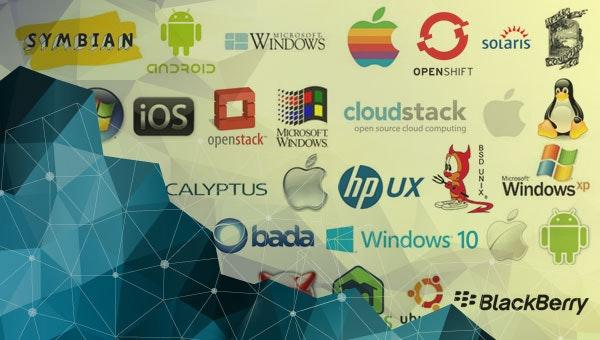
2.熟悉并运用操作系统工作原理、设计方法和实现技术,理解有代表性、典型的操作系统实例(如UNIX、Linux和Windows);
3.了解操作系统的演化过程、发展研究动向、新技术以及新思想,为后续相关课程的学习打下良好基础,为后续职业发展奠定基石。

Go to Class
MOOC List is learner-supported. When you buy through links on our site, we may earn an affiliate commission.


Related Courses

Agile Planning for Software Products (Coursera) Coursera
University of Alberta

Agile Planning for Software Products (Coursera)

This course covers the techniques required to break down and map requirements into plans that will ultimately drive software production. Upon successful completion of this course, you will be able to: create effective plans for software development; map user requirements to developer tasks; assess and plan for project risks; apply velocity-driven planning techniques; generate work estimates for software products.

Aug 31st 2026
4 Weeks
Programming Mobile Applications for Android Handheld Systems: Part 2 (Coursera) Coursera
University of Maryland, College Park

Programming Mobile Applications for Android Handheld Systems: Part 2 (Coursera)

This course introduces you to the design and implementation of Android applications for mobile devices. You will build upon concepts from the prior course, including handling notifications, using multimedia and graphics and incorporating touch and gestures into your apps.

Aug 31st 2026
5-12 Weeks
Capstone: Autonomous Runway Detection for IoT (Coursera) Coursera
EIT Digital

Capstone: Autonomous Runway Detection for IoT (Coursera)

The students will develop a larger system using the learning outcomes from these courses, and the students will evaluate the developed system in a real-world programming environment. This course is a true engineering task in which the student must, not only implement the algorithm code, but also handle the interfaces between many different actors and hardware platforms.

Sep 7th 2026
3 Weeks
Approximation Algorithms Part II (Coursera) Coursera
École normale supérieure

Approximation Algorithms Part II (Coursera)

This is the continuation of Approximation algorithms, Part 1. Here you will learn linear programming duality applied to the design of some approximation algorithms, and semidefinite programming applied to Maxcut. By taking the two parts of this course, you will be exposed to a range of problems at the foundations of theoretical computer science, and to powerful design and analysis techniques.

Aug 31st 2026
4 Weeks
Algorithmic Thinking (Part 1) (Coursera) Coursera
Rice University

Algorithmic Thinking (Part 1) (Coursera)

Experienced Computer Scientists analyze and solve computational problems at a level of abstraction that is beyond that of any particular programming language. This two-part class is designed to train students in the mathematical concepts and process of "Algorithmic Thinking", allowing them to build simpler, more efficient solutions to computational problems.

Sep 7th 2026
4 Weeks
Linux on LinuxONE (Coursera) Coursera
IBM

Linux on LinuxONE (Coursera)

This course is for Linux Systems Administrators, Architects and Developers who are already familiar with Linux components and everyday tasks, but need a primer on how to best take advantage of the LinuxONE platform. This includes working with the hardware, software, facilities, and processes unique to LinuxONE. It is comprised of videos, links to online resources, and a final test for a badge.

Sep 14th 2026
5-12 Weeks
Principles of Computing (Part 2) (Coursera) Coursera
Rice University

Principles of Computing (Part 2) (Coursera)

This two-part course introduces the basic mathematical and programming principles that underlie much of Computer Science. Understanding these principles is crucial to the process of creating efficient and well-structured solutions for computational problems. To get hands-on experience working with these concepts, we will use the Python programming language. The main focus of the class will be weekly mini-projects that build upon the mathematical and programming principles that are taught in the class.

Sep 7th 2026
4 Weeks
Core 2: OS, Software, Security and Operational Procedures (Coursera) Coursera
IBM

Core 2: OS, Software, Security and Operational Procedures (Coursera)

Are you interested in becoming a proficient and sought-after IT professional? Are you currently or do you plan to pursue a career in an IT support, network technician, or other IT-related role? This IBM course, designed for individuals with IT Fundamentals knowledge, is part of a series of courses that will help you prepare for the CompTIA Core 2 Certification exam. You will gain a solid foundation in operating systems, IT support best practices and procedures, and the skills necessary to excel in an IT role.

Sep 14th 2026
5-12 Weeks
Approximation Algorithms Part I (Coursera) Coursera
École normale supérieure

Approximation Algorithms Part I (Coursera)

How efficiently can you pack objects into a minimum number of boxes? How well can you cluster nodes so as to cheaply separate a network into components around a few centers? These are examples of NP-hard combinatorial optimization problems. It is most likely impossible to solve such problems efficiently, so our aim is to give an approximate solution that can be computed in polynomial time and that at the same time has provable guarantees on its cost relative to the optimum.

Aug 31st 2026
5-12 Weeks