EdX

Tsunamis and Storm Surges: Introduction to Coastal Disasters (edX)

Offered by Waseda University, WasedaX,
Tsunamis and Storm Surges: Introduction to Coastal Disasters (edX)

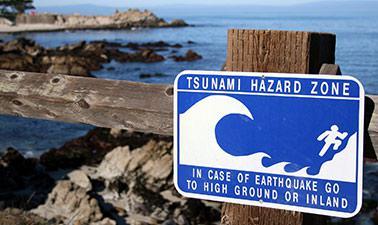
Learn about natural coastal disasters and how you can help improve global disaster management. In 2011, a magnitude 9.0 earthquake triggered a major tsunami that devastated northeast Japan, killing more than 15,000 people and crippling a nuclear power plant. Natural disasters like this one can be seen throughout our Earth’s history. They will continue to prey on all regions, bringing devastation when they strike. But are we so powerless? What if we could improve preparedness over the world and limit the devastation caused by coastal disasters?

Class Deals by MOOC List - Click here and see EdX's Active Discounts, Deals, and Promo Codes.

These are the questions we at Waseda University have been asking. Now we would like to share our experiences and achievements in disaster prevention with the rest of the world.

In this environmental studies course, you will learn about coastal disasters. Using worldwide field surveys, you will develop an understanding of the nature of tsunamis and storm surges. You will learn how coastal areas are attacked, understand how human lives are lost and infrastructure destroyed. Using numerical simulations and hydraulic experiments, we will present you with different scenarios, teaching you about the mechanisms behind a coastal disaster.
You will look at successful coastal disaster prevention concepts and methods. This will include defenses such as coastal dikes, as well as the implementation of essential evacuation plans. Ultimately, you will learn how to reduce the effects of coastal disasters and how to protect yourself and others if a disaster strikes.
Whether you are an emergency management official, a city developer, an engineering student, or living in a potential natural coastal disaster community, this environmental studies course will teach you how we can improve disaster preparedness and management throughout the world.

What you'll learn:

  • The science and mechanisms of tsunamis and storm surges
  • Natural coastal disaster prevention concepts and measures
  • How to better prepare for a natural coastal disaster

Go to Class
MOOC List is learner-supported. When you buy through links on our site, we may earn an affiliate commission.

Related Courses

Vocal Recording Technology (edX) EdX
Berklee College of Music,BerkleeX

Vocal Recording Technology (edX)

Explore emerging innovations in vocal production, audio engineering, recording, and mixing. We are in the midst of an explosion of musical creativity as a result of technologies that allow you to record music using your laptop or tablet. Whether you are a singer, music producer, audio engineer, or just someone that likes to make good music with vocals, it is essential to have an understanding of vocal technologies for music production.

Self Paced
Self-Paced
The Dynamic Earth: A Course for Educators (Coursera) Coursera
American Museum of Natural History

The Dynamic Earth: A Course for Educators (Coursera)

The AMNH course The Dynamic Earth: A Course for Educators provides students with an overview of the origin and evolution of the Earth. Informed by the recently released Next Generation Science Standards, this course examines geological time scales, radiometric dating, and how scientists “read the rocks.” We will explore dramatic changes in the Earth over the last 4 billion years, including how the evolution of life on Earth has affected its atmosphere. In addition to looking at geology on a global scale, participants will take to their own backyards to explore and share their local geologic history.

Sep 21st 2026
4 Weeks
Evaluación de peligros y riesgos por fenómenos naturales (Coursera) Coursera
Universidad Nacional Autónoma de México

Evaluación de peligros y riesgos por fenómenos naturales (Coursera)

Reconocer el conocimiento básico sobre los factores físicos y sociales que condicionan el riesgo de una sociedad por fenómenos extremos de origen natural (sismos, huracanes, etc.) y promover las acciones necesarias para reducir el impacto de los desastres en una comunidad.

Sep 28th 2026
4 Weeks
Be Ready: Staying Safe During Disasters (FutureLearn) FutureLearn
International Federation of Red Cross and Red Crescent Societies

Be Ready: Staying Safe During Disasters (FutureLearn)

Learn about the key preparedness actions you can take to stay safe during various disasters and extreme weather events. Discover what to do when disaster strikes. As extreme weather events continue to affect the lives of millions of people across the globe, it’s never been more important to know how to stay safe when disaster strikes. On this course, you’ll find out about the key actions you can take to reduce the risks associated with disasters and extreme weather events.

No sessions available
2 Weeks
Come Rain or Shine: Understanding the Weather (FutureLearn) FutureLearn
University of Reading

Come Rain or Shine: Understanding the Weather (FutureLearn)

Understand and explore the physical processes behind the weather. Weather affects our lives almost every day through what we wear, what we eat and what we do. But why is it rainy, windy or sometimes even sunny? Explore some of the physical processes driving UK weather systems and get hands on in the world of weather with practical activities and fieldwork.

Self Paced
3 Weeks
Tropical Coastal Ecosystems (edX) EdX
University of Queensland,UQx

Tropical Coastal Ecosystems (edX)

Take the challenge and understand problems and solutions to managing tropical coastal ecosystems. Do you want to develop the skills and knowledge needed to help preserve tropical coastal ecosystems? These habitats provide goods and services for hundreds of millions of people but human activities have led to their global decline.

Self Paced
Self-Paced
Algèbre Linéaire (Partie 2) (edX) EdX
École Polytechnique Fédérale de Lausanne,EPFLx

Algèbre Linéaire (Partie 2) (edX)

Un MOOC francophone d'algèbre linéaire accessible à tous, enseigné de manière rigoureuse et ne nécessitant aucun prérequis. Vous voulez apprendre l'algèbre linéaire, un précieux outil complémentaire à vos connaissances acquises durant vos études en économie, ingénierie, physique, ou statistique? Ou simplement pour la beauté de la matière? Alors ce cours est fait pour vous!

Self Paced
Self-Paced
Railway Engineering: An Integral Approach (edX) EdX
Delft University of Technology,DelftX

Railway Engineering: An Integral Approach (edX)

Discover the science and complexity behind the exciting world of metro, tram and railway systems. Have you ever wondered what it takes to get your train on the right platform at the scheduled time every day? Understanding the complexity behind today’s sophisticated railway systems will give you a better insight into how this safe and reliable transportation system works. We will show you the many factors which are involved and how multiple people, behind the scenes, have a daily task that enables you to get from home to work. Journey with us into the world of rail - a complex system that connects people, cities and countries.

Oct 14th 2026
5-12 Weeks
Electronique I (edX) EdX
École Polytechnique Fédérale de Lausanne,EPFLx

Electronique I (edX)

Introduction à l’électronique analogique- première partie. Fonctions de base réalisées à l’aide des amplificateurs opérationnels. Ce cours est un cours d’introduction à la réalisation des fonctions linéaires et non-linéaires de base à l’aide de l’amplificateur opérationnel.


Self Paced
Self-Paced
The Engineering of Structures Around Us (edX) EdX
DartmouthX,Dartmouth College

The Engineering of Structures Around Us (edX)

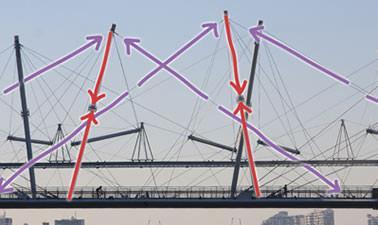
Explore how engineers design bridges and buildings in our communities and iconic structures around the world. In this introductory course, you’ll learn some engineering principles that can be applied to structural systems everywhere: in nature, in furniture, in mechanical and aerospace systems, and in any solid object that resists a load. Together we’ll explore how structures work, why they were designed the way they were designed, how they support loads, and where forces flow through them.

Self Paced
Self-Paced