Math for MBA and GMAT Prep (Coursera)

Offered by Emory University,
Math for MBA and GMAT Prep (Coursera)

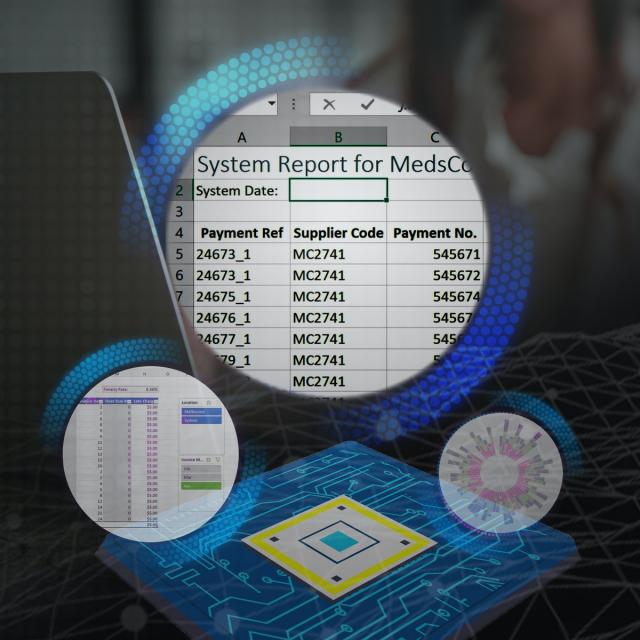
This course gives participants a basic understanding of statistics as they apply in business situations. A fair share of students considering MBA programs come from backgrounds that do not include a large amount of training in mathematics and statistics. Often, students find themselves at a disadvantage when they apply for or enroll in MBA programs. This course will give you the tools to understand how these business statistics are calculated for navigating the built-in formulas that are included in Excel, but also how to apply these formulas in an range of business settings and situations.

Class Deals by MOOC List - Click here and see Coursera's Active Discounts, Deals, and Promo Codes.

Syllabus

WEEK 1
Introduction
Get to know your professor, Thomas Smith, and introduce yourself.

WEEK 2
Descriptive Statistics
This module covers means, medians, modes, standard deviations, and foundational statistics concepts.

WEEK 3
Data and Data Visualization: Excel Tools and Techniques
This module presents Excel tools and techniques for data visualization.

WEEK 4
Equations and Inverting Equations (Algebra Refresher)
In this module, refresh your algebra skills with equations.

WEEK 5
Common Business Concepts
This module covers common business concepts and mathematical applications to business settings.

WEEK 6
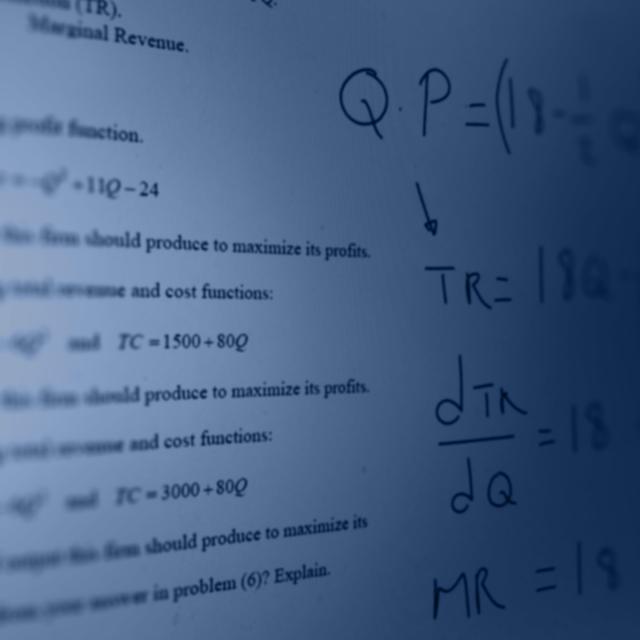
Calculus and Marginal Analysis in a Business Context
This module will provide an overview of calculus and marginal analysis.

WEEK 7
Regression Analysis
This module will provide an overview of regressions and coefficients.
Go to Class
MOOC List is learner-supported. When you buy through links on our site, we may earn an affiliate commission.

Related Courses

Structural Equation Model and its Applications | 结构方程模型及其应用 (普通话) (Coursera) Coursera
The Chinese University of Hong Kong

Structural Equation Model and its Applications | 结构方程模型及其应用 (普通话) (Coursera)

在社会学、心理学、教育学、经济学、管理学、市场学等研究领域的数据分析中,结构方程建模是当前最前沿的统计方法中应用最广、研究最多的一个。它包含了方差分析、回归分析、路径分析和因子分析,弥补了传统回归分析和因子分析的不足,可以分析多因多果的联系、潜变量的关系,

Sep 14th 2026
5-12 Weeks
Experimentation for Improvement (Coursera) Coursera
McMaster University

Experimentation for Improvement (Coursera)

We are always using experiments to improve our lives, our community, and our work. Are you doing it efficiently? Or are you (incorrectly) changing one thing at a time and hoping for the best? In this course, you will learn how to plan efficient experiments - testing with many variables. Our goal is to find the best results using only a few experiments. A key part of the course is how to optimize a system.

Sep 14th 2026
5-12 Weeks
Business intelligence and data analytics: Generate insights (Coursera) Coursera
Macquarie University

Business intelligence and data analytics: Generate insights (Coursera)

‘Megatrends’ heavily influence today’s organisations, industries and societies, and your ability to generate insights in this area is crucial to your organisation’s success into the future. This course will introduce you to analytical tools and skills you can use to understand, analyse and evaluate the challenges and opportunities ‘megatrends’ will inevitably bring to your organisation.

Sep 21st 2026
5-12 Weeks
Statistical Inference and Hypothesis Testing in Data Science Applications (Coursera) Coursera
University of Colorado Boulder

Statistical Inference and Hypothesis Testing in Data Science Applications (Coursera)

This course will focus on theory and implementation of hypothesis testing, especially as it relates to applications in data science. Students will learn to use hypothesis tests to make informed decisions from data. Special attention will be given to the general logic of hypothesis testing, error and error rates, power, simulation, and the correct computation and interpretation of p-values. Attention will also be given to the misuse of testing concepts, especially p-values, and the ethical implications of such misuse.

Sep 21st 2026
5-12 Weeks
Exploration et production de données pour les entreprises (Coursera) Coursera
University of Illinois at Urbana-Champaign

Exploration et production de données pour les entreprises (Coursera)

Ce cours fournit un cadre analytique afin de vous aider à évaluer les problèmes clés de manière structurée. Il vous procurera également des outils afin de mieux gérer les incertitudes qui envahissent et compliquent les processus des entreprises. Plus précisément, vous serez initié(e) aux statistiques et à la manière de résumer les données. Vous découvrirez les concepts de fréquence, de loi normale, d’études statistiques, de l’échantillonnage et des intervalles de confiance.

Sep 14th 2026
4 Weeks
Bayesian Statistics: Mixture Models (Coursera) Coursera
University of California, Santa Cruz

Bayesian Statistics: Mixture Models (Coursera)

Bayesian Statistics: Mixture Models introduces you to an important class of statistical models. The course is organized in five modules, each of which contains lecture videos, short quizzes, background reading, discussion prompts, and one or more peer-reviewed assignments. Statistics is best learned by doing it, not just watching a video, so the course is structured to help you learn through application.

Sep 21st 2026
5-12 Weeks
Combining and Analyzing Complex Data (Coursera) Coursera
University of Maryland, College Park

Combining and Analyzing Complex Data (Coursera)

In this course you will learn how to use survey weights to estimate descriptive statistics, like means and totals, and more complicated quantities like model parameters for linear and logistic regressions. Software capabilities will be covered with R® receiving particular emphasis. The course will also cover the basics of record linkage and statistical matching—both of which are becoming more important as ways of combining data from different sources. Combining of datasets raises ethical issues which the course reviews. Informed consent may have to be obtained from persons to allow their data to be linked. You will learn about differences in the legal requirements in different countries.

Sep 21st 2026
4 Weeks
Data Processing Using Python (Coursera) Coursera
Nanjing University

Data Processing Using Python (Coursera)

This course is mainly for non-computer majors. It starts with the basic syntax of Python, to how to acquire data in Python locally and from network, to how to present data, then to how to conduct basic and advanced statistic analysis and visualization of data, and finally to how to design a simple GUI to present and process data, advancing level by level.

Sep 14th 2026
5-12 Weeks
Model Diagnostics and Remedial Measures (Coursera) Coursera
Illinois Tech

Model Diagnostics and Remedial Measures (Coursera)

This course is best suited for individuals who have a technical background in mathematics/statistics/computer science/engineering pursuing a career change to jobs or industries that are data-driven such as finance, retain, tech, healthcare, government and many more. The opportunity is endless. In this course, we will learn what happens to our regression model when these assumptions have not been met. How can we detect these discrepancies in model assumptions and how do we remediate the problems will be addressed in this course.

Sep 14th 2026
3 Weeks
Principles of fMRI 1 (Coursera) Coursera
Johns Hopkins University

Principles of fMRI 1 (Coursera)

Functional Magnetic Resonance Imaging (fMRI) is the most widely used technique for investigating the living, functioning human brain as people perform tasks and experience mental states. It is a convergence point for multidisciplinary work from many disciplines. Psychologists, statisticians, physicists, computer scientists, neuroscientists, medical researchers, behavioral scientists, engineers, public health researchers, biologists, and others are coming together to advance our understanding of the human mind and brain. This course covers the design, acquisition, and analysis of Functional Magnetic Resonance Imaging (fMRI) data, including psychological inference, MR Physics, K Space, experimental design, pre-processing of fMRI data, as well as Generalized Linear Models (GLM’s).

Sep 14th 2026
4 Weeks
Estadística aplicada a los negocios (Coursera) Coursera
Universidad Austral

Estadística aplicada a los negocios (Coursera)

La toma de decisiones está en la esencia de los negocios. Gerenciar es tomar decisiones, muchas veces bajo presión, con información desordenada y en un contexto de incertidumbre. Un aspecto básico es entender y analizar la información, organizar los datos de forma de facilitar su posterior uso y la toma de decisiones.

Sep 14th 2026
4 Weeks