Switzerland in Europe: Money, Migration and Other Difficult Matters (FutureLearn)

Offered by University of Basel,
Switzerland in Europe: Money, Migration and Other Difficult Matters (FutureLearn)

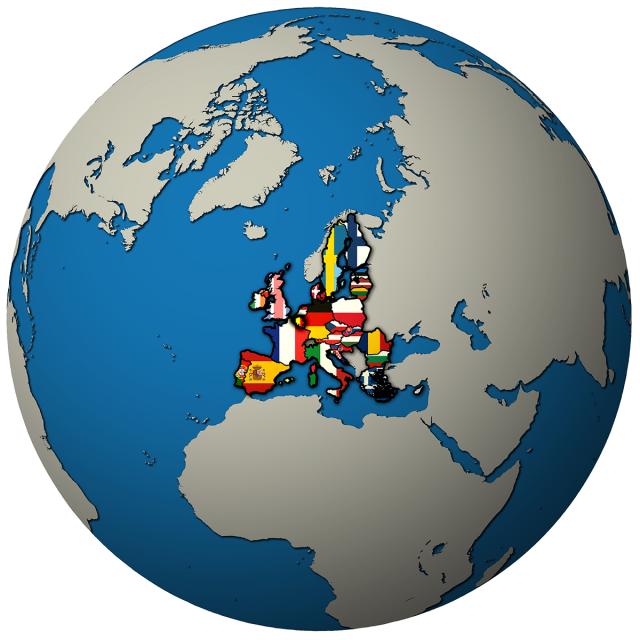
Learn about the position of Switzerland in Europe, in particular with respect to money, migration and other difficult matters. In times of economic uncertainty and increasing migration within Europe, the relationship between Switzerland and the European Union (EU) is severely tested. Located in the west of the European continent, Switzerland is a small but wealthy country, which is surprisingly not a member of the EU. Did you ever wonder what the reasons for this are? And have you ever thought about what legal conditions govern this exceptional relationship?

Class Deals by MOOC List - Click here and see FutureLearn's Active Discounts, Deals, and Promo Codes.

In this free online course, we will attempt to answer some key questions, including:

  • What is the general place of Switzerland in the ‘legal (and political) landscape’ of Europe?
  • What effect does the special situation of Switzerland have for the debate in other countries on issues such as taxation and migration?

Learn to distinguish fact from myth
This course offers a legal and political look at the position of Switzerland in Europe and its challenges as a non-Member State of the EU. We will put a particular focus on much debated and sometimes misunderstood issues such as corporate taxation, banking secrecy and the debate about curbing immigration. With this in mind, you will be able to reflect on Switzerland, the EU and regional integration on a differentiated basis.

Expand your knowledge through case studies
In addition to case studies on ‘money’ and ‘migration’, we will also discuss the present negotiations between Switzerland and the EU on the institutional framework of the Swiss-EU legal relationship. Studying the case of Switzerland from different angles will not only further your legal knowledge but also sharpen your awareness of the high degree of interconnectedness of countries in the modern world. After this course you should be able to apply your knowledge in other contexts - for example, when assessing news about regional integration in Europe or elsewhere.

Learning outcomes

  • Reflect on the interconnectedness of states in the modern world.
  • Describe the federal structure of Switzerland. .
  • Debate corporate taxation and banking secrecy against the background of global and regional rules.
  • Explore the interests involved in economic migration.
  • Compare the legal concept of free movement of persons with national debates on curbing migration.
  • Develop an opinion on the rules on persons seeking international protection.
  • Summarise the present system of Swiss-EU agreements.
  • Collect arguments ‘why Switzerland should or should not join the EU’.

Go to Class
MOOC List is learner-supported. When you buy through links on our site, we may earn an affiliate commission.

Related Courses

Teaching Migration Through Data and Storytelling (FutureLearn) FutureLearn
SOAS University of London,PositiveNegatives,MIDEQ

Teaching Migration Through Data and Storytelling (FutureLearn)

Explore how migration can be taught using both visual storytelling and big data sets. Help learners understand where, why, and how migration happens. There have been urgent recent calls for curricula to address issues of migration. Yet 78% of British teachers asked by the Runnymede Trust said they needed more support “to equip them to teach migration more sensitively and effectively.” On this course, teachers can develop their skills to explain where and why migration happens.

Dec 5th 2022
3 Weeks
Nursing in Crisis? Exploring Current Challenges (FutureLearn) FutureLearn
Coventry University

Nursing in Crisis? Exploring Current Challenges (FutureLearn)

Explore the key issues affecting nurses' job satisfaction and practice today - from stress to changing roles and healthcare needs. Nurses play an important role in providing healthcare around the world and, in some countries, form more than 50% of the healthcare workforce. Yet, there is a global shortage with international organisations citing working conditions and image as contributing factors to nurses leaving the profession and to their initial recruitment.

Self Paced
2 Weeks
An Introduction to Global Health (Coursera) Coursera
University of Copenhagen

An Introduction to Global Health (Coursera)

This course will provide you with an overview of the most important health challenges facing the world today. You will gain insight into how challenges have changed over time, we will discuss the likely determinants of such changes and examine future projections. Successful international strategies and programs promoting human health will be highlighted and global health governance structures will be mapped and the role of the key actors explored.

Aug 31st 2026
5-12 Weeks
Economics of Money and Banking (Coursera) Coursera
Columbia University

Economics of Money and Banking (Coursera)

The last three or four decades have seen a remarkable evolution in the institutions that comprise the modern monetary system. The financial crisis of 2007-2009 is a wakeup call that we need a similar evolution in the analytical apparatus and theories that we use to understand that system. Produced and sponsored by the Institute for New Economic Thinking, this course is an attempt to begin the process of new economic thinking by reviving and updating some forgotten traditions in monetary thought that have become newly relevant.

Aug 31st 2026
13-24 Weeks
Managing My Money for Young Adults (FutureLearn) FutureLearn
The Open University

Managing My Money for Young Adults (FutureLearn)

Learn how to make the most of your money and learn the skills you need to navigate the complex world of personal finance. Take control of your financial future by learning how to manage your money. Despite the introduction of mandatory personal finance education in UK secondary schools, those aged 18-24 are one of the age groups most likely to be in debt – representing over a fifth of the UK’s debt-burdened population.

No sessions available
5-12 Weeks
Understanding Money: the History of Finance, Speculation and the Stock Market (FutureLearn) FutureLearn
University of Southampton

Understanding Money: the History of Finance, Speculation and the Stock Market (FutureLearn)

Explore how money, investment and finance have been represented in arts, literature and popular culture over the last 300 years. Understand the key concepts of money, credit and debt, and the stock market. What is money? What does money do? How has the understanding of economics changed over the years? Explore the answers to these questions and more in this online course.

No sessions available
3 Weeks
Cultural Studies and Modern Languages: an Introduction (FutureLearn) FutureLearn
University of Bristol

Cultural Studies and Modern Languages: an Introduction (FutureLearn)

Explore the culture, language and national identity of eight countries through their books, images, slogans and monuments. Are you interested in other countries? Do you want to study and understand other cultures? This free online course will take you on a journey through a number of periods from the medieval to the modern day, from Russia to Europe and all the way to Latin America.

No sessions available
4 Weeks
Travelling Books: History in Europe and Japan (FutureLearn) FutureLearn
British Library,Keio University

Travelling Books: History in Europe and Japan (FutureLearn)

Discover how travelling books sparked cultural exchanges between Europe and Japan, and how they live on in the digital era. Unlock the history of travelling books in Europe and Japan. Books are cultural artefacts that are easily transported and translated. As such, they have been important in fostering relationships between countries for hundreds of years. On this three-week course presented by Keio University and the British Library, you’ll learn more about the history of European and Japanese literature promoting cultural exchange, how this continues in the digital era, and how vital this exchange is.

Self Paced
3 Weeks
Banking and Financial Institutions (Coursera) Coursera
University of Illinois at Urbana-Champaign

Banking and Financial Institutions (Coursera)

The purpose of this course is to provide you with a basic understanding of the connections between money, the financial system, and the broader macroeconomy. We will examine the economics of modern financial institutions (e.g. banks), including how they are organized, the products and financial services they offer, the risks they take, why and how they are regulated, and how this has changed over time.

Aug 31st 2026
4 Weeks
International migrations: a global issue (Coursera) Coursera
Sciences Po

International migrations: a global issue (Coursera)

The world is moving, but not all opinions and governments are willing to accept this poorly understood reality. The issue affects both states and the planet, in a process of globalization and of regionalization of migrations, and raises new questions for international relations, now including the South. This course aims at improving knowledge of the subject, addressing the key issues raised by international migration, and assessing the trends of tomorrow.

Aug 24th 2026
5-12 Weeks
Global Intimacies: Sex, Power, Gender and Migration (FutureLearn) FutureLearn
National Tsing Hua University

Global Intimacies: Sex, Power, Gender and Migration (FutureLearn)

Law

Study the evolution of intimacy in the context of global capitalism and probe the intersections of sex, love, labour and mobility. Explore how freedom of movement impacts sex, gender and our ideas of intimacy. In this time of global capitalism, travelling between countries for work and leisure is common. Global mobility has blurred the boundary between strangers and changed the meaning of intimacy.

Self Paced
4 Weeks