Sustainable Development Goal 3: Good Health and Well-being (CanopyLAB)

Offered by SDG LAB,
Sustainable Development Goal 3: Good Health and Well-being (CanopyLAB)

This course will walk you through the content and targets of the Sustainable Development Goal 3 on Good Health and Well-being, including information on the background of the goal and how different UN agencies, governments and research institutions work to achieve this goal. It will also introduce you to how private companies and new technologies can make a real difference in the global movement for health and well-being for all. Last but not least, the course will help you transform this knowledge into impact and become a champion of Goal 3 through practicing important skills, building network and taking actions.

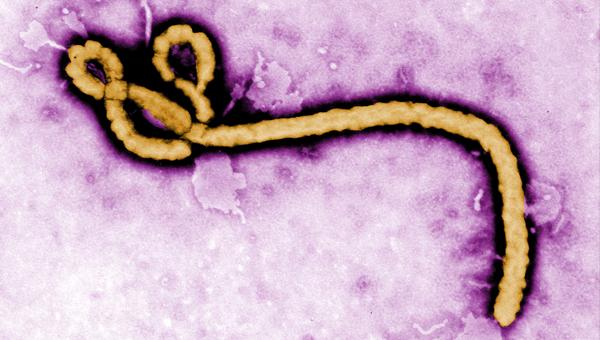
Battling the flu, chicken pox or going through chemotherapy- perhaps these are some things that come to mind when you think of the opposite of good health and well-being.
BUT, health covers more than you think. WHO describes health as "a state of complete physical, mental and social well-being and not merely the absence of disease or infirmity."
Discover what a real “healthy lifestyle” is all about and how YOU can make a difference in other people’s lives who are on the path to achieving Goal#3.
Unit 1: Introduction to Goal 3: Good Health and Well-being
Unit 2: The Targets of Goal 3: Good Health and Well-being
Unit 3: Technology and Global Health
Unit 4: What Can I Do to Promote Goal 3: Good Health and Well-being?

Go to Class
MOOC List is learner-supported. When you buy through links on our site, we may earn an affiliate commission.

Related Courses

Service Transformed: Lessons in U.S. Veteran Centered Care (Coursera) Coursera
University of Michigan

Service Transformed: Lessons in U.S. Veteran Centered Care (Coursera)

Improving health care for veterans has become a matter of national attention and has gained increasing attention from the medical community. With the current surge of veterans reintegrating into civilian society it is critical to improve the training of the next cadre of providers who will provide care for our veterans. It is widely known that veterans receive care in all aspects of the health system, thus providers in veteran focused care facilities, military health serves and civilian locals must be aware of the unique needs of veterans. It is perhaps even more important to educate civilian providers who may be unfamiliar with the unique physical, mental and emotional needs related to military service.

Jun 8th 2026
5-12 Weeks
Sustainable Development Goal 4: Quality Education (CanopyLAB) CanopyLAB
SDG LAB

Sustainable Development Goal 4: Quality Education (CanopyLAB)

Quality education encompasses a range of issues: from ensuring primary and secondary education, literacy and numeracy for all, to fighting discrimination and other societal issues that prevent people from receiving education, and many more. We take a special focus on girls' and women's rights to education and examine the layers of obstacles that females may face when it comes to overcoming poverty, violence, and stereotypes in order to receive the education that they are entitled to. Undeterred by the challenges, many female figures and organizations advocating for education and women's' rights have made amazing achievements in advancing their own education and that of females around the world. Part of this course is dedicated to telling their stories and inspiring you to take action to advance Goal 4.

Self Paced
Self-Paced
Sustainable Development Goal 6: Clean Water and Sanitation (CanopyLAB) CanopyLAB
SDG LAB

Sustainable Development Goal 6: Clean Water and Sanitation (CanopyLAB)

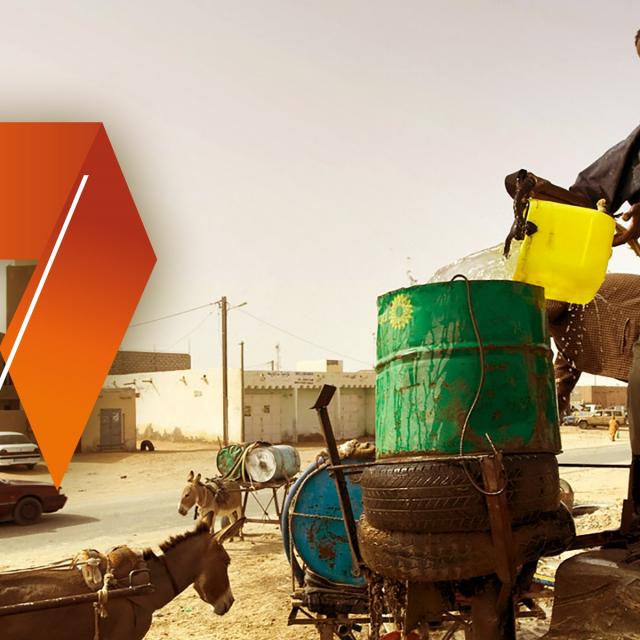
In this course, we provide you with an introduction to the Sustainable Development Goal 6: Clean Water and Sanitation and all its related targets aiming to achieve the goal by the year 2030. We will also learn about how the United Nations, civil society, the private sector and governments work both independently and interdependently on this issue. We will be “visiting” countries such as Somalia, the U.S., India, Qatar, Palestine, Bosnia and Herzegovina and Chile to get a better understanding of the very different challenges each country faces. We will also do many fun exercises to help you analyze the knowledge you have gained, link theory to examples, and partake in the fight for water rights for all. Finally, we will look at what YOU can do to make a difference for Goal 6!

Self Paced
Self-Paced
Paleontology: Early Vertebrate Evolution (Coursera) Coursera
University of Alberta

Paleontology: Early Vertebrate Evolution (Coursera)

Paleontology: Early Vertebrate Evolution is a four-lesson course teaching a comprehensive overview of the origin of vertebrates. Students will explore the diversity of Palaeozoic lineages within a phylogenetic and evolutionary framework .This course examines the evolution of major vertebrate novelties including the origin of fins, jaws, and tetrapod limbs. Students also explore key Canadian fossil localities, including the Burgess Shale (British Columbia), Miguasha (Quebec), and Man On The Hill (Northwest Territories).

Jun 10th 2026
4 Weeks
Sustainable Development Goal 10: Reduced Inequalities (CanopyLAB) CanopyLAB
SDG LAB

Sustainable Development Goal 10: Reduced Inequalities (CanopyLAB)

What does "inequality" mean? Goal 10 takes a holistic approach to the concept of inequality, which means that it recognizes inequality not just in terms of income but also in many other aspects of life such as unequal access to decent healthcare, quality education, good infrastructure and fairly paid jobs. In this course, we will investigate the consequences of inequality in theories, and see how they play out in the real world by looking at the rich and poor gap in examples of countries around the world, from the United Kingdom and the United States to Brazil, Indonesia, and Nigeria.

Self Paced
Self-Paced
Living with Dementia: Impact on Individuals, Caregivers, Communities and Societies (Coursera) Coursera
Johns Hopkins University

Living with Dementia: Impact on Individuals, Caregivers, Communities and Societies (Coursera)

Health professionals and students, family caregivers, friends of and affected individuals, and others interested in learning about dementia and quality care will benefit from completing the course. Led by Drs. Nancy Hodgson and Laura Gitlin, participants will acquire foundational knowledge in the care of persons with Alzheimer’s Disease and other neurocognitive disorders.

Jun 8th 2026
5-12 Weeks
Sustainable Development Goal 14: Life Below Water (CanopyLAB) CanopyLAB
SDG LAB

Sustainable Development Goal 14: Life Below Water (CanopyLAB)

You might not constantly think about it, but oceans are a crucial part of the ecosystem that makes Earth habitable for humans. More than half of the oxygen we breathe comes from algae, and the oceans absorb a large amount of the carbon dioxide released by human activities, thus mitigating the impact of climate change. The oceans are also a crucial source of food and livelihood for humans. Yet today, the oceans face multiple threats including climate change, environmental degradation, pollution, and overfishing. In this course, you will learn about the important role oceans play, their current state of deterioration, and what you can do to improve it.

Self Paced
Self-Paced
Soul Beliefs: Causes and Consequences - Unit 3: How Does It All End? (Coursera) Coursera
Rutgers University

Soul Beliefs: Causes and Consequences - Unit 3: How Does It All End? (Coursera)

Throughout history, the vast majority of people around the globe have believed they have, however defined, a “soul.” While the question of whether the soul exists cannot be answered by science, what we can study are the causes and consequences of various beliefs about the soul and its prospects of surviving the death of the body. Why are soul and afterlife beliefs so common in human history? Are there adaptive advantages to assuming souls exist?

Jun 8th 2026
5-12 Weeks
Sustainable Development Goal 12: Responsible Consumption and Production (CanopyLAB) CanopyLAB
SDG LAB

Sustainable Development Goal 12: Responsible Consumption and Production (CanopyLAB)

In Unit 1, we look at the different factors which contributed to the recognition of Responsible Consumption and Production as a Sustainable Development Goal by the United Nations. Unit 2 focuses on the targets set under Goal 12. Unit 3 is a study of the companies and figures that are working to make Goal 12 a reality by 2030. Finally, Unit 4 gives you the opportunity to apply what you learn and take meaningful actions to contribute to this goal.

Self Paced
Self-Paced
Sustainable Development Goal 11: Sustainable Cities and Communities (CanopyLAB) CanopyLAB
SDG LAB

Sustainable Development Goal 11: Sustainable Cities and Communities (CanopyLAB)

This course aims at providing you with a deeper understanding of the reasons why the United Nations chose to focus on Sustainable Cities and Communities as an important goal for sustainable development. In Unit 1, we look at the issues cities around the world are facing. In Unit 2, we focus on the targets set under this goal and the progress made so far. In Unit 3, we go around the world to see what different countries, cities, and communities are doing to become more sustainable. Finally, in Unit 4 we give you the opportunity to take the reigns and become the champion of Goal 11.

Self Paced
Self-Paced